MEDINDIA
 English
 हिन्दी
 Español
 français
 中文
中文
Women with type 2 diabetes may face higher hidden heart damage risk due to hormonal, metabolic, and diagnostic differences.

New Leicester study reveals hidden heart risks in women with Type 2 Diabetes
Go to source)

Type 2 Diabetes
Globalization and changing lifestyles has made diabetes very common in developing countries so much so that India is known as the Diabetes Capital of the World.
Globalization and changing lifestyles has made diabetes very common in developing countries so much so that India is known as the Diabetes Capital of the World.
TOP INSIGHT

Could a simple shift in focus protect your #heart for years to come? Targeted steps, #weightloss for women and #bloodpressure control for men, might prevent early #heartdamage and avert #heartfailure, especially if you have type 2 diabetes. #diabetes
CMD: A Silent Threat More Prevalent in Women with Type 2 Diabetes
CMD is a form of early, silent heart damage caused by impaired blood flow in the heart’s smallest vessels. Using advanced MRI scans and data taken from four studies conducted at the NIHR Leicester Biomedical Research Centre (BRC), researchers found that 46% of the women with type 2 diabetes had signs of CMD, compared to just 26% of the men.“We’re seeing early warning signs of heart disease that aren’t picked up through routine checks, and it’s women who seem to be most affected,” said NIHR Research Professor at the University of Leicester, Gerry McCann, lead investigator of the study.
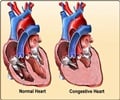
Congestive Heart Failure
Congestive heart failure (CHF) is a condition in which the heart fails to work adequately as a pump that can deliver oxygen rich blood to the body.
Congestive heart failure (CHF) is a condition in which the heart fails to work adequately as a pump that can deliver oxygen rich blood to the body.
Sex-Specific Drivers of CMD: BMI for Women, Blood Pressure for Men
Dr. Gaurav Gulsin, co-author and NIHR Clinical Lecturer, added: “The study also found that the drivers of CMD differ by sex. In women, CMD was most strongly linked to higher body weight (BMI). However, in men, higher blood pressure was the more significant factor.
This paper also marks a milestone for the NIHR Leicester BRC showcasing the power of cross-theme collaboration of the Cardiovascular, Lifestyle, and Diabetes research teams to uncover complex insights that would not be possible in isolation.
Insulin Injections for Diabetes
Insulin Therapy plays an important role in treating diabetes.Learning about insulin injections can help you better manage your diabetes condition.
Insulin Therapy plays an important role in treating diabetes.Learning about insulin injections can help you better manage your diabetes condition.
“The findings have significant implications for future prevention strategies. Interventions like weight loss for women and blood pressure control for men could help reduce early heart damage long before it progresses into heart failure which is a condition especially common in people with type 2 diabetes."
Reference:
- New Leicester study reveals hidden heart risks in women with Type 2 Diabetes - (https://www.sciencedirect.com/science/article/pii/S1097664724011591?via%3Dihub)
Source-Eurekalert
 Email
Email