MEDINDIA
 English
 हिन्दी
 Español
 français
 中文
中文
No medications and strategies have surfaced strongly which can cure Alzheimer's but researchers have come up with treatment that may temporarily give relief.


Risk Factors for Alzheimers Disease
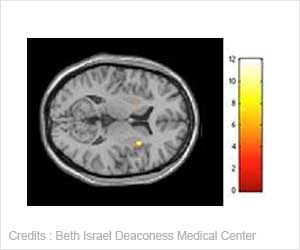
Cognitively normal adults exhibiting atrophy of their temporal lobe or damage to blood vessels in the brain are more likely to develop Alzheimer’s disease.
Cognitively normal adults exhibiting atrophy of their temporal lobe or damage to blood vessels in the brain are more likely to develop Alzheimer’s disease.
TOP INSIGHT

Alzheimer's is a type of dementia that causes problems with memory, thinking and behavior. Symptoms usually develop slowly and get worse over time, becoming severe enough to interfere with daily tasks.
The types of behaviour change vary from person to person and symptoms commonly experienced are:
Impairment of memory: A person is not able to grasp new information and keep forgetting events happened recently. One finds it difficult to remember the route travelled daily and keeps misplacing possessions.

Alzheimer�s Risk Increases With Loss of Y Chromosome
About one in five men over age 80 lose the Y chromosome from their blood cells and the condition is known a loss of Y, or LOY.
About one in five men over age 80 lose the Y chromosome from their blood cells and the condition is known a loss of Y, or LOY.
Worsened ability to speak, read and write: One starts trouble in communication. Difficulty in finding right words, stammering and spelling errors are common symptoms one should consider.

Long-Term Cognitive Impairment in Hospitalized Elderly
People who had urgent hospitalization experienced cognitive decline. But, those who were never hospitalized did not have cognitive decline.
People who had urgent hospitalization experienced cognitive decline. But, those who were never hospitalized did not have cognitive decline.
Alzheimer's progression can be divided into three stages:

Rare Disease Could Help Find Cure for Nervous-Neurologic Disorders
Single strand breaks are one of the most common types of DNA damage and could help spot other rare DNA repair related diseases.
Single strand breaks are one of the most common types of DNA damage and could help spot other rare DNA repair related diseases.
Mild Cognitive Impairment: In this, symptoms may be worse than what might be expected of the age but not severe to be declared as dementia
Dementia: In this stage, the patient develops severe memory loss, especially of recent memories
Alzheimer's Disease Treatment: There are various Alzheimer's disease causes, however, no permanent cure for this type of dementia for now but the treatment can manage the symptoms of the disease for as long as possible. Treatment/medications are decided after seeing all the diagnostic reports, Alzheimer's disease stages and the suitable need of the patient.
Drugs: There are two types of drugs currently used for the treatment of cognitive symptoms:
Cholinesterase Inhibitors: These are used to boost cell-to-cell communication levels by providing a neurotransmitter; acetylcholine which is absent in the brain due to the disease. Side effects of these are nausea, diarrhoea, sleep disturbances etc.
Memantine: This slows down the progression of symptoms. It is sometimes used in the combination of the cholinesterase inhibitor. Its side effects are a headache, dizziness and constipation.
Supportive Environment: Rather than focusing on lost abilities, family members should create a supportive environment around the patient and focus on his abilities that do remain. Also, some safety measures or steps must be taken to support the patient's sense of well-being.
Alternative medicine: There are various herbal mixtures and supplements that may prevent or delay Alzheimer.
Omega-3 fatty acid: it may help in delay of cognitive decline
Curcumin: It is derived from turmeric and has anti-inflammatory properties which may be helpful for a chemical process in the brain.
Vitamin E: Although it is not proven to cure or prevent the disease but it may delay the progression of the disease.
Source-ANI
 Email
Email