MEDINDIA
 English
 हिन्दी
 Español
 français
 中文
中文
NIAID (NIH/NATIONAL INSTITUTE OF ALLERGY AND INFECTIOUS DISEASES) scientists reported about the improvement in TB vaccine efficacy based on results from animal study.
TOP INSIGHT

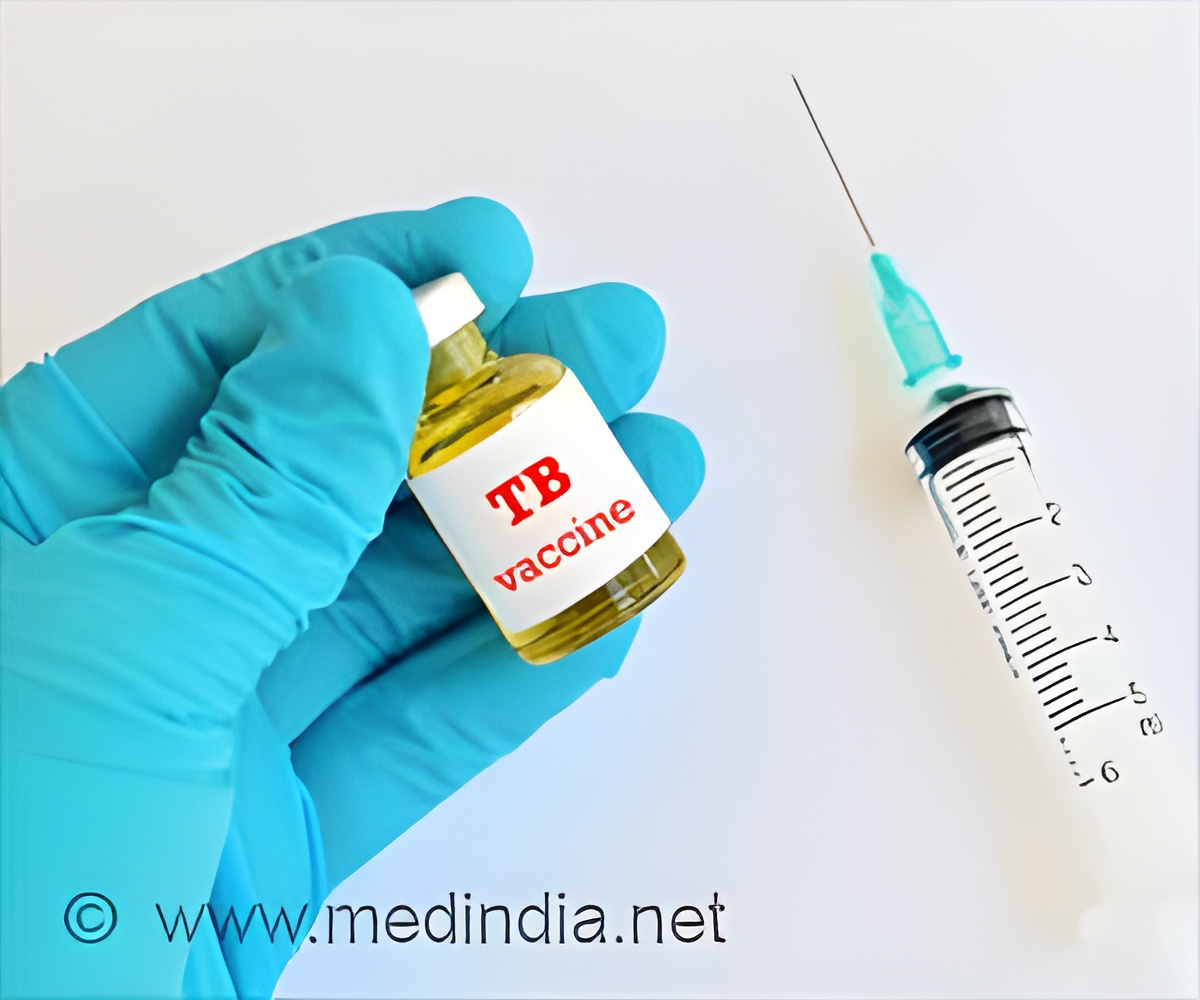
BCG vaccine to prevent tuberculosis, when given by IV or aerosol (AE) routes could confer more protection from infection and/or disease.
Read More..
Study investigators at the NIAID Vaccine Research Center were led by Robert A. Seder, M.D., and Mario Roederer, Ph.D. Their collaborators included JoAnne L. Flynn, Ph.D., of University of Pittsburgh School of Medicine.
To control Mtb infection and prevent clinical disease, a TB vaccine must elicit strong, sustained responses from the immune system's T cells, specifically those in the lungs. However, the standard, ID, route of BCG administration may not generate enough of these critical cells in the lungs.
The NIAID researchers and their colleagues hypothesized that administration of BCG by IV or aerosol (AE) routes would overcome this hurdle and thus confer substantially better protection from infection and/or disease in rhesus macaques following challenge with virulent Mtb.
In their study, groups of animals received the BGC vaccine by ID, AE or IV routes. The scientists assessed immune responses in blood and in fluid drawn from the lungs for a 24-week period following vaccination. IV BCG vaccination resulted in the highest durable levels of T cells in the blood and lungs. Six months after vaccination, the researchers exposed groups of vaccinated rhesus macaques (immunized via ID, AE or IV routes) and a group of unvaccinated macaques to a virulent strain of Mtb by introducing the bacteria directly into the animals' lungs. They then tracked the infection and disease development over three months.
The investigators concluded that IV BCG conferred an unprecedented degree of protection in an animal model of severe TB and "represents a major step forward in the field of TB vaccine research."
Drug-Resistant Tuberculosis - Types, Causes, Symptoms, Diagnosis, Treatment and Prevention
Drug-resistant tuberculosis (TB) is a globally serious infectious disease caused by the bacterium Mycobacterium tuberculosis. It occurs as multidrug-resistant or MDR TB or in its more severe form, extensively drug-resistant or XDR TB.
Drug-resistant tuberculosis (TB) is a globally serious infectious disease caused by the bacterium Mycobacterium tuberculosis. It occurs as multidrug-resistant or MDR TB or in its more severe form, extensively drug-resistant or XDR TB.
 Email
Email