MEDINDIA
 English
 हिन्दी
 Español
 français
 中文
中文
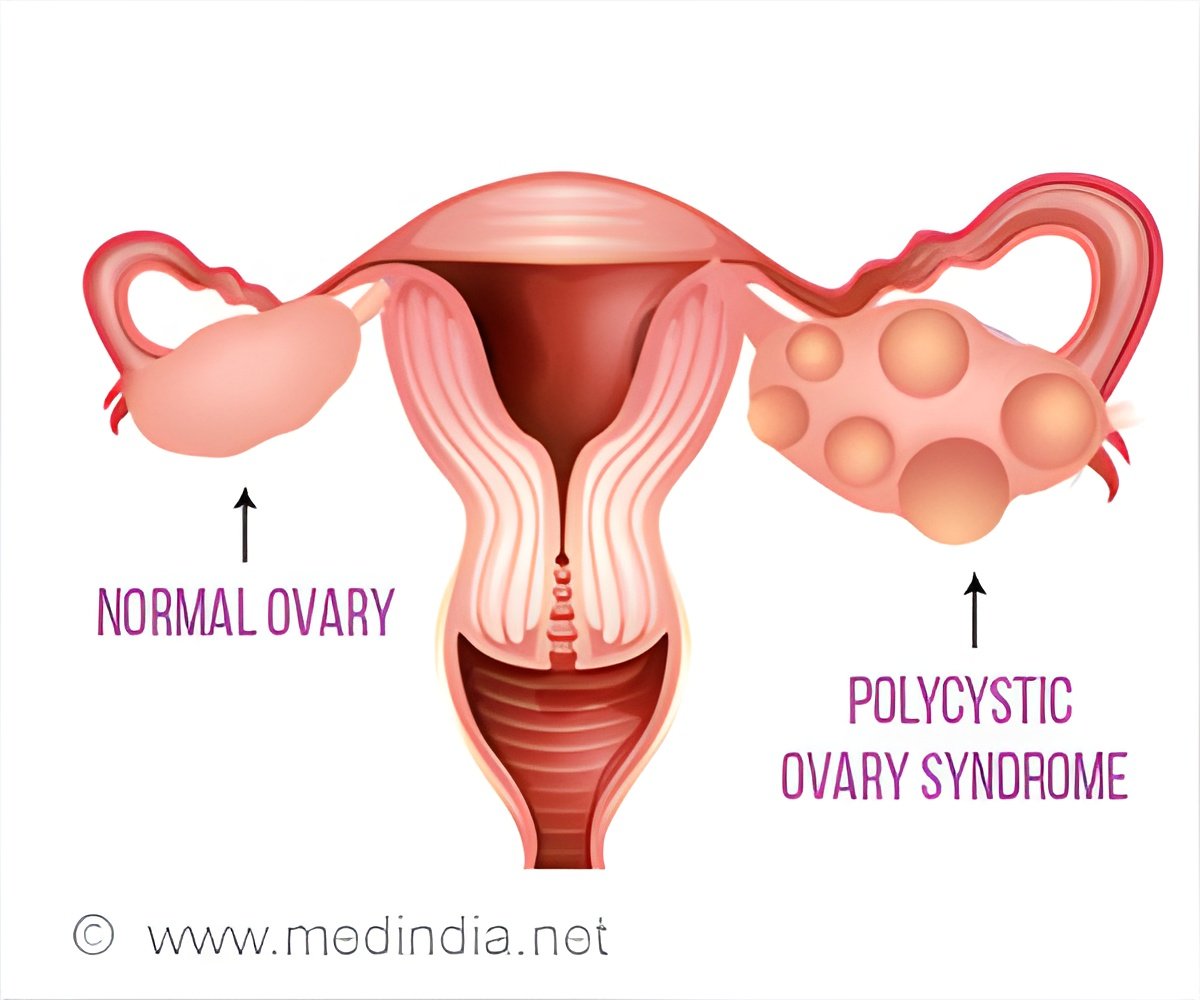
Acupunture or clomiphene medicine do not lead to improved ovulation or live births in women suffering with Polycystic ovary syndrome (PCOS).

Insulin Resistance And Polycystic Ovary Syndrome Share a Link
In recent years, it has become apparent that PCOS is also associated with hyperinsulinemia that is probably central to the pathogenesis of PCOS.
In recent years, it has become apparent that PCOS is also associated with hyperinsulinemia that is probably central to the pathogenesis of PCOS.
TOP INSIGHT

The most common cause of female infertility is Polycystic ovary syndrome (PCOS), which affects about 5 to 10 percent of women of reproductive age.
"We thought we would see the two interventions interacting for the benefit of the patient, but we didn't see that, which was surprising."
PCOS, which affects an estimated 5 to 10 percent of women of reproductive age, is the most common cause of female infertility. While clomiphene is a first-line treatment used to induce ovulation in women with PCOS, it has downsides namely that in a significant number of women it does not lead to improved ovulation or live births, and if it does induce ovulation, it frequently results in pregnancies with multiples who face much higher negative outcomes including death.

Researchers: Polycystic Ovary Syndrome Puts Glucose Control in Double Jeopardy
Researchers report that polycystic ovary syndrome, appears to cause a sort of double jeopardy for those struggling the hardest to control blood sugar levels.
Researchers report that polycystic ovary syndrome, appears to cause a sort of double jeopardy for those struggling the hardest to control blood sugar levels.
The researchers conducted a randomized, multicenter, clinical trial that included 1,000 Chinese women with PCOS at 21 sites in China.
Prevent Fertility Issues: Treat Polycystic Ovary Syndrome in Early Stages
Taking SPIOMET normalized more hepatic and visceral fat, insulin and markers of cardiovascular health in adolescent girls with poly cystic ovarian syndrome.
Taking SPIOMET normalized more hepatic and visceral fat, insulin and markers of cardiovascular health in adolescent girls with poly cystic ovarian syndrome.
The women were given active or control acupuncture twice a week in addition to clomiphene or placebo medication for five days per ovulation cycle for up to six months. Neither the patient nor their physician knew the type of medication and acupuncture received.

Anti-Mullerian Hormone may Help Detect Polycystic Ovary Syndrome
Anti-Mullerian hormone (AMH) blood levels may provide a useful biomarker for the diagnosis and treatment of polycystic ovary syndrome in obese adolescent girls.
Anti-Mullerian hormone (AMH) blood levels may provide a useful biomarker for the diagnosis and treatment of polycystic ovary syndrome in obese adolescent girls.
"There is an impression out there that acupuncture, in addition to conventional treatment, improves success rates. But this study showed that acupuncture added nothing beyond medication," said Legro, who noted that this large trial is one of the highest quality acupuncture trials to address fertility outcomes.
The study, published in the Journal of the American Medical Association, is not only applicable to Chinese women with PCOS; the results are also relevant to women around the world, Legro explained.
"The take-home message is that when acupuncture is used to treat infertility, it does not improve the chances of having a baby," he said.
A limitation of this study is that the method of acupuncture did not fully mimic traditional Chinese medicine which could include herbal mixtures, so that additional factors beyond acupuncture weren't added to the study data.
Source-Eurekalert
 Email
Email