MEDINDIA
 English
 हिन्दी
 Español
 français
 中文
中文
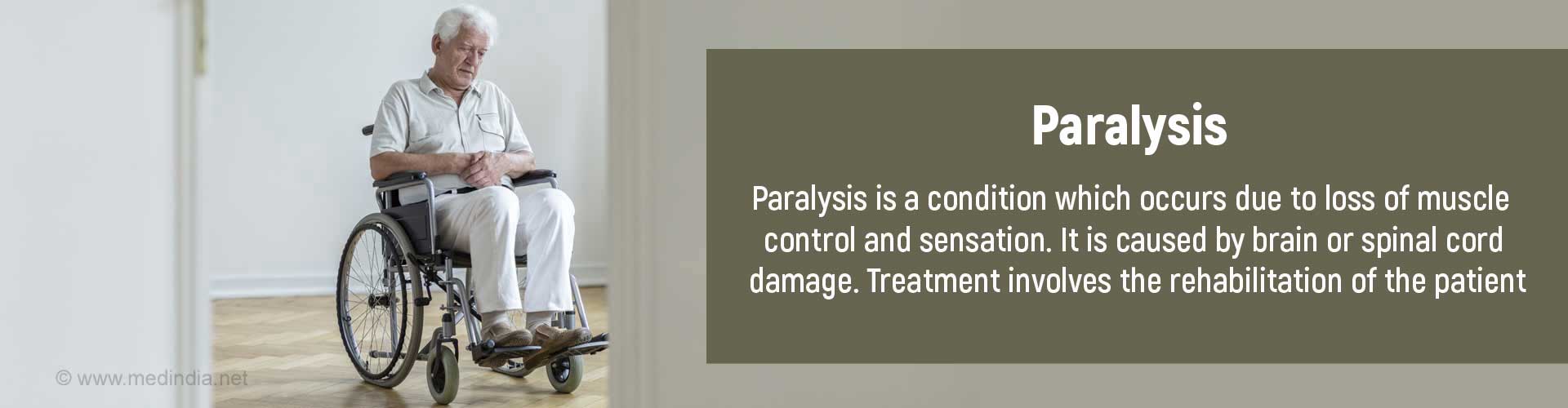
How do you Diagnose Paralysis?
Diagnosis of paralysis is usually easy since the symptoms and signs – loss of muscle control in a particular area – are quite obvious and diagnostic in themselves. However, for examination of internal body parts to detect the cause of paralysis, the following imaging approaches may be utilized:
- X-Ray: This procedure uses radioactive rays for visualization of radio-opaque structures in the body, such as bones.
- Computed Tomography (CT) Scan: This technique combines X-rays with computer technology for producing cross-sectional images of the internal structures of the body.
- Magnetic Resonance Imaging (MRI): This technique uses a magnetic field combined with radio waves and a computer to generate highly accurate and clear images of the internal body structures.
- Electromyography: This procedure is used to assess muscle function. Electrical sensors are attached, which measure the electrical activity of the muscles and nerves.
- Myelography: This procedure is used in the case of spinal cord injuries. Here, a contrast dye is injected into the spinal canal to make the nerves show up using imaging techniques such as X-rays, CT scans or MRI. This technique can pinpoint the exact location of the spinal cord lesion.
 Email
Email