- Indomethacin for asymptomatic patent ductus arteriosus in preterm infants. Cooke L, Steer P, Woodgate P - (http://www.cochrane.org/reviews/en/ab003745.html)
- Prophylactic intravenous Indomethacin for preventing mortality and morbidity in preterm infants. Fowlie PW, Davis PG - (http://www.cochrane.org/reviews/en/ab000174.html)
- Prolonged versus short course of Indomethacin for the treatment of patent ductus arteriosus in preterm infants. Herrera C, Holberton J, Davis P - (http://www.cochrane.org/reviews/en/ab003480.html)
- Ibuprofen for the prevention of patent ductus arteriosus in preterm and/or low birth weight infants. Shah SS, Ohlsson A - (http://www.cochrane.org/reviews/en/ab004213.html)
- Ibuprofen for the treatment of patent ductus arteriosus in preterm and/or low birth weight infants. Ohlsson A, Walia R, Shah S - (http://www.cochrane.org/reviews/en/ab003481.html)
- Oral Ibuprofen for Closure of Hemodynamically Significant PDA in Premature Neonates. Pramila Hariprasad, V. Sundarrajan, G. Srimathy, B. Suthagar, Ramadevi, B. Shyla. Indian Pediatrics 2002; 39: 99-100 - (http://www.indianpediatrics.net/jan2002/jan-99-100.htm)
- Patent Ductus Arteriosus (PDA) - (http://www.emedicine.com/emerg/topic358.htm)
- Khalil A et al. Incidence of congenital heart disease [PMID: 7875882] - (http://www.ncbi.nlm.nih.gov/sites/entrez? cmd=retrieve&db=pubmed&list_uids=7875882&dopt=medline)
- Congenital Heart Defects - (http://www.nhlbi.nih.gov/health/dci/diseases/pda/pda_what.html)
- PATENT DUCTUS ARTERIOSUS (PDA) - (http://www.heartpoint.com/congpda.html)
- Patent ductus arteriosus - (http://www.nlm.nih.gov/medlineplus/ency/article/001560.htm)
About Patent Ductus Arteriosus
Patent Ductus arteriosus is the second commonest congenital birth defect of the heart and can cause heart failure; however majority of these defect close spontaneously after birth.
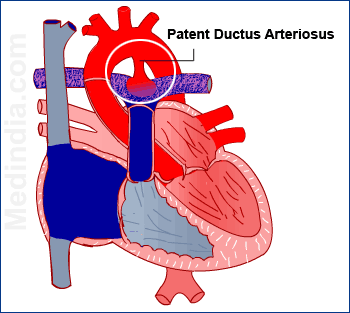
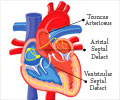
Patent Ductus Arteriosus is a congenital (present from birth) heart defect in which a fetal passageway between the pulmonary artery and the aorta remains open, causing excess blood flow to the lungs.
In the fetus the ductus arteriosus is a normal structure between two major blood vessels and about 60% of the total cardiac output is contributed by the ductus throughout the fetal life. After birth the ductus closes within 24 to 48 hours. Normally the pulmonary artery will carry blood to the lungs. In a fetus, the lungs are not functional. Ductus arteriosus acts like a shunt between pulmonary artery and aorta to prevent overloading of lungs with blood when the lungs are not functional.
At birth, there are several hormonal and chemical changes. Breathing increases the oxygen availability for the infant. These factors produce certain muscle contractions and cause the ductus to close completely in a few weeks.
Advertisement
Majority of patent ductus arteriosus - 88% closes itself within 8 weeks of birth. Persistent PDA occurs in about 1 in 2000 to3000 infants. In the United States about 3000 babies are born with PDA each year.
The incidence of this anomaly is twice in females than in males. After Ventricular septal defect the Patent Ductus Arteriosus is the commonest congenital heart defect in children and accunts for approximately 10% of all cases of congenital heart disease in childhood.
Babies born prematurely or having respiratory distress syndrome are at a higher risk for having a patent ductus arteriosus. About 30% of infants with a low birth weight develop a patent ductus arteriosus. Other contributing factors can be hypoxia, livging at high altitudes, maternal rubella, inheritance, and associated cardiac abnormalities.
Advertisement
Symptoms depend on the size of the PDA and the amount of blood flowing into lungs. Infants with small patent ductus may have no symptoms, while large ductus can result in heart failure.
Link - Listen to/Download |
All PDAs need treatment and closure to prevent endocarditis, heart failure and pulmonary hypertension that can occur later in life. PDA closure can be done by open cardiac surgery or through a cardiac catheterization route without surgical intervention.