About Water Borne Diseases
Waterborne diseases are communicable diseases caused by diseases causing microorganisms in contaminated water. It is more prevalent during floods and in tsunami affected areas.
Waterborne diseases are communicable diseases caused by diseases causing microorganisms in contaminated water. It is more prevalent during floods and in tsunami affected areas.
Writing in the International Journal of Nuclear Desalination, researchers at the D.J. Sanghvi College of Engineering, in Mumbai, India, explain that there are several nanotechnology approaches to water purification currently being investigated and some already in use. "Water treatment devices that incorporate nanoscale materials are already available, and human development needs for clean water are pressing," Alpana Mahapatra and colleagues Farida Valli and Karishma Tijoriwala, explain. Water purification using nanotechnology exploits nanoscopic materials such as carbon nanotubes and alumina fibers for nanofiltration, it also utilizes the existence of nanoscopic pores in zeolite filtration membranes, as well as nanocatalysts and magnetic nanoparticles. Nanosensors, such as those based on titanium oxide nanowires or palladium nanoparticles are used for analytical detection of contaminants in water samples.
The impurities that nanotechnology can tackle depend on the stage of purification of water to which the technique is applied, the team adds. It can be used for removal of sediments, chemical effluents, charged particles, bacteria and other pathogens. They explain that toxic trace elements such as arsenic, and viscous liquid impurities such as oil can also be removed using nanotechnology.
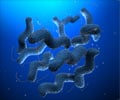
About Campylobacteriosis
Campylobacteriosis is a severe form of diarrhea caused by a bacterium Campylobacter jejuni. Causes, symptoms, treatment of campylobacteriosis are discussed in detail.
Campylobacteriosis is a severe form of diarrhea caused by a bacterium Campylobacter jejuni. Causes, symptoms, treatment of campylobacteriosis are discussed in detail.
For instance, carbon nanotube membranes can remove almost all kinds of water contaminants including turbidity, oil, bacteria, viruses and organic contaminants. Although their pores are significantly smaller carbon nanotubes have shown to have an equal or a faster flow rate as compared to larger pores, possibly because of the smooth interior of the nanotubes. Nanofibrous alumina filters and other nanofiber materials also remove negatively charged contaminants such as viruses, bacteria, and organic and inorganic colloids at a faster rate than conventional filters.
Advertisement

About Cholera
Cholera is an infection of the small intestine and is caused by the bacterium Vibrio cholerae.
Cholera is an infection of the small intestine and is caused by the bacterium Vibrio cholerae.
The researchers point out that several fundamental aspects of nanotechnology have raised concerns among the public and activist groups. They concede that the risks associated with nanomaterials may not be the same as the risks associated with the bulk versions of the same materials because the much greater surface area to volume ratio of nanoparticles can make them more reactive than bulk materials and lead to so far unrecognized and untested interactions with biological surfaces. Water purification based on nanotechnology has not yet led to any human health or environmental problems but the team echoes the sentiment of others that further research into the biological interactions of nanoparticles should be carried out.
Advertisement
Source-Eurekalert