MEDINDIA
 English
 हिन्दी
 Español
 français
 中文
中文
Hydroxyurea, a new drug, does not seem to be effective in reducing the risk of recurrent stroke in children with sickle cell anemia and iron overload.
Hydroxyurea, a new drug, does not seem to be effective in reducing the risk of recurrent stroke in children with sickle cell anemia and iron overload.
The National Heart, Lung, and Blood Institute (NHLBI), US, said it was giving up a major trial as there was no evidence that the drug could be any better than the existing treatment.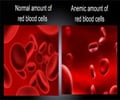
Anemia | Low Hemoglobin (Haemoglobin) Causes Symptoms Diagnosis Treatment FAQs
Anemia is a condition in which the red blood cell (RBC) count or hemoglobin is less than normal.
Anemia is a condition in which the red blood cell (RBC) count or hemoglobin is less than normal.
The study tested whether the drug known to prevent complications of sickle cell disease in adults, was as effective as transfusions, the standard therapy, in reducing the risk of recurrent strokes. Hydroxyurea is the only FDA-approved drug for treating sickle cell anemia.
The study also compared two approaches to remove excess iron, a consequence of regular blood transfusions. Participants who continued to receive transfusion therapy were given the standard oral iron-removal drug deferasirox, and participants who were switched to hydroxyurea underwent regular phlebotomy (blood removal) to eliminate excess iron that had accumulated from their earlier transfusions.
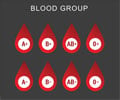
Blood Groups
The blood group of a person is determined by the presence or absence of certain inherited antigenic substances and certain acquired antibodies in blood.
The blood group of a person is determined by the presence or absence of certain inherited antigenic substances and certain acquired antibodies in blood.
“Protecting our participants is an important factor in determining whether to stop a trial,” said Susan B. Shurin, MD, acting director of the NHLBI, who is a board-certified hematologist and pediatrician. The NHLBI is part of the National Institutes of Health. “When an experimental treatment fails to meet its predetermined goals, it is best to return participants to standard treatment as soon as possible.”
The DSMB noted that no strokes occurred in the 66 participants who received the standard therapy of blood transfusions and deferasirox. In contrast, seven strokes occurred in the group of 67 participants who received hydroxyurea with phlebotomy. Study participants and their families have been contacted, and they will discuss future care options with their health care providers.

New treatment for babies with sickle cell anemia
Oral liquid hydroxyurea had shown good results when administered to babies with sickle cell anemia.
Sickle cell anemia is one of the
Oral liquid hydroxyurea had shown good results when administered to babies with sickle cell anemia.
Sickle cell anemia is one of the
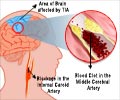
Regular blood transfusions greatly reduce the number of strokes in at-risk children with sickle cell disease. Because repeated transfusions cause side effects such as buildup of excess iron in the body, researchers hope to find more effective and safer ways to reduce stroke risk in young patients. Iron overload can damage organs and lead to cirrhosis (a liver condition), poor growth and development, and heart rhythm disturbances.
“These kinds of studies are so important to finding new treatments and confirming that current standards of care are the best available options,” Shurin explained. “The field of medicine would not advance without the help of those willing to participate in clinical research. We are grateful to these young patients and their parents for helping advance treatments of sickle cell disease. Their contributions will help us find other approaches to preventing complications of sickle cell disease.”
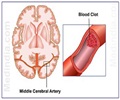
About 10 percent of children with sickle cell disease suffer a stroke. Having experienced one, they are at high risk of having another unless they receive preventive treatment.
Sickle cell disease affects more than 70,000 Americans. It is seen mostly in persons of African descent, but also in individuals of Middle Eastern, Mediterranean, Central and South American, and Asian Indian heritage. New therapies have helped patients live into middle age and older. Sickle cell disease involves an altered gene that produces abnormal hemoglobin, the protein that carries oxygen in the blood. Red blood cells with sickle hemoglobin become C-shaped, stiff, and sticky when they release the oxygen they carry. The deformed cells impede blood flow, causing severe pain and organ damage.
The study was scheduled to run until 2012.
Source-Medindia
 Email
Email