MEDINDIA
 English
 हिन्दी
 Español
 français
 中文
中文
Climate change is causing wildfires to burn more fiercely, pumping more greenhouse gases into the atmosphere than previously thought, reveals a new study.
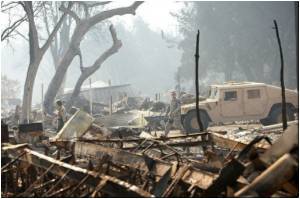

Seasonal Wildfires can Double CO2 Emissions Above Asia
A new study by NASA researchers has determined that seasonal wildfires can double the amount of carbon dioxide (CO2) released from the Earth to the atmosphere above many regions in Asia.
A new study by NASA researchers has determined that seasonal wildfires can double the amount of carbon dioxide (CO2) released from the Earth to the atmosphere above many regions in Asia.
"Essentially this could represent a runaway climate change scenario in which warming is leading to larger and more intense fires, releasing more greenhouse gases and resulting in more warming. This cycle can be broken for a number of reasons, but likely not without dramatic changes to the boreal forest as we currently know it," said Turetsky.
This study is part of a growing body of evidence that northern systems are bearing the brunt of climate change, said co-author Jennifer Harden, a U.S. Geological Survey scientist.
Wildfires may Increase Due to Global Warming in Coming Decades
Atmospheric scientists have determined that as the climate warms in the coming decades, the frequency of wildfires will increase in many regions.
Atmospheric scientists have determined that as the climate warms in the coming decades, the frequency of wildfires will increase in many regions.
The researchers visited almost 200 forest and peatland sites shortly after blazes were extinguished to measure how much biomass burnt. They also looked at fire records kept since the 1950s.

Wildfire Smog Blankets Moscow Posing Health Issues
Experts are warning that the concentration of toxic particles from a heavy smog from the wildfires burning around Moscow has reached dangerous levels.
Experts are warning that the concentration of toxic particles from a heavy smog from the wildfires burning around Moscow has reached dangerous levels.
"This is the first study that has demonstrated that increases in burned area are clearly linked to increases in fire severity. This not only impacts carbon storage, but also will accelerate permafrost loss and changes in forest cover," said Kasischke.

California Wildfires may Have Been Underestimated
The health threat to city dwellers posed by Southern California wildfires may have been underestimated by officials.
The health threat to city dwellers posed by Southern California wildfires may have been underestimated by officials.
Source-ANI
 Email
Email