MEDINDIA
 English
 हिन्दी
 Español
 français
 中文
中文
Researchers have highlighted some common and less common pitfalls in pediatric chest radiography, in addition to discussing some tools for avoiding potential mistakes.


Radiation Dose Reduced by Use of Dedicated Pediatric Imaging Departments for Pediatric CT
A study says that the use of a dedicated pediatric imaging department for pediatric CT scans significantly reduces the radiation dose delivered to the patient.
A study says that the use of a dedicated pediatric imaging department for pediatric CT scans significantly reduces the radiation dose delivered to the patient.
TOP INSIGHT

Having a thorough understanding of normal pediatric anatomy and developmental changes is essential for the pediatric and general radiologist to avoid significant interpretive errors.
"In our study, we highlight some common and less common pitfalls in pediatric chest radiography, in addition to discussing some tools for avoiding potential mistakes," the authors said.
Although errors in diagnostic radiology have been presented and debated with frequency during the past several decades, most of the literature centers on the adult population. More recent publications have highlighted the importance of addressing radiology errors separately in the pediatric population, where disease processes and imaging algorithms are often vastly different from those in the adult population.

Safety Checklist to Improve Pediatric Radiography Developed
A variety of issues relating to clinical practice, practice management, health services and policy, and radiology education and training are highlighted in the October issue.
A variety of issues relating to clinical practice, practice management, health services and policy, and radiology education and training are highlighted in the October issue.
Source-Eurekalert
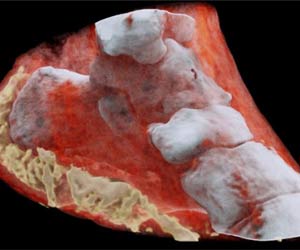
Korean Firm Introduces Its First U-arm Digital Radiography System in the US
RU-3000 is a compact device with motorized arms that can be operated using touchscreen display or even by remote control from distance for generating X-rays.
RU-3000 is a compact device with motorized arms that can be operated using touchscreen display or even by remote control from distance for generating X-rays.

Use of Radiography Reduced by 22 Percent When Simple Rule in Children's Ankle Injuries Is Used
Although only 12% of these show fractures, radiography is widely used in diagnosing ankle injuries, with 85%–95% in pediatric injuries.
Although only 12% of these show fractures, radiography is widely used in diagnosing ankle injuries, with 85%–95% in pediatric injuries.
 Email
Email