MEDINDIA
 English
 हिन्दी
 Español
 français
 中文
中文
After six months of desperate search, a three-year old gets blood group-incompatible kidney transplant, in SAARC region.
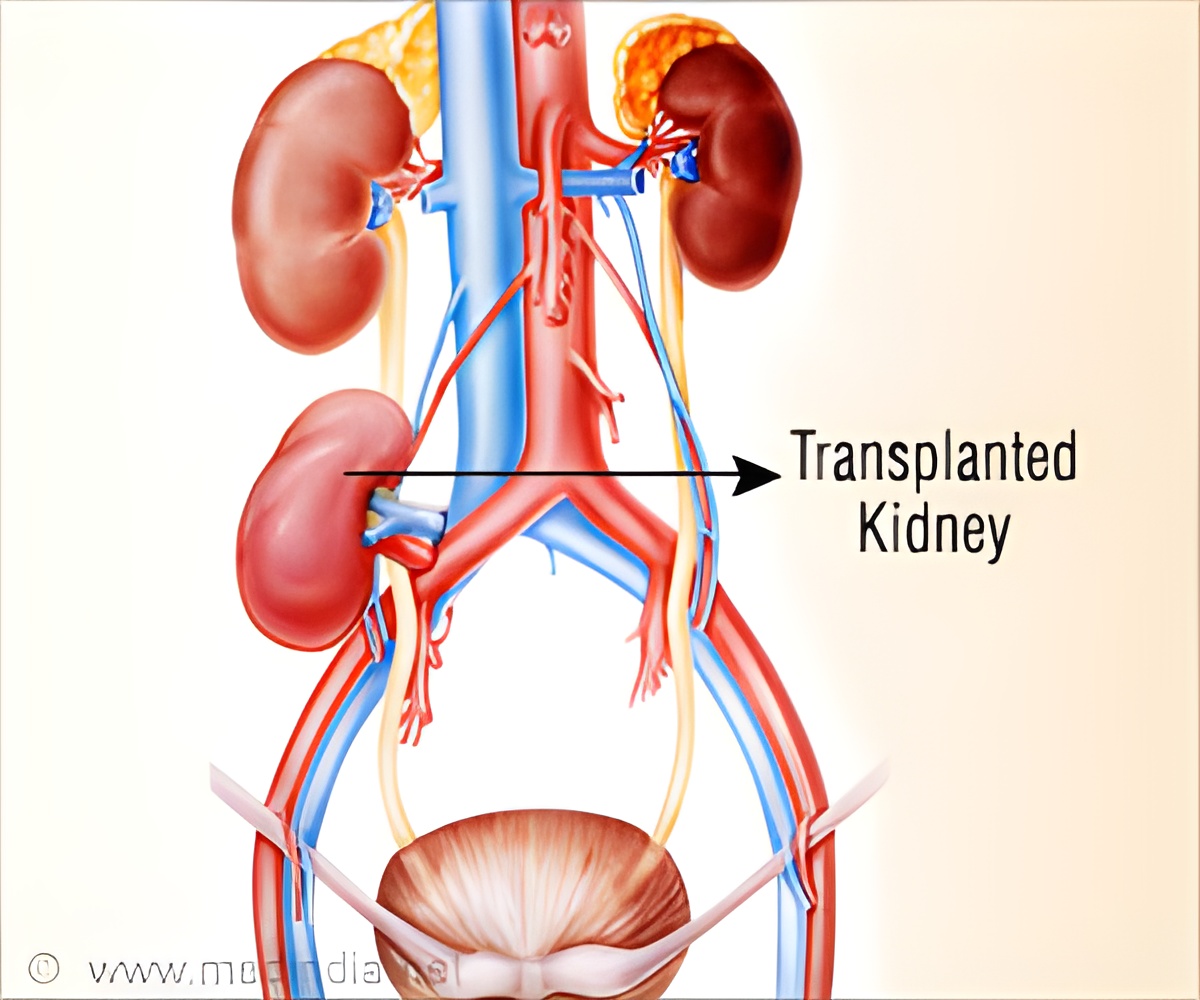
Success of Kidney Transplant is Dependent on Age and Sex
Study hints at the role of estrogen in graft success and suggests that patients could benefit from personalized immunosuppression strategies.
Study hints at the role of estrogen in graft success and suggests that patients could benefit from personalized immunosuppression strategies.
TOP INSIGHT

Following six months of despair, a three-year old gets blood group-incompatible kidney transplant, in SAARC region.
After six months of desperate search, the Kidney and Urology Institute at Medanta hospital planned to take mother as a donor which was a blood group incompatible transplant. Child was B+ and mother was A+.
Speaking on the occasion, Dr Sidharth Sethi, Consultant, Pediatric Nephrology and Pediatric Renal Transplant, Medanta, The Medicity, said, "We had already done India's first Pediatric blood group incompatible kidney transplant on a 12 years-old child in October 2014.
Children With Renal Failure Need An Early Kidney Transplant
Two boys were successfully treated for kidney transplant at the Kavery Hospital, Chennai.
Two boys were successfully treated for kidney transplant at the Kavery Hospital, Chennai.
Since, the mother had a different blood group, the child received renal transplant with mother as the donor, with a designed desensitization and immunosuppressive protocol," he added. "The child responded amazingly post-transplant, and is doing great with stable graft function.
New Calculator That Estimates Success of Kidney Transplants
The calculator indicates mismatches such as gender, weight, body size, genetic make-up that are associated with increased risks of graft failure.
The calculator indicates mismatches such as gender, weight, body size, genetic make-up that are associated with increased risks of graft failure.
The child is currently completely normal, and leading a normal life," noted Sethi. The shortage of cadaveric donation (donation after death) for transplant is a global problem. Statistics suggest that about 2,20,000 people in India are waiting for a kidney transplant; out of which, only 7,000 of them are able to receive a transplant every year.
New Method to Avoid Kidney Transplant Rejection Using White Blood Cells
A group of white blood cells plays an important role in controlling replication of the BK polyomavirus (BKPyV) that causes premature kidney transplant failure.
A group of white blood cells plays an important role in controlling replication of the BK polyomavirus (BKPyV) that causes premature kidney transplant failure.
This is because of the increasing discrepancy between the number of available deceased donor organs and the number of patients waiting for a transplant but also, because of the better survival rates found in living donor transplants."
"This is to emphasize to the general public and doctors that ABO incompability does not always mean loss of hope for children and adults with end stage renal disease.
We now accept blood group incompatible living donors, following our successful patients. We have now done more than 50 blood group incompatible kidney transplants in our centre, with Pratyasha being the youngest in India and SAARC," he added. Dr Prasun Ghosh, Associate Director-Renal Transplantation, said, "Pratyasha was 3 years old, weighing 10 kg, which put her at additional risk of rejection and also surgical complications due to smaller size of the child.
Her abdomen was small, hence putting an adult sized kidney into small abdomen was technically demanding. There is also a risk of clotting in blood vessels, when small vessels of child are joined to donor's kidney. Pratayasha's surgery went smooth with no post-surgery complications."
Source-ANI
 Email
Email