MEDINDIA
 English
 हिन्दी
 Español
 français
 中文
中文
Despite being widely available for sale in low-and-middle income countries, commercial serological tests used

Tuberculosis - Spread - Symptoms - Diagnosis - Treatment - FAQs
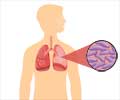
Tuberculosis, caused by Mycobacterium tuberculosis, primarily affects the lung. It may spread to other organs.
Tuberculosis, caused by Mycobacterium tuberculosis, primarily affects the lung. It may spread to other organs.
The authors conclude: "Despite expansion of the literature since 2006, commercial serological tests continue to produce inconsistent and imprecise estimates of sensitivity and specificity."
In an associated study with David Dowdy of Johns Hopkins University, Baltimore, USA as first author, the authors analyzed the cost-effectiveness of TB serological tests from the perspective of tuberculosis control in India, compared to other diagnostic tests. They found that if used as an initial test for tuberculosis in India, serology would result in more DALYs (years of healthy life lost because of premature death or disability), more secondary infections, and more false-positive diagnoses than sputum smear microscopy while increasing costs per patient to the Indian tuberculosis control sector.

Genotype Could Make Customized Tuberculosis Therapies Possible
Bethesda, MD—Are you genetically predisposed to tuberculosis? Scientists may now be able to answer this question and doctors may be able to adjust their therapeutic approach based on what they learn.
Bethesda, MD—Are you genetically predisposed to tuberculosis? Scientists may now be able to answer this question and doctors may be able to adjust their therapeutic approach based on what they learn.

New Tuberculosis Test Shows Promise
A new automated DNA test for tuberculosis that can increase TB detection rate compared to other tests.
A new automated DNA test for tuberculosis that can increase TB detection rate compared to other tests.
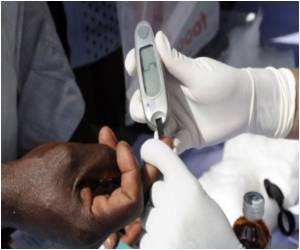
People With Diabetes At Higher Risk of Developing Tuberculosis
A recent study has found that diabetics have a three to five times higher risk of developing tuberculosis (TB) than those without the disease.
A recent study has found that diabetics have a three to five times higher risk of developing tuberculosis (TB) than those without the disease.
 Email
Email