MEDINDIA
 English
 हिन्दी
 Español
 français
 中文
中文
Differing molecular processes in an area of the brain is likely to play a significant role in the difference in intensity of jet lag, says a new study.
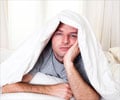
Circadian Rhythm Sleep Disorders - Types, Causes, Health risks, Diagnosis, Treatment, Prognosis
Circadian rhythm (also known as sleep/wake cycle or the body clock) is a biological process that follows an internal cycle of roughly 24 hours.
Circadian rhythm (also known as sleep/wake cycle or the body clock) is a biological process that follows an internal cycle of roughly 24 hours.
The researchers, including a University of Washington biologist, exposed hamsters to two light-dark cycles, one of 23.33 hours and the other at 24.67 hours, to test the mechanisms that advance and delay the circadian clock.
A one-hour light pulse in the shorter cycle acted as dawn, but in the longer cycle it acted as dusk and the scientists confirmed that the pulse of light at dawn advanced the animals' circadian clocks, while the light at dusk delayed the clocks.
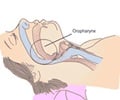
Obstructive Sleep Apnea - Overview
Obstructive sleep apnea should be suspected in overweight middle aged adults who snore loudly and which can cause interruption of breathing for 10 seconds or more and this results in reduced blood o
Obstructive sleep apnea should be suspected in overweight middle aged adults who snore loudly and which can cause interruption of breathing for 10 seconds or more and this results in reduced blood o
"One of the reasons may be that these two forms of resetting the clock involve different molecular mechanisms at the clock level," he stated.
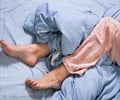
Sleep Disorder : Restless Legs Syndrome
Restless legs syndrome (RLS) causes - An urge to move, usually due to uncomfortable sensations that occur primarily in the legs.
Restless legs syndrome (RLS) causes - An urge to move, usually due to uncomfortable sensations that occur primarily in the legs.
The study has been published online in the Proceedings of the National Academy of Sciences.
 Email
Email