MEDINDIA
 English
 हिन्दी
 Español
 français
 中文
中文
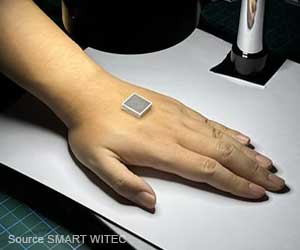
The new chip allows the transmission of brain signals wireless and with high accuracy to implants, facilitating movement.

Parkinson’s Disease - Causes, Symptoms, Diagnosis, Treatment
Parkinson’s disease is a neurodegenerative disease caused by progressive dopamine brain cells loss. Symptoms of Parkinson’s disease are correctable to an extent.
Parkinson’s disease is a neurodegenerative disease caused by progressive dopamine brain cells loss. Symptoms of Parkinson’s disease are correctable to an extent.
TOP INSIGHT

The low-power microchip allows paraplegic people to move their prosthetic limbs through the wireless signals it transmits from the brain.
Source-Medindia

Nutritional Management of Parkinson's Disease
Parkinson's disease is a brain disorder which leads to many other related effects. Nutrition plays an important role in management of the disease.
Parkinson's disease is a brain disorder which leads to many other related effects. Nutrition plays an important role in management of the disease.

Briton Who Could 'Smell' Parkinson's Before Symptoms Developed Prompts New Research
The research team is investigating whether Parkinson's triggers changes in sebum and aim to recruit 200 people with and without the condition for the study.
The research team is investigating whether Parkinson's triggers changes in sebum and aim to recruit 200 people with and without the condition for the study.
Depression may be a Very Early Symptom or Just a Risk Factor of Parkinson's Disease
People with depression surveyed in the study were 3.2 times more likely to develop Parkinson's disease within a year than people who did not have depression.
People with depression surveyed in the study were 3.2 times more likely to develop Parkinson's disease within a year than people who did not have depression.
 Email
Email