MEDINDIA
 English
 हिन्दी
 Español
 français
 中文
中文
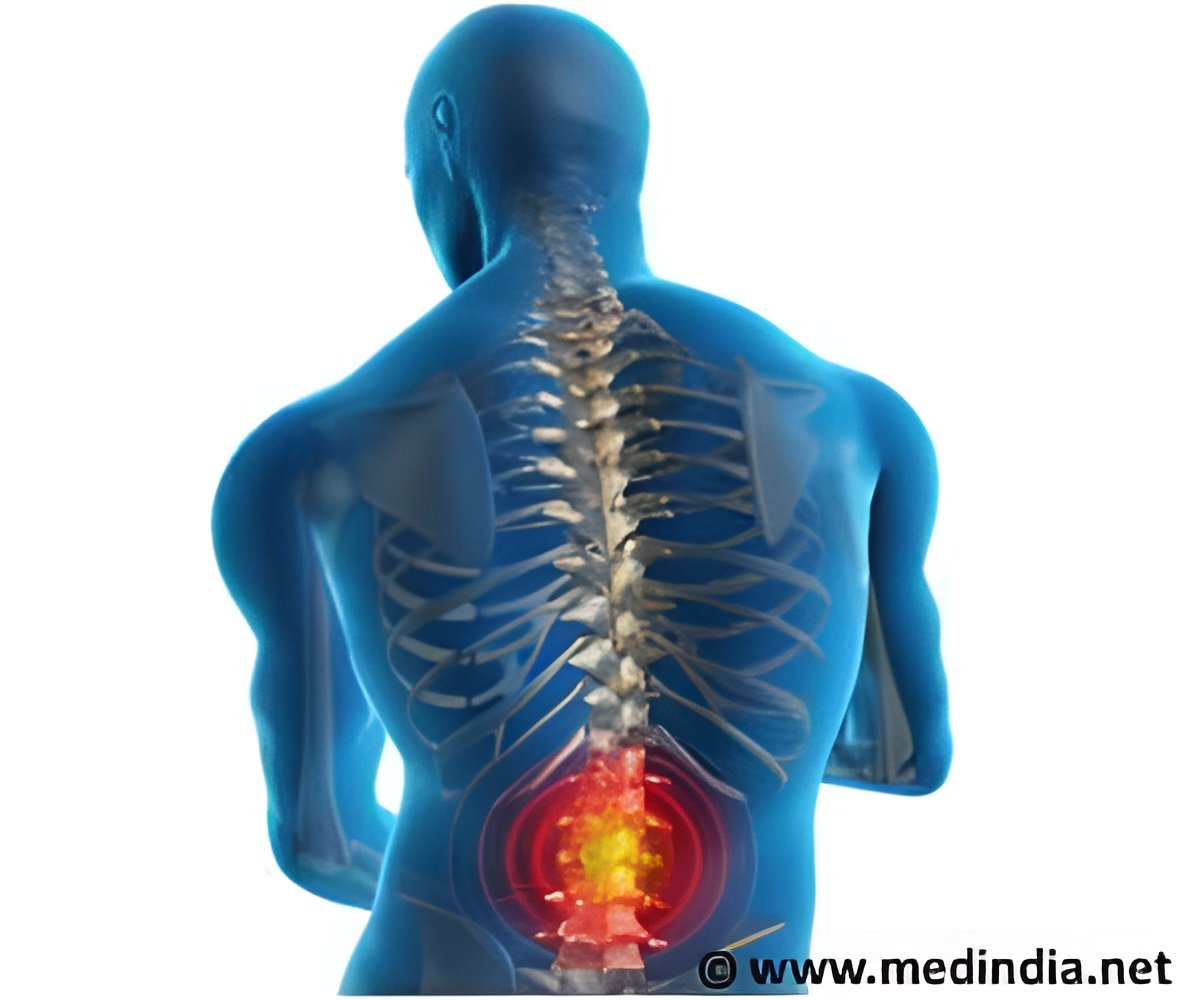
Patterns of spinal curvature in younger children that may be likely to develop into scoliosis by adolescence can now be identified.
TOP INSIGHT

The current treatment for patients with severe scoliosis is to custom design a rigid spinal brace, with surgery as another option at a young age.
Read More..
In the current study, Pasha used computer simulations to investigate how elastic rods, modeling children's spines, change shape in response to mechanical loading. She borrowed the concept from other researchers who simulate how DNA molecules and proteins change their structure in response to a variety of factors.
In the current study, Pasha drew on spinal X-rays of 129 adolescents with or without scoliosis. Computer analysis transformed those images into 2-dimensional (2-D) patterns, designated sagittal spinal profiles. She used those patterns to create S-shaped elastic rods in the computer simulation and applied simulated mechanical forces to observe how those rods deformed in 3-dimensional (3-D) shapes. The results were intriguing.
Scoliosis - Facts, Causes, Types, Symptoms & Treatment
Scoliosis is a condition characterized by an abnormal curvature of the spine or backbone to the left or right side.
Scoliosis is a condition characterized by an abnormal curvature of the spine or backbone to the left or right side.
Much research remains to be done, said Pasha, to determine whether the spinal shapes seen in images from younger patients can be developed into a risk-assessment tool to predict whether a 10-year-old is likely to develop scoliosis during their teenage years.
Source-Eurekalert
 Email
Email