MEDINDIA
 English
 हिन्दी
 Español
 français
 中文
中文
Scientists are getting closer to developing a vaccine against kala azar (black fever) - a fatal parasitic infection transmitted by sandflies.


Leishmaniasis (Kala-Azar) – Symptoms, Signs, Diagnosis, Treatment & Prevention
Leishmaniasis (Kala-azar) refers to the spectrum of infectious disease produced by species of the Leishmania parasite. The parasites spread by the bite of infected sand flies.
Leishmaniasis (Kala-azar) refers to the spectrum of infectious disease produced by species of the Leishmania parasite. The parasites spread by the bite of infected sand flies.
Leishmaniasis affects 12 million people and there are an estimated 1.5 million new cases annually, mainly in India, Bangladesh, Nepal, Sudan, South Sudan, Ethiopia and Brazil, the journal Nature Genetics reports.
Jenefer Blackwell, professor and head of genetics at the Telethon Institute for Child Health Research, University of Western Australia co-authored the study which has uncovered a single major genetic risk factor for visceral leishmaniasis.

Successful Results Against Human Leishmaniasis With a More Efficient and Economic Vaccine: Research
A research has succeeded in testing a vaccine against leishmaniasis. It was coordinated by the UAB.
A research has succeeded in testing a vaccine against leishmaniasis. It was coordinated by the UAB.
The researchers compared genomes of 1,346 people suffering from disease in India and Brazil against those of 2702 healthy controls.
New Treatment Clues for Leishmaniasis from Sandfly Saliva
A new discovery by Brazilian scientists may lead to new breakthroughs, offering hope for millions of people who live under the constant threat of Leishmania infection.
A new discovery by Brazilian scientists may lead to new breakthroughs, offering hope for millions of people who live under the constant threat of Leishmania infection.
Teams in Australia, Britain and the US are using the results to study the way the immune system interacts with the disease in mice.

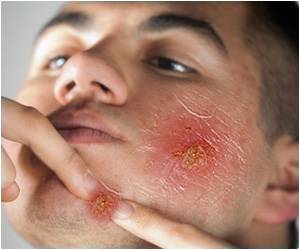
North Texas Leishmaniasis Outbreak Identified by Dermatologists
Nine North Texas cases of an infectious skin disease common in South America, Mexico and in the Middle East, where it is sometimes referred to as a “Baghdad boil” has been identified
Nine North Texas cases of an infectious skin disease common in South America, Mexico and in the Middle East, where it is sometimes referred to as a “Baghdad boil” has been identified
Source-IANS
 Email
Email