MEDINDIA
 English
 हिन्दी
 Español
 français
 中文
中文
Transoral robotic surgery, a minimally invasive procedure, can improve health outcomes for early-stage oropharyngeal cancer patients, according to a new study.

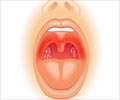
Oral Cancer | Mouth Cancer - Types, Causes, Symptoms, Diagnosis, Treatment & Prevention
Oral cancer is a cancer that develops in any part of the mouth. It is more common in men over 40.
Oral cancer is a cancer that develops in any part of the mouth. It is more common in men over 40.
TOP INSIGHT

Oropharyngeal cancer occurs in the back of the throat and includes the base of the tongue, tonsils.
"At a minimum, robotic surgery for oropharyngeal cancer patients seems safe and effective compared to what's been the standard of care for many years," said Zachary S. Zumsteg, MD, assistant professor of Radiation Oncology at Cedars-Sinai, referring to standard surgery, radiation therapy, and chemotherapy. He is the study's senior and corresponding author. Anthony T. Nguyen, MD, Ph.D., a resident in the Department of Radiation Oncology at Cedars-Sinai, is the study's lead author.
Oropharyngeal cancer often is associated with human papillomavirus, which is believed to cause 70% of oropharyngeal cancers in the United States, according to the Centers for Disease Control and Prevention. About 3,500 new cases of HPV-associated oropharyngeal cancers are diagnosed in women and about 15,500 in men each year in the U.S.
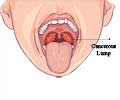
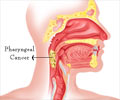
Oropharyngeal Cancer - Causes, Symptoms, Diagnosis, Treatment, Complications and Prevention
Oropharyngeal cancer affects the central region of the pharynx, the middle part of the throat. Human papillomavirus and smoking are major risk factors. Main symptoms are lump in the neck and persistent sore throat.
Oropharyngeal cancer affects the central region of the pharynx, the middle part of the throat. Human papillomavirus and smoking are major risk factors. Main symptoms are lump in the neck and persistent sore throat.
The nationwide increase in transoral robotic surgery for oropharyngeal cancer prompted the investigators to assess whether the theoretical benefits of robotic surgery for oropharyngeal cancer patients actually provide outcomes that are superior or equivalent to the standard treatments for that cancer type and others.
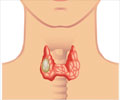
Papillary Thyroid Cancer - Types, Risk Factors, Diagnosis, Treatment
Papillary thyroid cancer accounts for almost 80 % of all thyroid cancer cases. Surgery and radioiodine therapy are the mostly used treatment options.
Papillary thyroid cancer accounts for almost 80 % of all thyroid cancer cases. Surgery and radioiodine therapy are the mostly used treatment options.
"Our purpose in doing this study was to see how this new technology, which has never been tested in a randomized, controlled trial, has influenced patterns of treatment and outcomes since its FDA approval," Zumsteg said. "There is a learning curve with any new surgical technique, and new ones don't always translate into equal or improved outcomes."
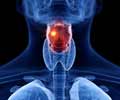
Cancer of Larynx (Throat Cancer)-Risk Factors-Symptoms-Diagnosis-Treatment
Laryngeal cancer is also called cancer of the larynx or throat cancer or laryngeal carcinoma. It usually affects men over the age of 55 years.
Laryngeal cancer is also called cancer of the larynx or throat cancer or laryngeal carcinoma. It usually affects men over the age of 55 years.
"Meanwhile, it's reassuring to our patients that their survival rate is the same if not better with robotic surgery and they have the potential for a better quality of life," Nguyen said.
Source-Eurekalert
 Email
Email