MEDINDIA
 English
 हिन्दी
 Español
 français
 中文
中文
A magnetic stimulator was placed over their sacral vertebrae in the lower back and 15 Hz pulses were applied for 10 seconds on and 30 seconds off.
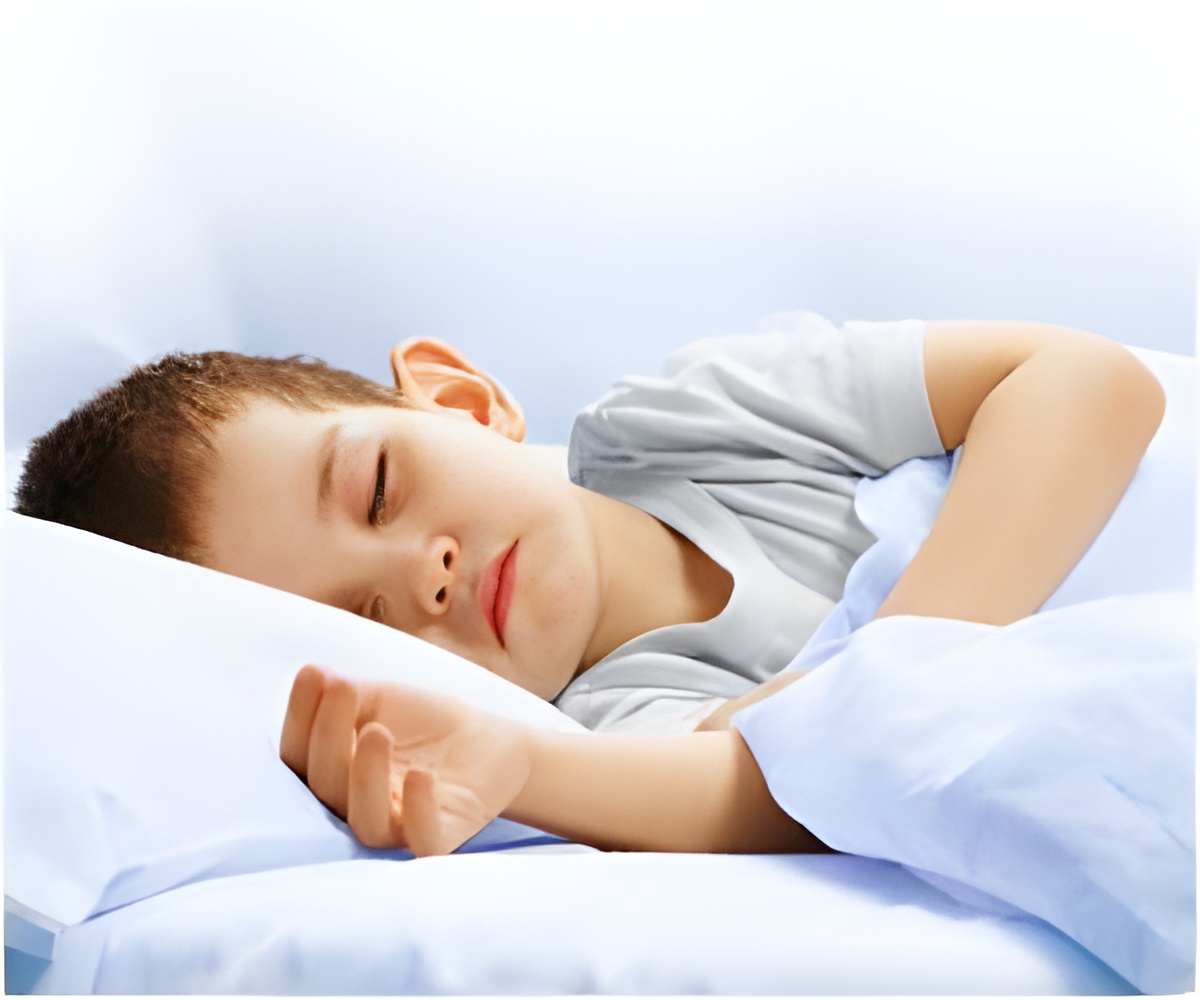

Bedwetting in Older Children: Analysis and Treatment
Older children bedwetting is usual but distressing. An article in CMAJ (Canadian Medical Association Journal) outlines possible causes and proof for existing treatments.
Older children bedwetting is usual but distressing. An article in CMAJ (Canadian Medical Association Journal) outlines possible causes and proof for existing treatments.
After the end of the treatment sessions, the average number of weekly nocturnal bed-wetting episodes fell from 5.7 to 0.3 per week for the real group compared to 6.5 to 1.8 per week after sham stimulation. Although the procedure resulted in improvement (placebo effect), the improvement in the real group continued one month later (one per week) whereas the sham group returned to baseline behavior (5.2 per week).
The findings were published in Restorative Neurology and Neuroscience.

Hope For Bedwetting Children
Danish medical doctors have come up with a finding that nighttime urine of children who do not respond to desmopressin, a common medication, show more sodium and urea
Danish medical doctors have come up with a finding that nighttime urine of children who do not respond to desmopressin, a common medication, show more sodium and urea

Enuresis | Bedwetting - Causes, Treatment
Bedwetting (nocturnal enuresis) is involuntary voiding of urine during sleep at least three times a week in a child aged 5 years or older.
Bedwetting (nocturnal enuresis) is involuntary voiding of urine during sleep at least three times a week in a child aged 5 years or older.
Medication Can Successfully Treat Bedwetting: Study
Bedwetting is a genetic and can be successfully treated with medicines, according to Indian researchers.
Bedwetting is a genetic and can be successfully treated with medicines, according to Indian researchers.
 Email
Email