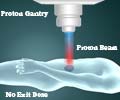
Cancer patients who receive high-tech proton therapy experience similar cure rates and less serious side effects than those who undergo traditional X-ray radiation therapy.
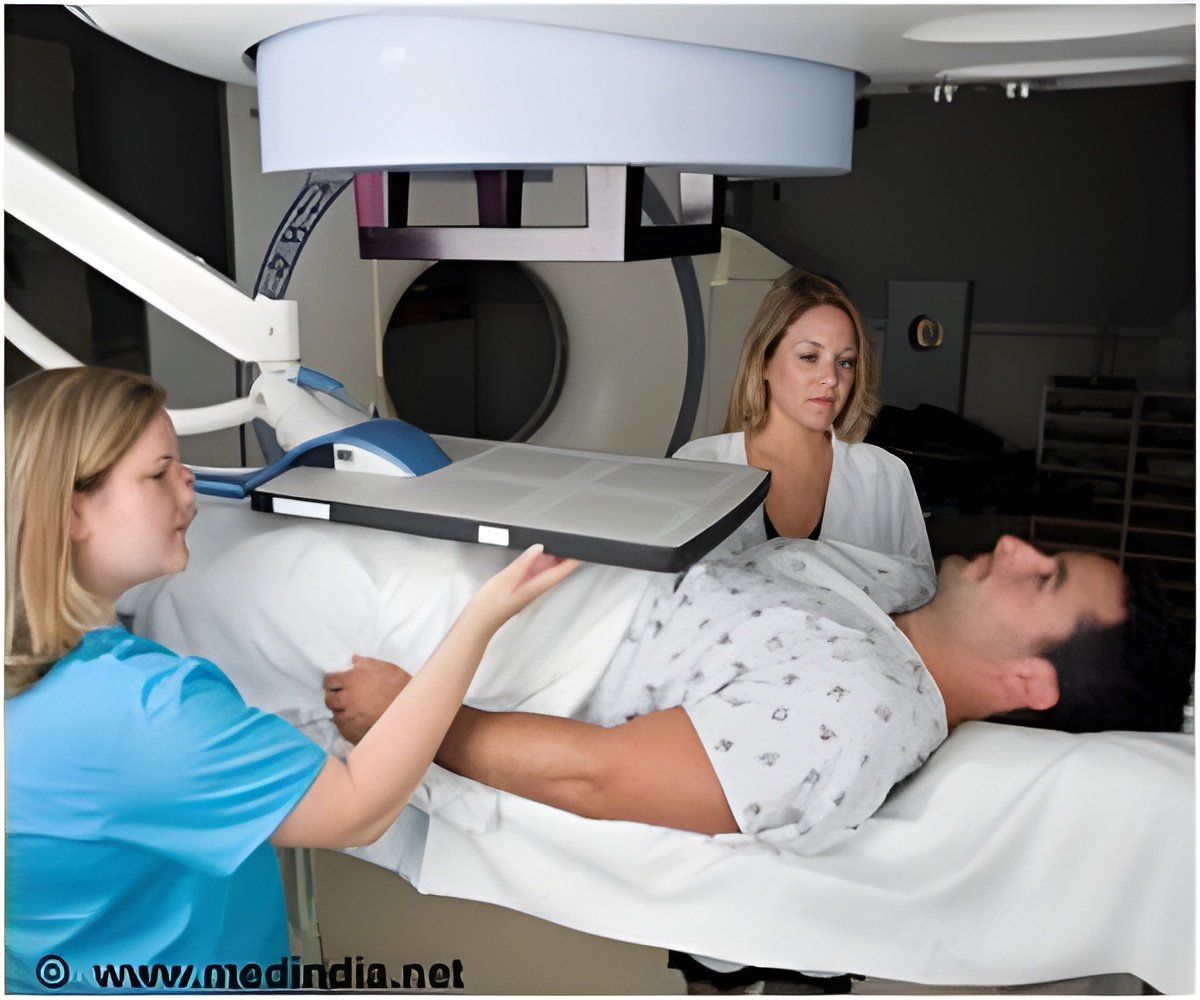
External Beam Radiation Therapy for Prostate Cancer
In depth information about various types of external beam radiotherapy for treatment of prostate cancer. Radiotherapy is an alternative to surgical treatment such as radical prostatectomy.
In depth information about various types of external beam radiotherapy for treatment of prostate cancer. Radiotherapy is an alternative to surgical treatment such as radical prostatectomy.
‘Lower hospitalization rates following proton therapy could offset its higher upfront cost compared with standard radiation therapy.
’





"We observed significantly fewer unplanned hospitalizations in the proton therapy group, which suggests the treatment may be better for patients and, perhaps, less taxing on the health-care system," said first author Brian C. Baumann, MD, an assistant professor of radiation oncology at Washington University and an adjunct assistant professor of radiation oncology at Penn. "If proton therapy can reduce hospitalizations, that has a real impact on improving the quality of life for both our patients and their caregivers." While radiation therapy can be curative for certain cancers, it also causes severe side effects -- such as difficulty swallowing, nausea and diarrhea -- that reduce quality of life and can, in some cases, require hospitalization, said Baumann, who treats patients at Siteman Cancer Center at Barnes-Jewish Hospital and Washington University School of Medicine.
The study, which included almost 1,500 patients from Penn Medicine, is the first large review of data across several cancer types -- including lung, brain, head and neck, gastrointestinal and gynecologic cancers -- to show a reduced side-effect profile for proton therapy compared with X-ray radiation therapy for patients receiving combined chemotherapy and radiation. None of the patients had metastatic cancer, in which a tumor has spread to other parts of the body.
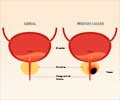
Prostate Cancer: Treatment Options - Surgery, Radiation Therapy, Hormone Therapy
Treatment options of prostate cancer includes waiting, surgery, radiation, hormone therapy, chemotherapy, cryosurgery or biologic therapy.
Treatment options of prostate cancer includes waiting, surgery, radiation, hormone therapy, chemotherapy, cryosurgery or biologic therapy.
The difference in side effects was more pronounced. Forty-five of 391 patients receiving proton therapy experienced a severe side effect in the 90-day time frame (11.5 percent). In the X-ray radiation therapy group, 301 of 1,092 patients experienced a severe side effect in the same period (27.6 percent). The patients receiving proton therapy experienced fewer side effects despite the fact that they were, on average, older, and had more medical problems than those receiving standard X-ray radiation therapy. After taking steps to control for these differences, the researchers found that patients receiving proton therapy experienced a two-thirds reduction in the relative risk of severe side effects within the first 90 days of treatment, compared with patients receiving X-ray radiation therapy.
Advertisement

Targeted Radiation Therapy-Viable Option For Elderly With Lung Cancer
Stereotactic body radiation therapy is a viable option for elderly patients who may otherwise be offered no curative treatment.
Stereotactic body radiation therapy is a viable option for elderly patients who may otherwise be offered no curative treatment.
Since the study found proton therapy to have fewer adverse events, Baumann said it could prompt radiation oncologists to design clinical trials to investigate whether increasing the dose of proton radiation would help patients do better, while still maintaining acceptable levels of side effects.
Advertisement

Death Rates in Head and Neck Cancer Reduced by Twice-Daily Radiation Therapy
Twice-daily radiation therapy combined with chemotherapy to treat head and neck cancer, could save more lives.
Twice-daily radiation therapy combined with chemotherapy to treat head and neck cancer, could save more lives.
"Clinical trials often are limited to patients who have serious cancers but are otherwise quite healthy, and that's not the real-world cancer population," said Baumann. "Doctors, rightly, are concerned about toxicity. But with the reduced toxicity that we found with proton therapy, this might open the doors to the possibility of older patients with multiple medical problems getting cancer therapy they can tolerate that is more likely to be curative.
"With our aging population, this could have a big impact on a lot of patients," he added. "To me, that's an exciting implication of this research."
Source-Eurekalert