MEDINDIA
 English
 हिन्दी
 Español
 français
 中文
中文
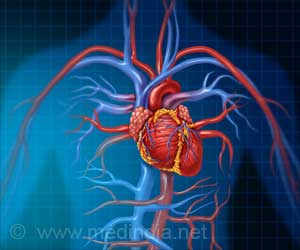
Laser device placed on the heart identifies insufficient oxygenation better than other measures, thereby can predict cardiac arrest.


Cardiac Arrest - Causes, Symptoms, Risk factors, Complications, Diagnosis, Treatment, Prevention
Cardiac arrest occurs when the heart stops beating abruptly due to an electrical malfunction. Blood flow to vital organs is cut off causing unconsciousness.
Cardiac arrest occurs when the heart stops beating abruptly due to an electrical malfunction. Blood flow to vital organs is cut off causing unconsciousness.
TOP INSIGHT

Laser technology could be used to monitor tissue viability in other operations in which tissues and organs are exposed.
The device uses a technology called resonance Raman spectroscopy to measure whether enough oxygen is reaching the mitochondria, the organelles that provide cells with energy. In critically ill patients with compromised circulation or breathing, oxygen delivery is often impaired, making it hard for mitochondria to do their job. This is especially a problem for the heart, which has constant high energy needs.
The current standard for measuring tissue oxygenation, known as mixed venous saturation (SvO2), requires repeated blood draws, adding extra risk in critically ill patients. More importantly, SvO2 cannot tell whether oxygen supply is sufficient to meet the dynamic demands of heart muscle.
Brugada Syndrome - Causes, Symptoms, Diagnosis & Treatment
Brugada syndrome is a rare genetic heart condition that affects the way electrical signals pass through the heart causing the heart to beat dangerously fast.
Brugada syndrome is a rare genetic heart condition that affects the way electrical signals pass through the heart causing the heart to beat dangerously fast.
Using light to monitor mitochondria
The team created a metric they call 3RMR that uses light readings generated by resonance Raman spectroscopy to quantify oxygenation and mitochondrial function in real time.
Implantable Cardioverter Defibrillator - Indications, Advantages and Risks
An Implantable Cardioverter Defibrillator is an implantable cardiac device which defibrillates the heart in case of life-threatening arrhythmias.
An Implantable Cardioverter Defibrillator is an implantable cardiac device which defibrillates the heart in case of life-threatening arrhythmias.
Resonance Raman spectroscopy quantifies the fraction of mitochondrial proteins with electrons on them based on how light is scattered when a laser is shined on them. Under low-oxygen conditions, the gain in electrons causes these molecules to distort and, as a result, their spectrum changes.
"This system tells us how satisfied the mitochondria are with their oxygen supply," Kheir explains. The team used a precise laser and a complex algorithm to distill the information in real time.
"Distinguishing mitochondrial signals from other biological signals with accuracy and speed was the most significant scientific advance here," says Pendar CEO Daryoosh Vakhshoori, PhD, who oversaw the engineering aspect of the project.
Predicting cardiac arrest
Joshua Salvin, MD, MPH and Dorothy Perry, MBChB of the Heart Center, the study's co-first authors, tested the device in rat models. They found that reduced oxygenation of the heart corresponded with elevations in 3RMR, regardless of the cause of reduced oxygen delivery.
Elevations of more than 40 percent, measured after 10 minutes of low-oxygen conditions, predicted reduced heart contractility and subsequent cardiac arrest with 97 percent specificity and 100 percent sensitivity, outperforming all other measurement techniques.
The team further tested the device during simulated congenital heart surgery in a pig model. They were able to measure how satisfied the heart muscle was with its oxygen supply, something that cannot currently be done.
"Our likely first application of this device will be to monitor oxygen delivery during and after heart surgery," says Kheir. The current probe is the size of a pen, but eventually, the team would like to develop a smaller probe that could be left inside the chest, so patients could be monitored in the ICU during highest-risk times.
Future applications
Kheir and colleagues also believe the technology could be used to monitor tissue viability in other operations in which tissues and organs are exposed. Potential applications might include monitoring organs intended for transplantation and detection of dangerously reduced blood flow in limbs.
"I think there would be many surgical uses," says Vakhshoori, co-corresponding author on the study. "There really is no technology currently that can assess, in real time, whether oxygen delivery to a tissue is adequate at the level of the mitochondrion."
Kheir also thinks the tool could be helpful in cancer research, since mitochondrial function is central to cancer biology.
The team's goal is to seek FDA approval and commercialize a bedside monitor of mitochondrial oxygenation. In the meantime, Kheir and colleagues plan to seek approval to test the device to monitor heart patients.
Source-Eurekalert
 Email
Email