MEDINDIA
 English
 हिन्दी
 Español
 français
 中文
中文
Blocking nerve growth factor keeps pancreatic cancer cells from invading surrounding nerves, revealed a new study.
Pancreatic Cancer - All About the Disease, its Diagnosis and Management
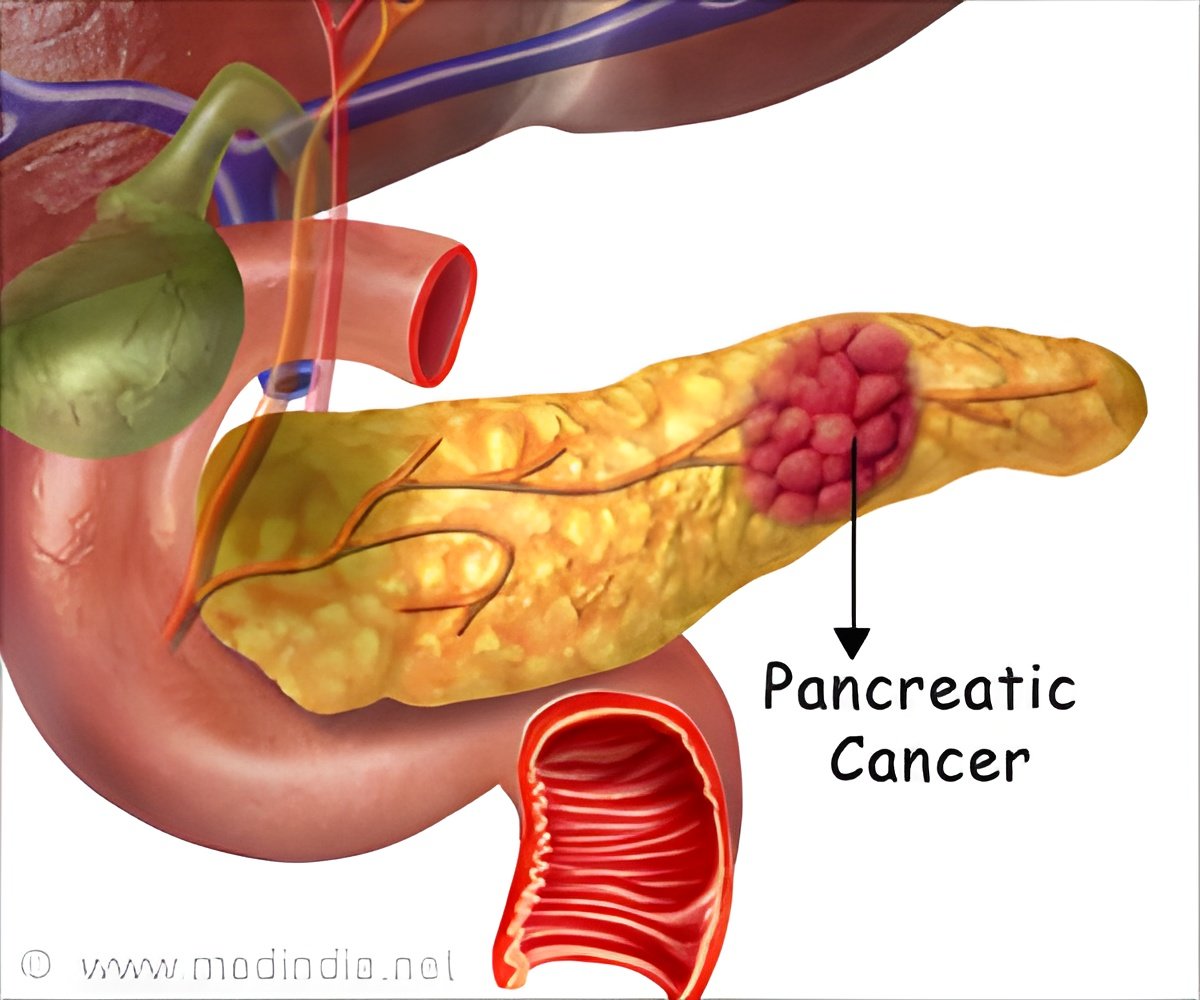
Pancreatic cancer often involves its exocrine part. It grows aggressively, and often detected late. Treatment options include surgery, radiation and chemotherapy.
Pancreatic cancer often involves its exocrine part. It grows aggressively, and often detected late. Treatment options include surgery, radiation and chemotherapy.
TOP INSIGHT

Blocking nerve growth factor (NGF) signaling through inhibitors of NGF and its TRKA receptor reduces the potential of pancreatic cancer cells to migrate towards the surrounding nerves.
Blocking the NGF signaling through inhibitors of NGF and TRKA reduces the potential of pancreatic cancer cells to migrate towards the surrounding nerves, according to a TGen study published in the scientific journal PLOS ONE.
"We have demonstrated that NGF signaling via the protein TRKA, between pancreatic cancer cells and surrounding nerves, is one of the molecular mechanisms involved in PNI," said Dr. Haiyong Han, Associate Professor of TGen's Clinical Translational Research Division and the senior author of the study.

Microfluidic Device Captures Potential Biomarker for Early Pancreatic Cancer
Cancer cells are on the move in the bloodstream in the very early stage of pancreatic cancer. And it can be detected before cancer is diagnosed, claims research by the University of Michigan Health System.
Cancer cells are on the move in the bloodstream in the very early stage of pancreatic cancer. And it can be detected before cancer is diagnosed, claims research by the University of Michigan Health System.
This invasion is a highly coordinated process, involving signaling molecules secreted by both the nerves and the pancreatic cancer cells. The nerve ends are damaged and exposed by the pancreatic cancer cell invasion, resulting in pain.
New Device may Help in Early Diagnosis of Pancreatic Cancer
Early diagnosis of pancreatic cancer could be cheaper and faster thanks to a new device being developed by researchers.
Early diagnosis of pancreatic cancer could be cheaper and faster thanks to a new device being developed by researchers.
The study concludes that additional research is needed, and that a clinical trial should be designed, using TRKA antagonists, to decrease the onset or worsening of pain for patients with advanced pancreatic cancer.
Enzyme Linked to Aggressive Pancreatic Cancer Offers Potential Clinical Advances
An enzyme is being discovered by Mayo Clinic researchers which they say is tightly linked to how aggressive pancreatic cancer will be in a patient.
An enzyme is being discovered by Mayo Clinic researchers which they say is tightly linked to how aggressive pancreatic cancer will be in a patient.
The study - Blocking Nerve Growth Factor Signaling Reduces the Neural Invasion Potential of Pancreatic Cancer Cells - was published by PLOS ONE.
Source-Eurekalert
 Email
Email