MEDINDIA
 English
 हिन्दी
 Español
 français
 中文
中文
Drug candidates that can boost a cell's ability to catch the typos in protein production that can cause a deadly disease called amyloidosis have been identified.


Newly Developed Sensitive Method for Early Detection of Amyloidosis in Humans
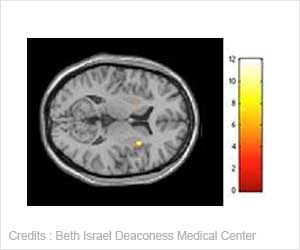
A molecular probe that can detect an array of different amyloid deposits in several human tissues has been developed by a team of scientists.
A molecular probe that can detect an array of different amyloid deposits in several human tissues has been developed by a team of scientists.
TOP INSIGHT

Drug candidates that can boost a cell's ability to catch the "typos" in protein production that can cause a deadly disease called amyloidosis have been identified.
Drug candidates that can boost a cell's ability to catch the "typos" in protein production that can cause a deadly disease called amyloidosis have been identified by scientists at The Scripps Research Institute (TSRI)
"This study reveals a new approach to intervene in human disease," said Luke Wiseman, assistant professor at TSRI and co-senior author of the new research with Jeffery Kelly, Lita Annenberg Hazen Professor of Chemistry at TSRI.

BUSM Researchers Part of Multi-center Study on Cardiac Amyloidosis
A multicenter observational study called TRACS (Transthyretin Amyloidosis Cardiac Study) has been conducted in collaboration with researchers at BUSM
A multicenter observational study called TRACS (Transthyretin Amyloidosis Cardiac Study) has been conducted in collaboration with researchers at BUSM
"We're trying to make these helpers more efficient," said Kelly, who also serves as chairman of the Department of Molecular and Experimental Medicine and is a member of the Skaggs Institute for Chemical Biology at TSRI.

Anti-inflammatory Drug Shows Success in Treatment of Amyloidosis
Diflunisal an anti-inflammatory drug reduces neurological decline and preserves the quality of life in patients with familial transthyretin amyloidosis (ATTR), says study.
Diflunisal an anti-inflammatory drug reduces neurological decline and preserves the quality of life in patients with familial transthyretin amyloidosis (ATTR), says study.
However, an intriguing 2014 study from the Wiseman and Kelly labs indicated there may be a way to activate just one "arm" of the UPR, the ATF6 pathway, to catch misfolded proteins without triggering cell death. For the new study, the researchers teamed up with TSRI's Molecular Screening Center, on the institute's Florida campus, to pursue this potential approach to developing new therapies.

A Powerful Drug in the Fight Against Familial Transthyretin Amyloidosis
Tolcapone has proved to be up to four times more effective than the only pharmacological treatment currently available for familial transthyretin amyloidosis.
Tolcapone has proved to be up to four times more effective than the only pharmacological treatment currently available for familial transthyretin amyloidosis.
Next, the researchers asked the key question: "Which molecules would preferentially activate ATF6 without launching the entire UPR network?"
To figure this out, the researchers used an approach called transcriptional profiling, which allowed the scientists to see if the molecules were really targeting just the ATF6 arm of the UPR.
The researchers then prioritized eight promising "structural families"-templates for compounds that appeared effective. TSRI Graduate Student Ryan J. Paxman led the effort to synthesize compounds from these families for confirmation and to understand how they activate ATF6.
In experiments with human liver and plasma cells, the researchers found that several of the compounds could "phenocopy", or mimic, a cell's normal activation of AFT6-leading to the generation of chaperone proteins that could help prevent misfolding events associated with disease.
Interestingly, these compounds activated ATF6 to different extents-even causing slight activation of the other UPR arms in some cases. The researchers compared these compounds to rheostat knobs, carefully tuning certain cellular pathways up and down.
For example, one compound activated ATF6 at about 40%, yet that was enough to produce a beneficial response from the ER in two models of human amyloid disease.
"Now we can fine-tune the ER quality-control process," said TSRI Research Associate Lars Plate, who was co-first author of the study with Christina B. Cooley, a TSRI research associate at the time of the study, now an assistant professor at Trinity University.
The next steps will be to test several other small molecules as potential drug candidates and develop models to study these compounds in different diseases where protein secretion plays a role.
"This is a class of drugs that could also work for diabetes and additional neurodegenerative diseases linked to protein misfolding, like Alzheimer's disease," said Kelly.
Source-Newswise
 Email
Email