MEDINDIA
 English
 हिन्दी
 Español
 français
 中文
中文
Therapist-guided techniques hold promise for music treatment, indicating that slow music for delirium is not a futile concept.

Slow-Tempo Music and Delirium/Coma-Free Days Among Older Adults Undergoing Mechanical Ventilation
Go to source). The data were generated by the Decreasing Delirium through Music (DDM) clinical trial, conducted at Indiana University School of Medicine, and published in the Journal of the American Medical Association’s JAMA Internal Medicine.
The team included researchers from IU School of Medicine, Mayo Clinic, Regenstrief Institute, Anglia Ruskin University and Area 10 Labs.

Music Holds Promise in Decreasing Delirium in Critically Ill Patients
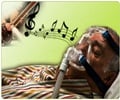
Music appears to reduce delirium in patients on mechanical ventilators in the intensive care unit (ICU), reports a new study.
Music appears to reduce delirium in patients on mechanical ventilators in the intensive care unit (ICU), reports a new study.
TOP INSIGHT

Did You Know?
The #slow_music was ineffective in reducing #delirium, pain, or anxiety in #ICU patients, underscoring the need for more therapist-active approaches. #musictherapy #delirium #icu #criticalcare #nonpharmacological #medindia
Consequences and Prevalence of Delirium in Older Adults (50+)
The trial used generic music of 60 to 80 beats per minute in the twice a day session. Even though researchers observed a positive shift in patients who received more music and in patients, who were dosed with benzodiazepines (a sedative, known to increase delirium risk).Such unpredictable findings suggest that therapist-active personalized approaches may still hold promise of efficient music treatments rather than a large-scale trials.
Delirium is a state of confusion and has serious short and long-term health consequences including an increased risk of post-ICU dementia. About 75 percent of older adults develop delirium in the ICU.

Quiz on Antidepressants
The use of antidepressants is quite common with an increase in stress-related depression of the modern world. The tricyclic antidepressants like amitriptyline and imipramine are among the older drugs for the treatment of depression. Newer drugs like ...
The use of antidepressants is quite common with an increase in stress-related depression of the modern world. The tricyclic antidepressants like amitriptyline and imipramine are among the older drugs for the treatment of depression. Newer drugs like ...
Shifting to Personalized Therapy from Generic Music Playlists
The two-arm trial featured concealed outcome assessments and compared a carefully curated selection of slow-tempo music vs. silence-track control. Listening sessions in both arms were delivered twice daily for up to seven days via computer tablets and over-the-ear active noise-cancelling headphones.The DDM Trial demonstrated the feasibility of centralized, app-based, music playlist delivery and in the busy ICU environment.
“Despite the intuitive appeal of calming music in the ICU, our rigorously conducted multi-center trial shows prescribed slow-tempo playlists did not reduce delirium, pain or anxiety, nor change length of ventilation or stay,” said Babar Khan, M.D., M.S., co-lead author.
“These data refine practice and suggest future studies focus on personalized, therapist-guided approaches and targeted populations.”

Depression Calculator
A quick, simple and anonymous self-assessment health tool to assess the level of depression using the famous Zung Self-Rating Depression Scale.
A quick, simple and anonymous self-assessment health tool to assess the level of depression using the famous Zung Self-Rating Depression Scale.
The Role of Musical Preference and Sedation Interaction in Critical Care
Linda L. Chlan, PhD, R.N., Mayo Clinic and co-lead investigator, added, “We conceptualized music as a meaningful, complex stimulus to activate the brain among ICU patients.”“It is possible that a prescribed selection of music was not meaningful to patients which highlights the importance of music preferences in designing future clinical trials.”
“In DDM, we were able to demonstrate it’s feasible to deliver and track music ‘dose’ reliably in critically ill patients using an app,” said Sikandar Khan, D.O., M.S., co-lead author, “Our post hoc analyses, while exploratory, show a trend towards greater coma-free days in patients who were in the ICU long enough to receive seven days of intervention, and those patients who had received benzodiazepines.”
“This raises new questions about the interaction between sedation and the effect of slow-tempo music.”
Reference:
- Slow-Tempo Music and Delirium/Coma-Free Days Among Older Adults Undergoing Mechanical Ventilation - (https://jamanetwork.com/journals/jamainternalmedicine/article-abstract/2840194)
Source-Eurekalert
 Email
Email