MEDINDIA
 English
 हिन्दी
 Español
 français
 中文
中文
A new study has now discovered a mechanism enabling the production of cellular diversity in the developing nervous system.

TOP INSIGHT

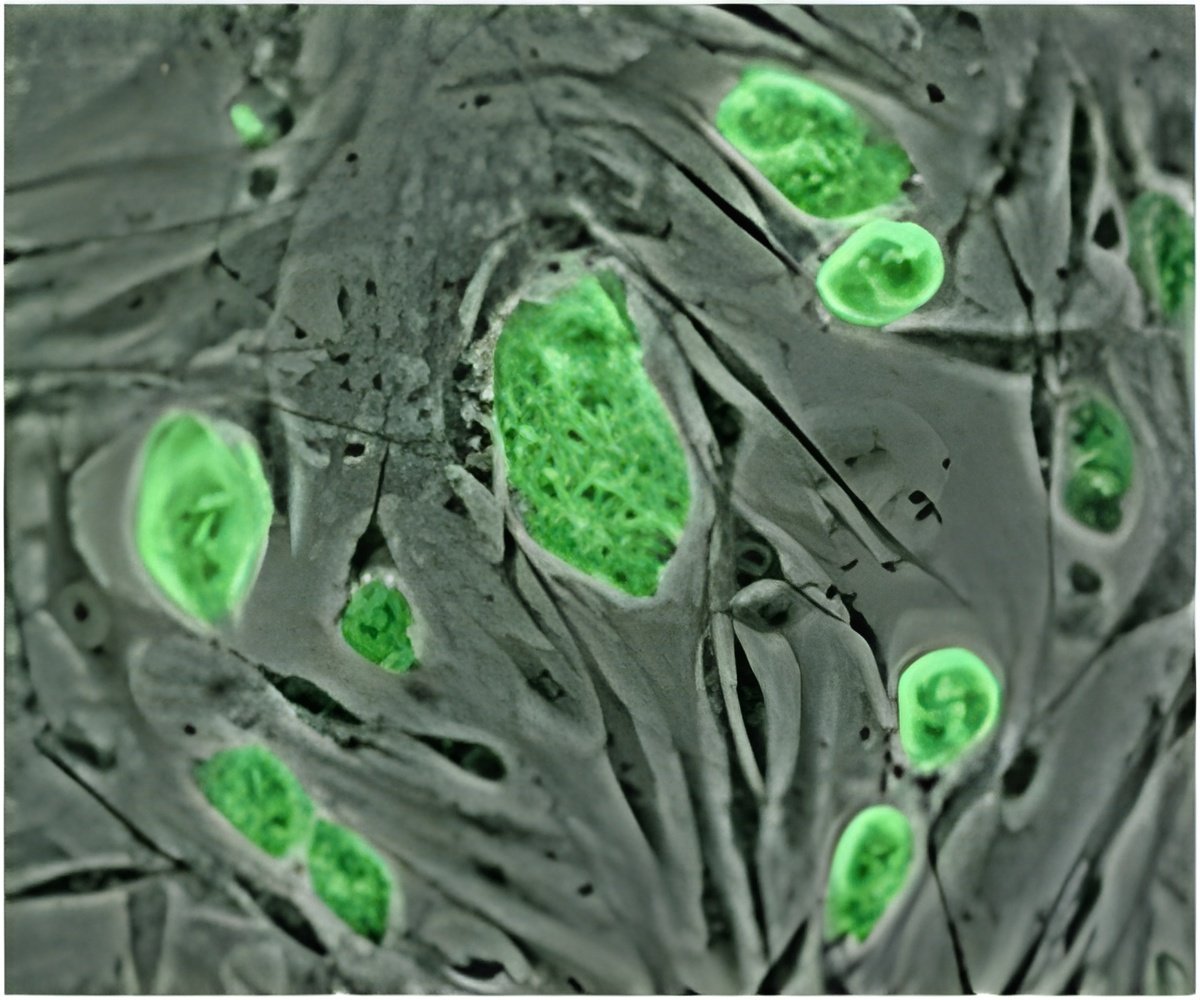
A mechanism enabling the production of cellular diversity in the developing nervous system has been discovered by ICRM researchers. This could improve the protocols to 'program' stem cells to generate a particular cell type of interest.
The researchers demonstrated that a gene named SAPCD2 influences cell division orientation. Moreover, they confirmed that the orientation of division controls daughter cell fates in vivo. To do this, they studied mouse retinal stem cells that were genetically engineered to express or not the SAPCD2 gene. Carine Monat said, "In the absence of SAPCD2, a good proportion of the divisions changed orientation and the daughter cells produced were different. However, in the presence of the gene, the daughter cells produced were identical." Therefore, the gene controls stem cell division orientation, which in turn affects cell diversification.
This discovery could improve the protocols to 'program' stem cells to generate a particular cell type of interest, like specific retinal cells that degenerate in diseases causing blindness. These would then be implanted in a patient to regenerate damaged tissues. Furthermore, this study will help design more targeted approaches to slow down tumor progression. Indeed, disruptions in cell division orientation were observed in some cancers, and the SAPCD2 gene has been previously linked to the development of tumors.

Use of Stem Cells in Personalized Medicine
Stem cell therapy, a leading topic of interest among the budding scientists. These cells play a role in the development of personalized medicines for millions of cancer and heart patients.
Stem cell therapy, a leading topic of interest among the budding scientists. These cells play a role in the development of personalized medicines for millions of cancer and heart patients.

Comparison of Outcomes of Peripheral and Bone Marrow Stem Cells Transplantation
Bone marrow transplant was first done successfully in 1968. The surgical procedure is required for treating those suffering from leukemia, aplastic anemia, Hodgkin’s disease.
Bone marrow transplant was first done successfully in 1968. The surgical procedure is required for treating those suffering from leukemia, aplastic anemia, Hodgkin’s disease.
Unrestricted Somatic Stem Cells Better Than Mesenchymal Stem Cells in Repairing Heart Attack Damage
Unrestricted somatic stem cells derived from umbilical cord blood are better in repairing heart attack damage compared to mesenchymal stem cells derived from bone marrow.
Unrestricted somatic stem cells derived from umbilical cord blood are better in repairing heart attack damage compared to mesenchymal stem cells derived from bone marrow.
 Email
Email