MEDINDIA
 English
 हिन्दी
 Español
 français
 中文
中文
People who are blind or visually impaired cannot adapt to current navigation technology from GPS to artificial intelligence. To address this technology disparity, researchers improved regular cane with navigation tip.
Night Blindness - Causes, Symptoms, Diagnosis, Treatment & Prevention
Night blindness is a common result of vitamin A deficiency, which is preventable and reversible.
Night blindness is a common result of vitamin A deficiency, which is preventable and reversible.
TOP INSIGHT

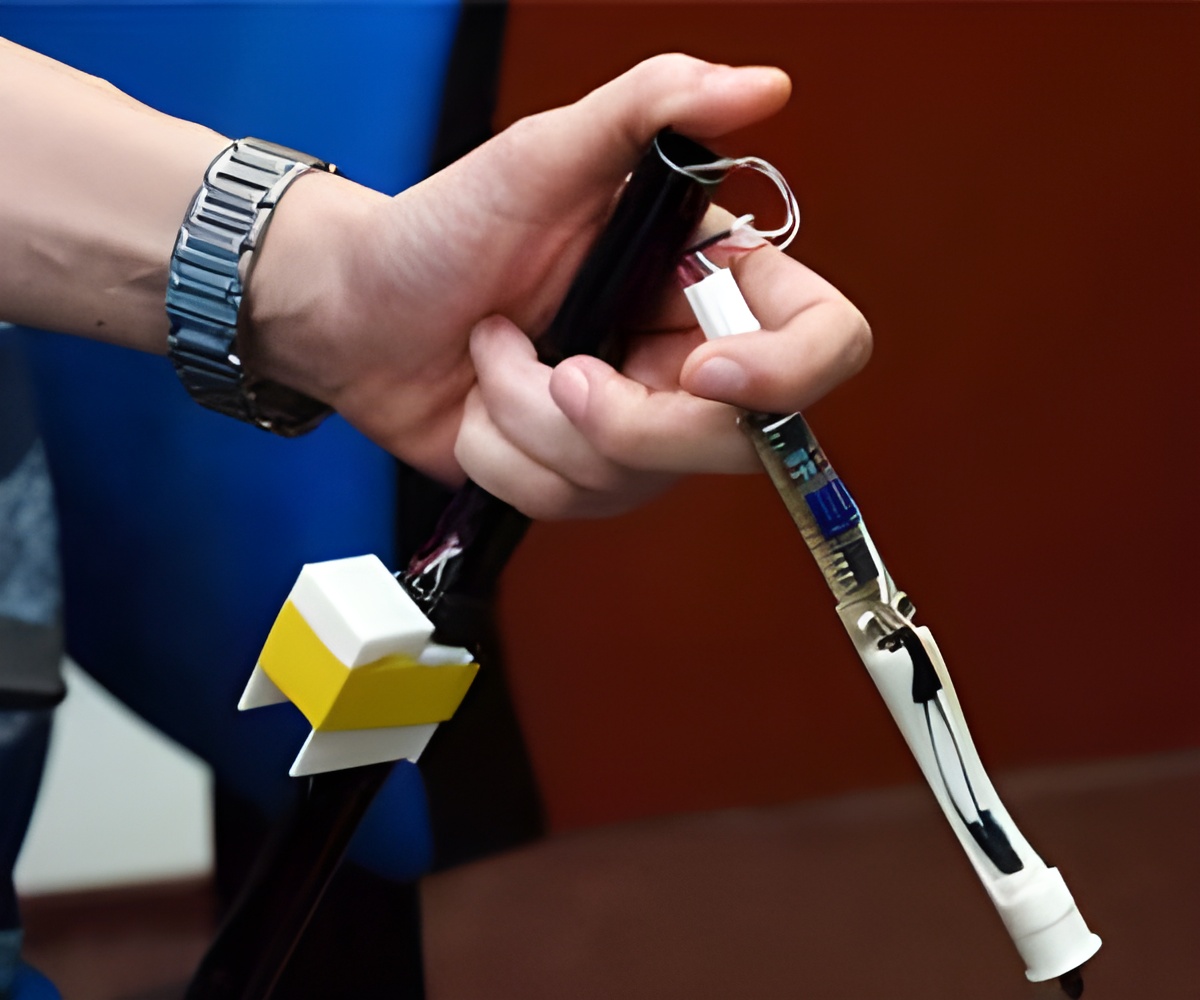
“Robotic white cane” using computer vision to aid blind and visually impaired was developed.
To compensate for this, a range of solutions has been proposed, from the installation of Bluetooth beacons to radio-frequency identification chips (RFID), and constructing a visual map ahead of time. But building such a map is very time-consuming, and placing beacons or chips in the environment is impractical for all.
To overcome these limitations, researchers developed a computer vision technique that uses an RGB-D camera, a gyroscope, and an accelerometer to measure how the RNA moves and rotates in space.

Blindness Due To Degeneration of Retinal Cells Can Be Reversed
Using gene therapy which reprograms cells in the eye to become light sensitive can help restore vision in retinitis pigmentosa.
Using gene therapy which reprograms cells in the eye to become light sensitive can help restore vision in retinitis pigmentosa.
A statistical method is then deployed to reduce error still further. An initial estimated pose is used as a ‘seed’ for the statistical generation of numerous other probable poses surrounding the estimated one. These technological improvements in conventional white canes can also stumble over the effectiveness of their human-machine interface.
Gene Therapy for Macular Degeneration
Gene therapy gives new hope for age-related blindness. Scientists were able to deliver the gene for a retinal opsin into the genome of ganglion cells using an adeno-associated viral vector. The blind ganglion cells were restored and became sensitive to light.
Gene therapy gives new hope for age-related blindness. Scientists were able to deliver the gene for a retinal opsin into the genome of ganglion cells using an adeno-associated viral vector. The blind ganglion cells were restored and became sensitive to light.
This consists of a rolling tip like the end of a ballpoint pen, an electromagnetic clutch, and a motor. By engaging the clutch, the user puts the cane in robotic mode.

Cost Effective Antioxidant - Zinc Supplement To Combat Blindness
A supplement with zinc and copper given to patients with wet age related macular degeneration slowed down disease progression and vision loss.
A supplement with zinc and copper given to patients with wet age related macular degeneration slowed down disease progression and vision loss.
Source-Medindia
 Email
Email