MEDINDIA
 English
 हिन्दी
 Español
 français
 中文
中文
Newly discovered behavior of known chemical compound might led to breast cancer drugs that keep tumors from coming back.


Recent Advances and the Present Status of Breast cancer Management
The crab that invades the breast is no more a fear factor with all the advancements that medical science and customized protocols can fight breast cancer. the recent developments in the management of breast cancer.
The crab that invades the breast is no more a fear factor with all the advancements that medical science and customized protocols can fight breast cancer. the recent developments in the management of breast cancer.
TOP INSIGHT

The anti-hormonal breast cancer drugs available drugs like tamoxifen and fulvestrant work very well, but they work in only about two-thirds of the women with ER+ breast cancers.
Prossnitz remains cautiously optimistic that the compound he and his team are now studying could help thousands of women. According to the National Cancer Institute’s Surveillance, Epidemiology and End Results program, more than 80% of women with breast cancer have estrogen receptor-positive (ER+) breast cancer.
And, some of these women initially respond but then their breast cancer comes back in a form that resists the drug.

Screening for Breast Cancer with Clinical Breast Examination
Clinical breast examination is a simple and inexpensive method of detecting breast cancer especially in women who do not have access to mammography.
Clinical breast examination is a simple and inexpensive method of detecting breast cancer especially in women who do not have access to mammography.
Prossnitz and his team discovered some years ago that another cell receptor responds to anti-hormonal drugs. They named it GPER, for G protein-coupled estrogen receptor. While the primary estrogen receptor, ER-alpha, resides primarily inside the nucleus of a cell, GPER sits within cell membranes.
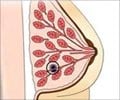
Quiz on Breast Cancer
Breast cancer is one of the leading causes of cancer deaths among women. It is often said that a woman who breast-feeds is at a lower risk of developing cancer compared to another who does not .Are these mere old wives tales or is there some truth in it? This quiz on breast cancer has all the details.
Breast cancer is one of the leading causes of cancer deaths among women. It is often said that a woman who breast-feeds is at a lower risk of developing cancer compared to another who does not .Are these mere old wives tales or is there some truth in it? This quiz on breast cancer has all the details.
“ER-alpha is the one [receptor] that plays an important role in ER+ breast cancer,” Prossnitz says.

Breast Cancer Risk Assessment Calculator
Breast Cancer Risk Assessment Calculator predicts the risk for breast cancer. Find list of breast cancer facts and more information on signs and symptoms of breast cancer and mammography.
Breast Cancer Risk Assessment Calculator predicts the risk for breast cancer. Find list of breast cancer facts and more information on signs and symptoms of breast cancer and mammography.
Prossnitz and his team discovered a compound some years ago called AB-1 that binds to ER-alpha but does not activate GPER, thereby avoiding the undesirable side effect of current anti-hormonal drugs. In their Cell Chemical Biology paper, they report their studies that describe AB-1’s unique binding and activity behavior.
As they’ve done previously, Prossnitz and his team are working to change the structure of AB-1 to control its properties more tightly, before they progress to preclinical studies. Prossnitz is familiar with the path, and again, he hopes to develop a drug that will benefit many women with breast cancer.
Source-Newswise
 Email
Email