Colorectal Cancer Screening with Double-Contrast Barium Enema
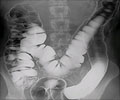
Double-contrast barium enema is a radiological technique that can be used to screen individuals for colorectal cancer and is performed when colonoscopy is not possible.
Double-contrast barium enema is a radiological technique that can be used to screen individuals for colorectal cancer and is performed when colonoscopy is not possible.
While more testing needs to be done, the findings were enough to warrant an editorial in the highly regarded Journal by Heinz-Josef Lenz, MD, associate director for clinical research at the University of Southern California's Norris Comprehensive Cancer Center. "MiR-21 may not be just another brick in the wall but rather may be the keystone leading to a molecularly justified, miRNA-based biomarker era in colorectal cancer," Dr. Lenz said in the Journal.
About Baylor Research Institute
Baylor Research Institute (baylorhealth.edu/Research) is the research component of the Baylor Health Care System (baylorhealth.com). Established in 1984, Baylor Research Institute promotes and supports research to bring innovative treatments from the laboratory workbench to the patient bedside. Baylor Research Institute focuses on basic science, clinical trials, healthcare effectiveness and quality-of-care research. Today, Baylor Research Institute is conducting more than 800 active research protocols with 250 research investigators, spanning more than 20 medical specialties, and has research and development projects in areas ranging from human immunology and orphan metabolic diseases to diabetes, cardio-vascular disease and many other unmet medical needs.

Colorectal Cancer Screening with Flexible Sigmoidoscopy
Flexible sigmoidoscopy is an endoscopic procedure used to screen individuals for colorectal cancer suspected to be in sigmoid colon.
Flexible sigmoidoscopy is an endoscopic procedure used to screen individuals for colorectal cancer suspected to be in sigmoid colon.
Source-Newswise
Colorectal Cancer - Types, Causes, Risk Factors, Symptoms, Diagnosis, Treatment, Prognosis & Prevention
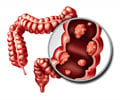
Colorectal cancer is a cancer that starts in the colon or the rectum. Colorectal cancer is the third most common cancer in men.
Colorectal cancer is a cancer that starts in the colon or the rectum. Colorectal cancer is the third most common cancer in men.