MEDINDIA
 English
 हिन्दी
 Español
 français
 中文
中文
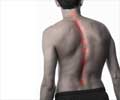
Several thousand U.S. children with severe, early-onset scoliosis undergo a yearlong process known as growing rod treatment to straighten their backbone.

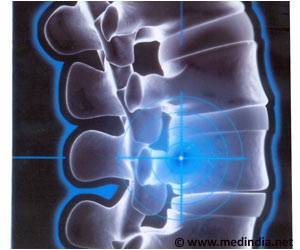
3-D Device �Scolioscan� Enables Radiation-Free Diagnosis for Scoliosis
Based on 3-dimensional ultrasound imaging of the spine relative to bone landmarks, Scolioscan can be used to determine the spine’s rotation in various planes.
Based on 3-dimensional ultrasound imaging of the spine relative to bone landmarks, Scolioscan can be used to determine the spine’s rotation in various planes.
TOP INSIGHT

Early-onset scoliosis patients currently reaching their mature height in the U.S. can likely forgo a "grueling" final procedure. The payoff is that they often don't need a big surgery at the end.
Typically, the estimated several thousand U.S. children with severe, early-onset scoliosis undergo a yearlong process known as growing rod treatment. To straighten the backbone, surgeons implant a rod in the spine and periodically replace it with longer ones as a child grows.
Once the child reaches skeletal maturity, Sponseller explains, surgeons have routinely performed a final procedure in which they insert rods and screws to maintain the spine's alignment. They also use bone from a patient's hip or a tissue bank and implant it to "fuse" and stabilize the structure. Such fusion is thought to prevent the development of subsequent deformities.
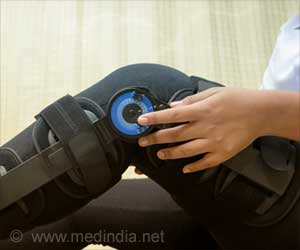
Many Kids With High-Risk Scoliosis may Benefit from Wearing Braces
Adolescents suffering from most common form of scoliosis, or curvature of the spine, can benefit from wearing a back brace.
Adolescents suffering from most common form of scoliosis, or curvature of the spine, can benefit from wearing a back brace.
To find out, Sponseller and his colleagues combed through an international database and picked out the records of 167 children who received growing rod treatments between 1995 and 2010. Some 137 of those patients underwent the final fusion, but Sponseller focused on the outcomes of the 30 who, in consultation with their doctors, opted out of that procedure. Half of those 30 patients were female; their mean age at first surgery was 7.1 years. They underwent an average of 5.4 lengthening procedures, and there was a mean of 3.7 years of follow-up after their last surgery.
Monitoring Scoliosis Patients Prevents Curve Progression
New study emphasizes the role that open doctor-patient communication plays in encouraging treatment effectiveness in the adolescent age group.
New study emphasizes the role that open doctor-patient communication plays in encouraging treatment effectiveness in the adolescent age group.
Sponseller cautions that the study was small and based on records from a variety of institutions, and that children who forgo the final fusion will require "continued observation" over the long haul. Moreover, he says, further research is needed to determine if similar results will be found for children receiving newer rod implants that can be lengthened magnetically without multiple operations.

New Implantable Device Helps Treat Scoliosis, Stimulating Muscles Near the Spinal Column
Features of the new implant include wireless charging and data transmission and the device can be customized for better individual results.
Features of the new implant include wireless charging and data transmission and the device can be customized for better individual results.
Sponseller's work is part of a larger effort at Johns Hopkins and elsewhere to challenge conventional wisdom in medicine and potentially do away with unnecessary medical procedures. The nationwide Choosing Wisely initiative, for instance, seeks to educate physicians and patients about more than 250 common tests and procedures that serve no conclusive or apparent purpose. Included in that list are stress tests for patients at low risk for heart disease and MRI or CT scans for uncomplicated headaches.
While early-onset scoliosis is too rare to qualify for the Choosing Wisely campaign, says Sponseller, his research does point to a new model of health care in which patients - and their doctors - are encouraged to question recommended treatments.
Other authors of the report include Amit Jain of the Johns Hopkins University School of Medicine, John Flynn of the Children's Hospital of Philadelphia, Suken Shah of Nemours/AIfred I. duPont Hospital for Children and the Growing Spine Study Group. This database used in this study is funded in part by the Growing Spine Foundation.
Source-Newswise
 Email
Email