MEDINDIA
 English
 हिन्दी
 Español
 français
 中文
中文
Bronchopulmonary dysplasia (BPD), a chronic lung disease which mainly occurs when the newborns require mechanical ventilation or oxygen supplementation.

Triggering Autophagy Decrease Lung Injury in Mice Exposed to High Oxygen Levels
By triggering a process called autophagy researchers were able to decrease lung injury in mice that were exposed to high concentrations of oxygen.
By triggering a process called autophagy researchers were able to decrease lung injury in mice that were exposed to high concentrations of oxygen.
TOP INSIGHT

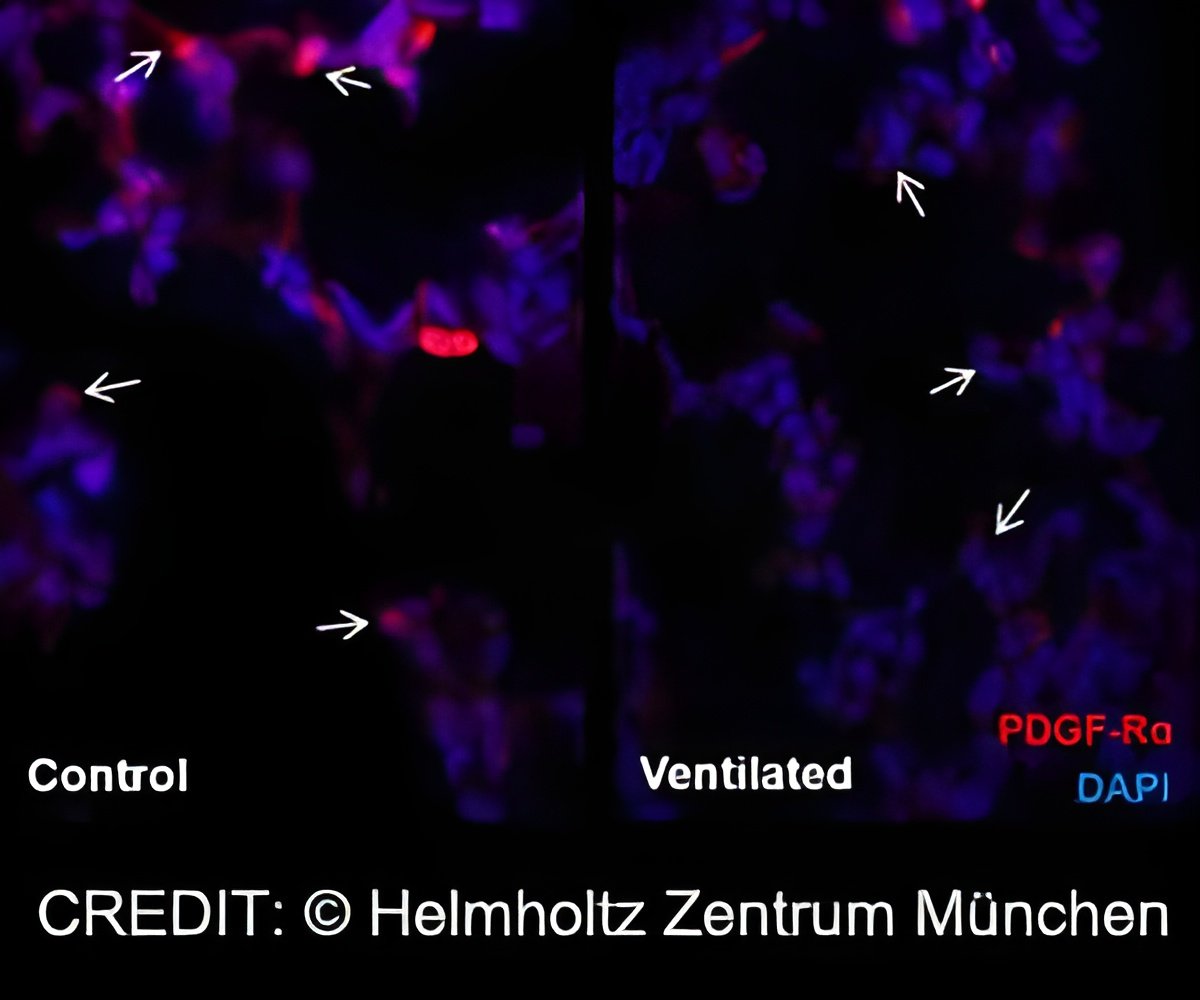
For the first time, the cells in premature baby's are linked to Bronchopulmonary dysplasia (BPD) and the decreased production of a key growth factor, namely PDGFR-α.
"To date, there has been very little understanding of what exactly causes BPD," says Dr. Prajakta Oak, scientist at the Comprehensive Pneumology Center and Institute of Lung Biology and Disease (ILBD) at the Helmholtz Zentrum München.
"Alongside damage caused by mechanical ventilation and oxygen toxicity, characteristic inflammatory processes and the functional and structural immaturity of the lungs are considered to underlie the disease," the lead author of the current study explains.
Molecular Control Switch for Preterm Lung Disorders Discovered
Yale School of Medicine researchers have identified the key molecules switch on stress pathways in preterm lung disorders.
Yale School of Medicine researchers have identified the key molecules switch on stress pathways in preterm lung disorders.
That stands to reason, as the cells in the lung tissue that produce PDGFR-α are involved in the formation of the alveoli and in the development of lung structure.
Adult Survivors of Premature Births may Develop Chronic Obstructive Pulmonary Disease
Infants with bronchopulmonary dysplasia are at a higher risk for Chronic Obstructive Pulmonary Disease, a progressive disease that causes breathing difficulty.
Infants with bronchopulmonary dysplasia are at a higher risk for Chronic Obstructive Pulmonary Disease, a progressive disease that causes breathing difficulty.
"In a model system that has only been established at a few locations worldwide, we were then able to show that lowered production of PDGFR-α combined with mechanical ventilation led to the typical symptoms of BPD," explains research team leader Dr. Anne Hilgendorff from the ILBD.
Corticosteroid Treatment Linked to Vision Problems in Very Low Birth Weight Babies
For very premature infants with birth weights of less than 500 grams, corticosteroid use was linked to increased risk for retinopathy of prematurity (ROP).
For very premature infants with birth weights of less than 500 grams, corticosteroid use was linked to increased risk for retinopathy of prematurity (ROP).
The researchers associated these findings with a lower production in VEGF-A (vascular endothelial growth factor A), an important vascular growth factor. However, the researchers succeeded in decreasing the symptoms in the experimental model of the disease by artificially increasing signal transmission via PDGFR-α.
In further experiments, the researchers also demonstrated that the TGF-ß (transforming growth factor beta) signaling molecule plays a role in the development of BPD by decreasing production of PDGFR-α. The scientists presume that the messenger substance TGF-ß is released particularly frequently due to injury to the lung caused during mechanical ventilation.
"For the first time, we show in an experimental model and in cells of premature patients that there is a link between BPD and the decreased production of a key growth factor, namely PDGFR-α," Dr. Hilgendorff says, putting the results into context. BPD may be genetically determined, but it can also be caused or worsened by effects of the inflammatory process.
"Next we would like to examine even more closely whether we can target interventions into this signaling pathway and thus open up the way for potential therapies."
Source-Eurekalert
 Email
Email