MEDINDIA
 English
 हिन्दी
 Español
 français
 中文
中文
Current cancer treatments often involve aggressive treatment with high doses chemotherapy in an attempt to wipe out as many tumor cells as possible.
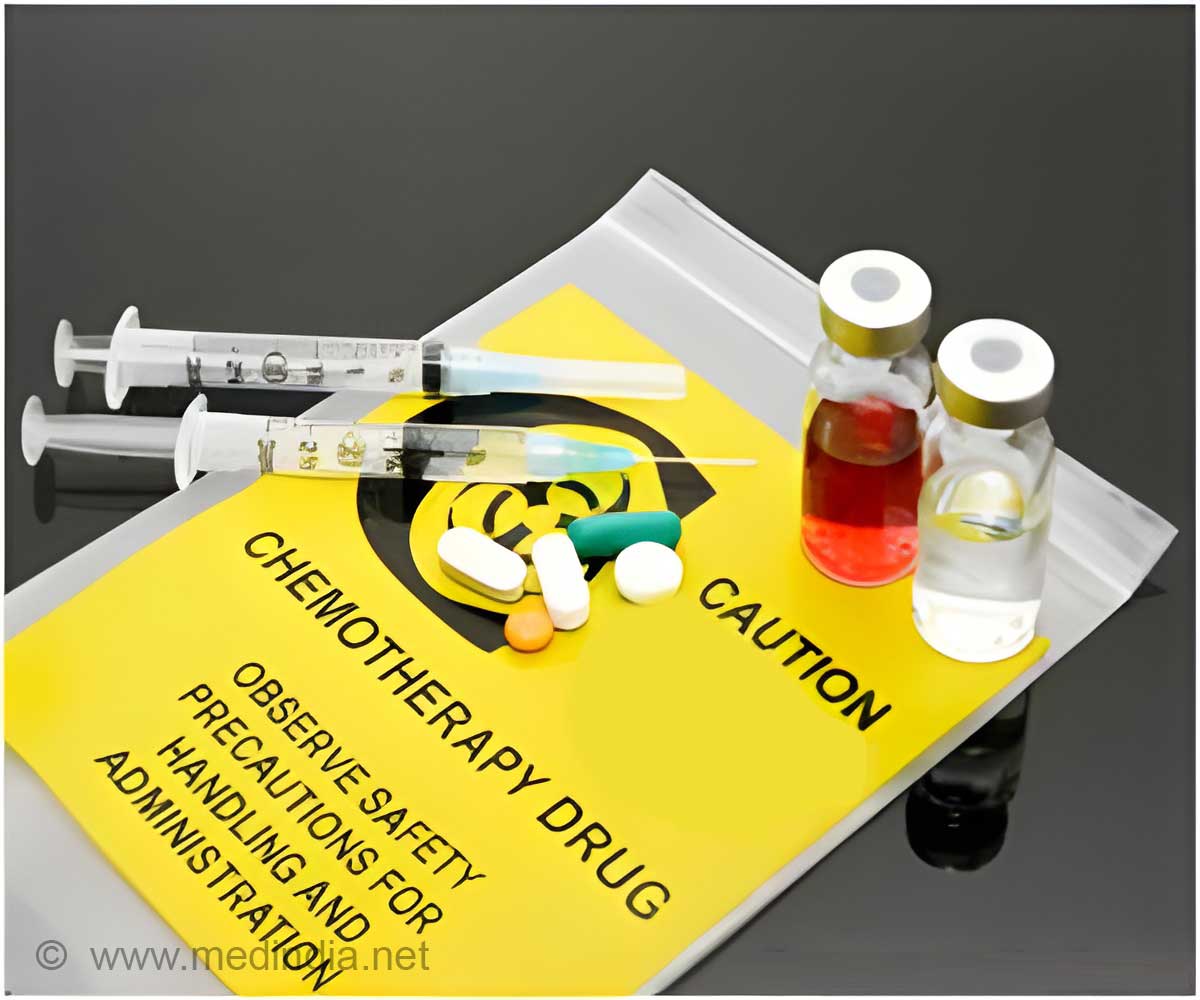
Chemotherapy Preferable to Radiotherapy to Reduce Recurrences
All the cancer patients should receive a full course of chemotherapy rather than chemoradiotherapy following surgical treatment for pancreatic cancer.
All the cancer patients should receive a full course of chemotherapy rather than chemoradiotherapy following surgical treatment for pancreatic cancer.
TOP INSIGHT

Adaptive therapy with a high chemotherapy dose initially, followed by low doses keeps some drug-resistant cancer cells alive and thus controls cancer growth.
Some researchers question the use of standard chemotherapy because it rarely wipes out cancer entirely, and leaves behind drug-resistant cells that can take over and lead to an explosion in tumor growth.
The new approach delivers continuous low-dose chemotherapy -- in this case paclitaxel -- that stabilizes the tumor by "maintaining a small population of drug-sensitive tumor cells to suppress the growth of resistant cells," said the study.

Personalized Chemotherapy for Leukemia Patients to Reduce Toxicity
Patients of Asian ancestry have poor tolerance to drugs used to treat acute lymphoblastic leukemia while it is commonly used in Europe and the U.S.
Patients of Asian ancestry have poor tolerance to drugs used to treat acute lymphoblastic leukemia while it is commonly used in Europe and the U.S.
"Another treatment regimen that skips doses whenever the tumor shrunk also inevitably resulted in tumor progression," said the study.

Injuries and Other Health Concerns Common in Older People After Cancer Surgeries
Older people who undergo cancer surgery are more likely than their younger counterparts to experience injuries and health issues.
Older people who undergo cancer surgery are more likely than their younger counterparts to experience injuries and health issues.
The study found that 60 to 80 percent of the mice treated by adaptive therapy could be "weaned off the drug completely without relapsing for an extended period of time."

New Device Hits Pancreatic Tumors With Toxic 4-Drug Cocktail, Sparing the Body
An implantable device that can deliver a particularly toxic cocktail of drugs directly to pancreatic tumors to stunt their growth has been developed by researchers.
An implantable device that can deliver a particularly toxic cocktail of drugs directly to pancreatic tumors to stunt their growth has been developed by researchers.
 Email
Email