MEDINDIA
 English
 हिन्दी
 Español
 français
 中文
中文
Explanation for how the fruit fly's internal clock is affected by the daily changes in temperature was shown by new research.
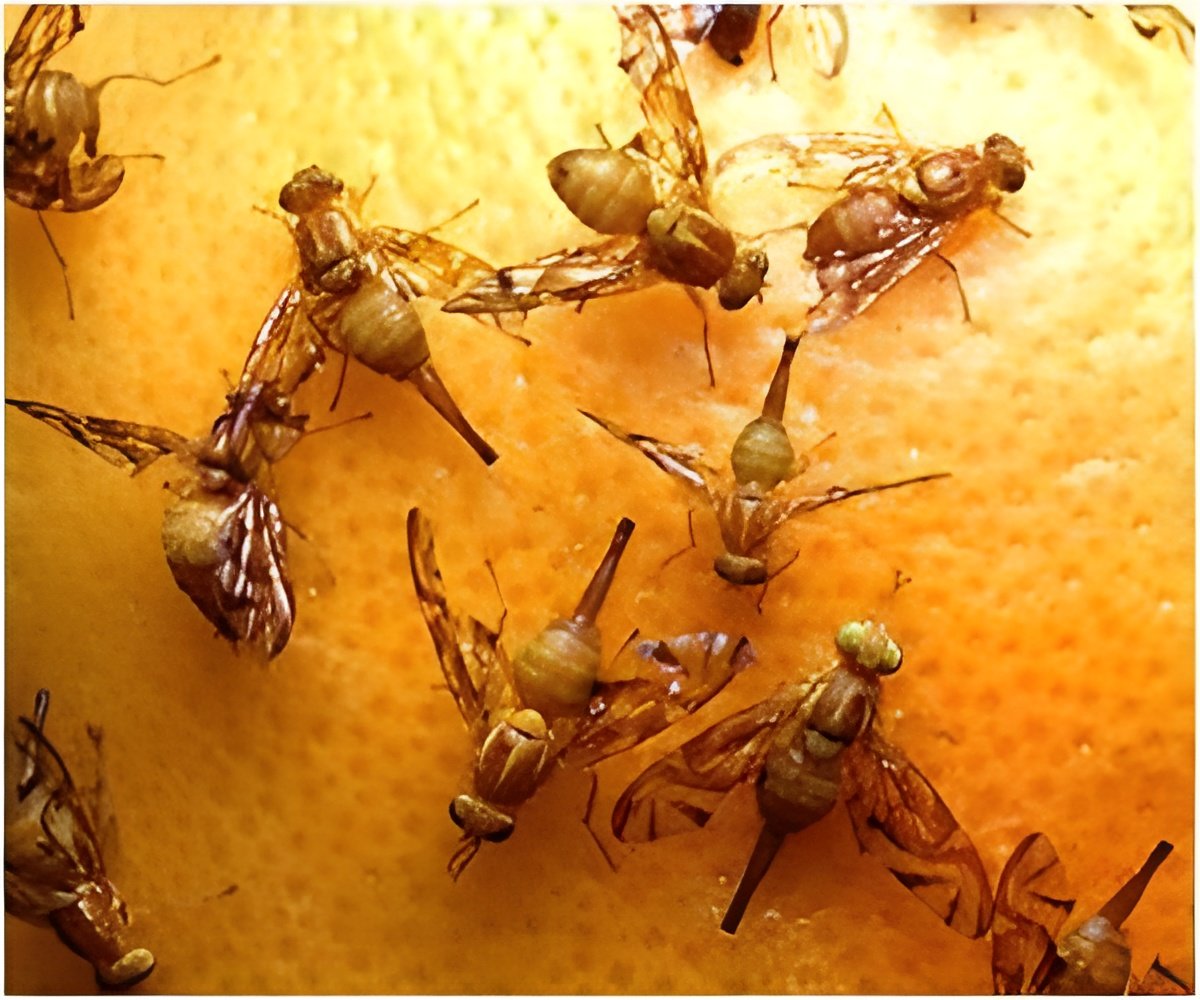

Carbon Nanoparticles Toxic to Adult Fruit Flies, but Benign to Larvae Identified
Certain types of carbon nanoparticles that can prove environmentally toxic to adults, but which are benign when added to food for larvae have been identified in experiments on fruit flies
Certain types of carbon nanoparticles that can prove environmentally toxic to adults, but which are benign when added to food for larvae have been identified in experiments on fruit flies
Scientists have a good understanding of how light affects the internal body clock, also known as the circadian clock. Specially evolved cells in the brain contain the circadian clock, which needs to be synchronised with the natural environment every day to help them run on time.
In this new study, the researchers made groups of fruit flies 'jet-lagged' by exposing them to daily temperature changes reflecting warmer or colder climates to understand how temperature affects the circadian clock.

Scientists Identify Genes That Affect Aggression in Fruit Flies
A set of genes that affect aggression in the fruit fly Drosophila melanogaster have been identified by scientists.
A set of genes that affect aggression in the fruit fly Drosophila melanogaster have been identified by scientists.
The research also shows that removing the light-receptor Cryptochrome, an important component in synchronising the clock to the daily light changes, leads to the flies being more sensitive to temperature changes.
Fruit Flies May Hold Cure For Obesity
Nutrient sensor in fruit flies may offer new treatment for obesity and diabetes, according to researchers.
Nutrient sensor in fruit flies may offer new treatment for obesity and diabetes, according to researchers.
Source-ANI

Fruit Flies may Help Researchers to Find Humans' Fondness for Fizzy Drinks
A study in fruit flies reveals that they are attracted to carbonated water – something that may help explain why humans are so fond of fizzy drinks.
A study in fruit flies reveals that they are attracted to carbonated water – something that may help explain why humans are so fond of fizzy drinks.
 Email
Email