MEDINDIA
 English
 हिन्दी
 Español
 français
 中文
中文
A major cause of serious infectious diseases including sepsis, meningitis and pneumonia is the Group B streptococcus.
Meningitis - Causes - Symptoms - Diagnosis - Treatment - FAQs
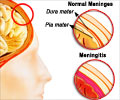
Meninges are the three layers of membrane that cover the brain and infection of the cerebrospinal fluid between them causes meningitis the disease of the meninges.
Meninges are the three layers of membrane that cover the brain and infection of the cerebrospinal fluid between them causes meningitis the disease of the meninges.
In many European countries, including the Netherlands, antibiotic treatment to prevent neonatal group B streptococcal disease is only offered to pregnant women with known risk factors for perinatal disease.
Using nationwide surveillance data from 1987 to 2011, a team of Dutch researchers examined group B streptococcus disease trends before and after the introduction of these guidelines in the Netherlands in 1999. The analysis revealed that the incidence of early-onset disease increased from 0.11 to 0.19 cases per 1000 livebirths between 1987 and 2011, and the incidence of late-onset disease increased from 0.03 to 0.13 livebirths.
Quiz on Meningitis
Meningitis is a serious condition that can even cause death. Children are commonly affected and it often appears as outbreaks. Test your knowledge on meningitis by taking this quiz.
Meningitis is a serious condition that can even cause death. Children are commonly affected and it often appears as outbreaks. Test your knowledge on meningitis by taking this quiz.
Lead author Dr Arie van der Ende from the Reference Laboratory for Bacterial Meningitis, Amsterdam, Netherlands says, "Our findings should lead to a reassessment of current practices. Only offering antibiotic treatment during labour to pregnant women at risk is probably too limited to prevent all group B streptococcal infections in newborn infants. Moving to universal screening of pregnant women by vaginal and rectal swabs for group B streptococcus and offering antibiotic prophylaxis to group B streptococcus positive pregnant women must be considered."
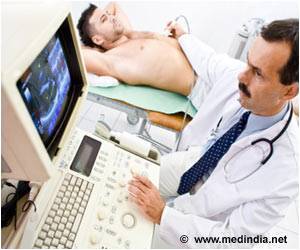
Chest Ultrasound an Efficient Tool in the Early Detection of Swine Flu
A new research has demonstrated and recommended the use of Chest Ultrasound for an early and accurate diagnosis of Influenza A (H1N1) pneumonia.
A new research has demonstrated and recommended the use of Chest Ultrasound for an early and accurate diagnosis of Influenza A (H1N1) pneumonia.
Source-Eurekalert
Higher Maternal Age at Delivery May Cause Food Allergy in the Child
A recent study reveals that male infants and infants born to older mothers are at an increased risk for food allergies.
A recent study reveals that male infants and infants born to older mothers are at an increased risk for food allergies.
 Email
Email