MEDINDIA
 English
 हिन्दी
 Español
 français
 中文
中文
For our immune system to fight infections without damaging the body's own cells, it must first distinguish between self and foreign cells.


Research Finds Long Non-Coding RNAs Fine-Tune the Immune System
An elaborate network of complex signaling pathways that supervise multiple genes are involved in the regulation of the human immune system's response to infection.
An elaborate network of complex signaling pathways that supervise multiple genes are involved in the regulation of the human immune system's response to infection.
An article appearing in the latest edition of the journal Cell discusses how immunological self-tolerance develops. The article was published by the research group led by Professor Ed Palmer and first author Ondrej Stepanek from the Department of Biomedicine at the University Hospital and the University of Basel along with researchers from Cambridge (USA) and Cardiff (UK).
During their maturation process, T cells in the thymus undergo various tests requiring T cell's antigen receptor to bind the body's own molecules. If the antigen receptor binds a body molecule too tightly, the developing T cell might eventually cause an autoimmune disease; in this case negative selection is triggered, and the cell dies. Only those T cells that exhibit "loyal" behavior towards a person's own body continue the maturation process, to become pathogen-fighting T cells.

Ways To Boost Your Immune System
Do you feel stressed all the time? If yes, beware, for your immune system could be going downhill!
Do you feel stressed all the time? If yes, beware, for your immune system could be going downhill!
The negative selection of maturing T cells is essential for the immune system to function properly. In the current study, the authors describe the mechanism that controls the negative selection process. Based on their own experiments, they developed a mathematical model describing the molecular events underlying negative selection. The key feature is the dwell time, during which a maturing T cell binds to one of the body's molecules. The dwell time is measured by a molecular biological chronometer. If the process exceeds four seconds, the maturing T cell is eliminated through cell death; if it is less than four seconds, the cells continue to mature because they passed the "loyalty" test.
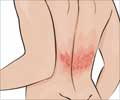
Hives
Hives or Urticaria are allergic skin reaction that appear suddenly in clusters or as single bumps on the skin surface and can be itchy.
Hives or Urticaria are allergic skin reaction that appear suddenly in clusters or as single bumps on the skin surface and can be itchy.
Source-Eurekalert

Oral Immunotherapy in Treating Egg Allergy in Children
Growing children should eat eggs, as they are an important source of proteins and calcium. Unfortunately, egg protein is one of the commonest causes of allergy among children.
Growing children should eat eggs, as they are an important source of proteins and calcium. Unfortunately, egg protein is one of the commonest causes of allergy among children.
 Email
Email