MEDINDIA
 English
 हिन्दी
 Español
 français
 中文
中文
Brain age reveals how 9/11 rescue community suffers from Post Traumatic Stress Disorder as neurobiological effect beyond mental health.

MRI signature of brain age underlying post-traumatic stress disorder in World Trade Center responders
Go to source) The findings come from the study led by researchers from the Icahn School of Medicine at Mount Sinai, published in the journal Translational Psychiatry.
The team found that many WTC (9/11 World Trade Center) responders had brains that appeared exactly older than their actual age (chronological age).
The findings highlight the neurobiological effect of PTSD in recovery workers even after years and the heightened risk of age-related neurological conditions like declined cognition. The study outcomes are important to prevent the early signs of nervous disorders and protect brain health in the population.

Quiz on Post Traumatic Stress Disorder
People with PTSD find it difficult to communicate. Take this quiz on Post-Traumatic Stress Disorder to understand the condition and help you deal with it ...
People with PTSD find it difficult to communicate. Take this quiz on Post-Traumatic Stress Disorder to understand the condition and help you deal with it ...
TOP INSIGHT

did You Know?
New #brain_AI model reveals higher #brain_age_difference (3.1-year higher than chronological age) in #9/11_ground_heroes, due to post traumatic #stress_disorder, linking #trauma to neurological conditions. #PTSD #9/11_responders #deeplearning_AI #neurology
Trauma's Lasting Effect Extends Beyond Mental Health in Responders
“These findings suggest that PTSD is not only a psychological condition but may also have measurable effects on the brain’s aging process,” said Azzurra Invernizzi, PhD, a postdoctoral fellow in the Department of Environmental Medicine at the Icahn School of Medicine at Mount Sinai and the study’s first author.“Understanding these changes helps us recognize the neurobiological toll of trauma and can guide early interventions to protect brain health.”
The results provide new evidence that the long-term impact of PTSD extends beyond mental health, potentially increasing the risk of age-related neurodegenerative conditions.
The study offers a new biomarker—brain age—that could be used to monitor neurological health in trauma-exposed populations.

Do You Know Your Brain? Test Your Knowledge About Your Brain
Introduction The brain is the most complex organ that controls all the functions in the human body. It controls memory, speech, emotions, thinking, and learning. The brain is made up of billions of neurons and it is protected by the ...
Introduction The brain is the most complex organ that controls all the functions in the human body. It controls memory, speech, emotions, thinking, and learning. The brain is made up of billions of neurons and it is protected by the ...
Advanced Tools Help Study Brain Structure Alterations
The findings also underscore the importance of continued monitoring and support for WTC responders as they age, and highlight the need for policies that integrate mental and neurological health care for trauma-exposed populations.“Many 9/11 responders continue to experience the effects of trauma decades later,” said Megan K. Horton, PhD, MPH, Professor of Environmental Medicine at Icahn Mount Sinai and senior author of the study.
“By applying advanced neuroimaging tools, we’re uncovering how PTSD and prolonged stress may alter brain structure and function over time. This work is crucial for developing strategies to detect and prevent early signs of cognitive decline.”
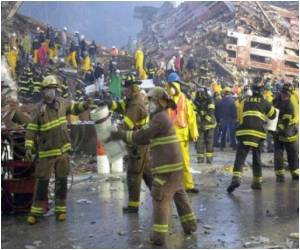
95% Survivors of WTC Attacks Suffered PTSD
Researchers have found that of the 3,271 civilians who evacuated the World Trade Center (WTC) towers, 95.
Researchers have found that of the 3,271 civilians who evacuated the World Trade Center (WTC) towers, 95.
Scientists Integrate Neuroscience and Environmental Health for Trauma's Impact
The study involved collaboration with researchers from the Renaissance School of Medicine at Stony Brook University. It was funded by the Centers for Disease Control and Prevention/National Institute for Occupational Safety and Health, the National Institute on Aging, the National Institutes of Health, and the Swiss National Science Foundation, among others.“Mount Sinai has long been at the forefront of caring for World Trade Center responders,” said Michael A. Crane, MD, MPH, Medical Director, World Trade Center Health Program Clinical Center of Excellence at Mount Sinai.
“This study exemplifies our commitment to combining neuroscience, environmental health, and advanced computational tools to better understand and address the long-term impacts of trauma.”
Reference:
- MRI signature of brain age underlying post-traumatic stress disorder in World Trade Center responders - (https://www.nature.com/articles/s41398-025-03769-7)
Source-Eurekalert
 Email
Email