MEDINDIA
 English
 हिन्दी
 Español
 français
 中文
中文
German researchers have identified a new variant - A.30 - that might be able to escape the immune system. However, only five cases were found in the world, none in the past five months.

Coronavirus
Coronaviruses infect animals, humans, and birds. Human coronaviruses, such as SARS, MERS, and 2019-nCoV cause respiratory distress and even death. The S protein is the infectious agent of the virus.
Coronaviruses infect animals, humans, and birds. Human coronaviruses, such as SARS, MERS, and 2019-nCoV cause respiratory distress and even death. The S protein is the infectious agent of the virus.
TOP INSIGHT

The A.30 COVID-19 variant reliant on vaccines to protect against coronavirus may pose a distinct threat in the world but remains isolated for now.
The A.30 variant probably originated in Tanzania and was detected in individuals in Angola and Sweden, presents significant mutations in the spike protein in which the vaccine-produced antibodies target.
To discover how dangerous the variant may be, researchers used multiple human cell lines to study how successfully the virus can infect host cells, before subjecting it to neutralizing antibodies that develop post-vaccination.
Antibiotic Resistance - An Emerging Global Crisis
Antibiotic resistance refers to the adaption of bacteria that allows them to grow even in the presence of antibiotics. The infection by the resistant bacteria are difficult to treat.
Antibiotic resistance refers to the adaption of bacteria that allows them to grow even in the presence of antibiotics. The infection by the resistant bacteria are difficult to treat.
When tested against vaccine-induced antibodies from the Pfizer-BioNTech and Oxford-Astrazeneca vaccines, A.30 was more resistant than the other variants tested at evading them, suggesting a reduced efficacy of the vaccines.

COVID-19 Vaccination in India: Issues and Challenges
India’s COVID-19 vaccination program has been launched. It currently uses the vaccines Covishield and Covaxin. There are some issues and challenges that need to be overcome in order to vaccinate all Indians.
India’s COVID-19 vaccination program has been launched. It currently uses the vaccines Covishield and Covaxin. There are some issues and challenges that need to be overcome in order to vaccinate all Indians.
They also suggest that A.30 should be closely monitored in the coming months and countries should prioritize preventative measures that would stop an outbreak if A.30 were to become more widespread.
Cytokines - Part of Body's Defence System
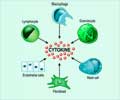
Cytokines are chemical signaling molecules produced by immune cells of our body and help cells in the human body to communicate with each other. They are involved in inducing immune response and growth regulation.
Cytokines are chemical signaling molecules produced by immune cells of our body and help cells in the human body to communicate with each other. They are involved in inducing immune response and growth regulation.
Source-Medindia
 Email
Email