MEDINDIA
 English
 हिन्दी
 Español
 français
 中文
中文

Men require nearly double the amount of exercise compared to women to achieve the same heart health benefits.
Highlights:
Men need to engage in nearly twice as much physical activity as women to experience the same drop in coronary heart disease risk, according to findings that suggest healthy lifestyle recommendations should reflect biological sex differences(1✔ ✔Trusted Source- Women can achieve the same heart protection as men with only half the exercise time
- Men require about 530 minutes of weekly activity to see similar benefits
- Tailored exercise guidelines could improve cardiovascular health for both sexes
Physical activity guidelines for adults aged 19 to 64
Go to source). Researchers examined exercise records from over 80,000 individuals and found that women who completed 250 minutes of weekly physical activity reduced their heart disease risk by 30 percent. In contrast, men had to spend about 530 minutes, almost nine hours, each week to see a similar improvement.

Morning Exercise Could Lower Risk of Heart Disease and Stroke
Morning physical activity is related to lower risk of heart disease and stroke compared to other times of the day
Morning physical activity is related to lower risk of heart disease and stroke compared to other times of the day
TOP INSIGHT

Did You Know?
Women can cut their heart disease risk by 30 percent with just 250 minutes of weekly activity, while men need more than double that time to reach the same benefit. #hearthealth #exercise #medindia
Exercise Impact and Current Recommendations
This work supports earlier evidence showing that women gain greater health benefits from equivalent levels of exercise. However, women are typically less active overall and less likely to achieve recommended activity goals.Current National Health Service guidelines advise men and women between the age of 16 and 64 to engage in at least 150 minutes of moderate exercise or 75 minutes of vigorous exercise weekly, along with muscle-strengthening routines twice a week.

Exercise and Sports Guidelines for Heart Disease Patients
European Society of Cardiology recently launched the exercise and sports guidelines for people with all types of heart diseases.
European Society of Cardiology recently launched the exercise and sports guidelines for people with all types of heart diseases.
Need for Personalized Fitness Advice
The latest analysis emphasizes the importance of customized guidance for men and women and underlines the major cardiovascular advantages women can achieve even with moderate exercise. Around the world, one in three women die due to cardiovascular disease(2✔ ✔Trusted Sourcehttps://www.nature.com/articles/s44161-025-00732-z
Go to source).
According to the authors in Nature Cardiovascular Research, "Compared with male individuals, females derive equivalent health benefits with only half the exercise time." They also noted that these results could inspire women to become more physically active.

Yoga Or Aerobic Exercise? Which Can Improve Heart Disease Risk Factors?
Yoga, as well as aerobic exercise, reduce blood pressure levels, BMI and cholesterol levels in obese diabetic adults with heart disease.
Yoga, as well as aerobic exercise, reduce blood pressure levels, BMI and cholesterol levels in obese diabetic adults with heart disease.
Data Insights from Large Population Analysis
Dr. Jiajin Chen of Xiamen University in China and his colleagues analyzed data from wearable activity trackers of middle-aged participants in the UK Biobank project. They focused on 80,243 people without coronary heart disease. Among them, women meeting the 150-minute weekly exercise goal had a 22 percent lower heart disease risk over eight years of follow-up compared to those who did not. For men, the reduction was 17 percent(3✔ ✔Trusted Sourcehttps://www.theguardian.com/science/2023/nov/30/uk-biobank-and-the-masses-of-medical-data-that-became-key-to-genetic-research
Go to source).
Additional analysis revealed that women exercising for 250 minutes weekly achieved a 30 percent decrease in heart disease risk, whereas men required 530 minutes of weekly activity to match this benefit.
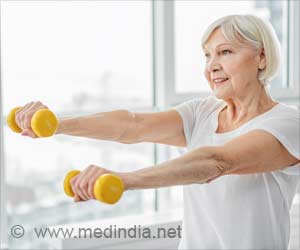
Exercise Levels Help Predict Heart Disease Risk
Asking elderly patients how much they exercise can help predict their risk of heart disease and death, said researchers.
Asking elderly patients how much they exercise can help predict their risk of heart disease and death, said researchers.
Differences in Heart Disease Mortality
An especially striking finding came from data on over 5,000 participants already diagnosed with coronary heart disease.The risk of death during the follow-up period was three times lower in women who met the exercise guidelines than in men who were equally active.
Encouraging Global Participation in Exercise
Professor Yan Wang, one of the senior authors, stated that both men and women can achieve "substantial cardiovascular benefits" through regular exercise and urged everyone to remain physically active regardless of sex.However, he also noted that worldwide, a higher proportion of women fail to meet exercise targets. "We particularly hope that our findings could encourage physically inactive females to become more active, thereby reducing their cardiovascular risk," he said.
Exploring Hormonal and Muscle Differences in Heart Health
Although the exact reasons for women's greater benefits from exercise remain unclear, scientists suggest that variations in sex hormones, muscle fiber composition, and energy metabolism could play a role.In an accompanying article, Dr. Emily Lau, a cardiovascular health specialist at Massachusetts General Hospital, wrote that "one size really does not fit all" and urged for the integration of sex-specific strategies and personalized approaches to enhance heart health for women.
In conclusion, women achieve significant heart health advantages with far less exercise than men, showing the importance of gender-specific physical activity guidelines. These insights highlight how understanding biological differences can help shape more effective and inclusive health recommendations for everyone.
Reference:
- Physical activity guidelines for adults aged 19 to 64 - (https://www.nhs.uk/live-well/exercise/physical-activity-guidelines-for-adults-aged-19-to-64/)
- Sex differences in the association of wearable accelerometer-derived physical activity with coronary heart disease incidence and mortality - (https://www.nature.com/articles/s44161-025-00732-z)
- UK Biobank and the masses of medical data that became key to genetic research - (https://www.theguardian.com/science/2023/nov/30/uk-biobank-and-the-masses-of-medical-data-that-became-key-to-genetic-research)
Source-Medindia
 Email
Email