MEDINDIA
 English
 हिन्दी
 Español
 français
 中文
中文
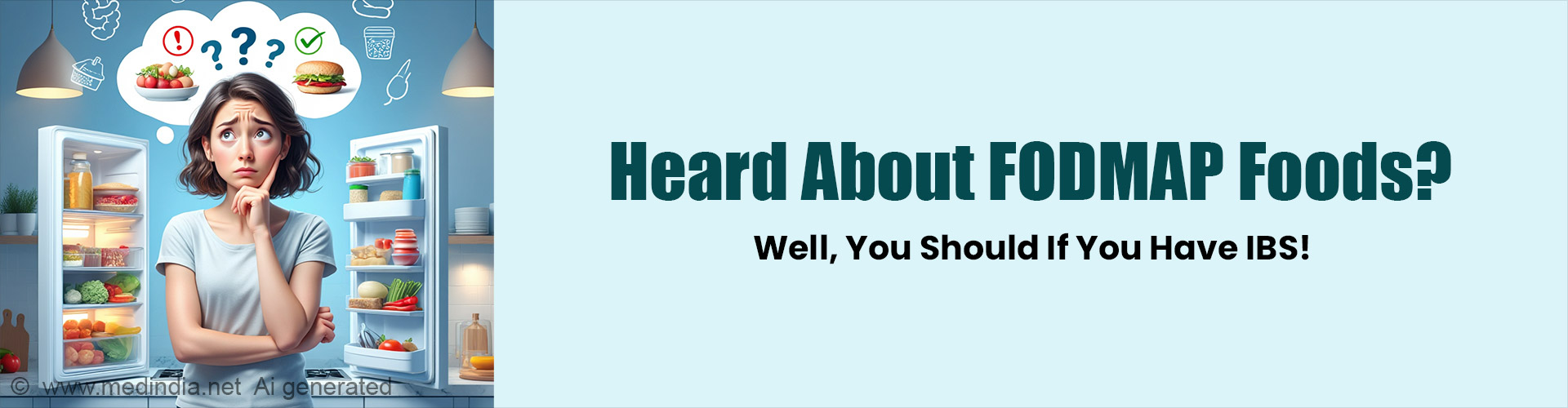
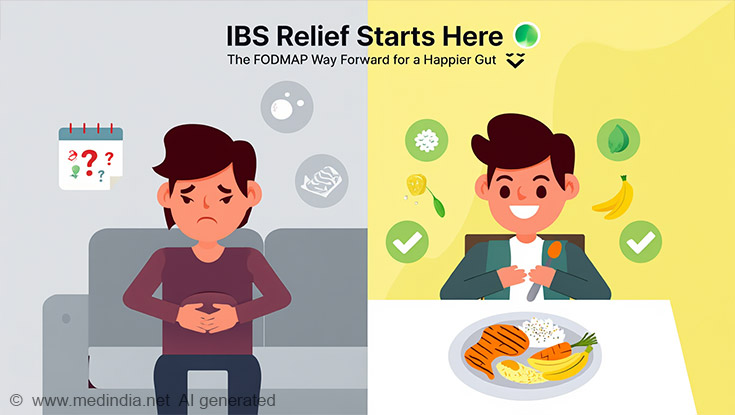
The low-FODMAP diet emerges as a powerful, clinically proven approach to manage IBS symptoms and improve gut health.
Highlights:
Irritable Bowel Syndrome (IBS) is a multi-factorial, long-lasting gut-brain condition that affects more than 10-15% of the world population, and is characterized by symptoms such as bloating, gas, pain in the abdomen, constipation, and diarrhea. But what truly defines IBS has shifted dramatically over the years; along with it, the treatment approach has also changed.
With the new Rome IV diagnostic protocols, medical practitioners no longer perceive IBS as a vague collection of stomach problems but as a legitimate disorder of gut-brain interaction (DGBI). This development has led to the interest in non-pharmacological therapies, such as dietary interventions—with the low FODMAP diet rapidly emerging as a front-runner (1✔ ✔Trusted Source- Rome IV criteria redefined IBS as a gut-brain disorder, paving the way for diet-based therapy
- A low FODMAP diet reduces IBS symptoms like bloating, gas, and abdominal pain
- A clinical trial confirmed significant symptom improvement and better quality of life
Gut Check: Rome IV Reflects Evolving IBS Understanding
Go to source).
Irritable Bowel Syndrome – Causes, Diagnosis, Treatment
Irritable bowel syndrome (IBS) causes recurrent abdominal pain or discomfort and a fluctuating disturbance in defecation. IBS is not life threatening.
Irritable bowel syndrome (IBS) causes recurrent abdominal pain or discomfort and a fluctuating disturbance in defecation. IBS is not life threatening.
TOP INSIGHT

Did You Know?
#Irritable-Bowel-Syndrome affects over 10-15% of the global population, but most patients find lasting relief through dietary changes-not drugs! #IBS #FODMAP #guthealth #medindia
The Rome IV Criteria
IBS diagnosis has been refined using the Rome IV criteria. In contrast to the previous versions, where the criteria of IBS as a diagnosis were based on the frequency and duration of bowel changes, Rome IV considers the following as the diagnosis:“Recurrent abdominal pain, on average, at least 1 day per week in the last 3 months, associated with at least 2 of the following: related to defecation, change in stool frequency, or change in stool form.”
With this paradigm shift, the gut-brain axis takes the center stage, paving the for personalized and lifestyle-driven therapies. And that is where the low FODMAP diet enters the scene (2✔ ✔Trusted Source
Rome IV Criteria
Go to source).

Irritable Bowel Syndrome Diet Guide: Foods That Harm Your Gut
Practical dietary tips to manage irritable bowel syndrome by identifying and avoiding common trigger foods.
Practical dietary tips to manage irritable bowel syndrome by identifying and avoiding common trigger foods.
What is the FODMAP Diet?
Fermentable oligosaccharides, disaccharides, monosaccharides and polyols (FODMAPs) are short-chain carbohydrates (sugars) that are poorly absorbed in the small intestine.High FODMAP Foods Could Trigger
Consumption of FODMAP could lead to the following symptoms:
- Cramping
- Diarrhea
- Constipation
- Stomach bloating
- Gas and flatulence
High FODMAP Foods
Foods that are high in FODMAPs include:
- Vegetables: Garlic, onions, artichokes, asparagus, beans, lentils, and legumes
- Fruits: Apples, apricots, blackberries, blueberries, and raspberries (depending on quantity), cherries, figs, grapes, mangoes, nectarines, peaches, pears, plums, watermelon
- Milk-Based Products: Dairy-based milk, yogurt, and ice cream
- Wheat-based products: cereal, bread, and crackers
- Artificial sweeteners (sorbitol, mannitol)
Low FODMAP Foods
Low FODMAP foods include:
- Eggs and meat
- Certain cheeses, such as brie, Camembert, cheddar, and feta
- Almond milk
- Grains like rice, quinoa, and oats
- Vegetables like eggplant, potatoes, tomatoes, cucumbers, and zucchini
- Fruits such as grapes, oranges, strawberries, blueberries, and pineapple
The Three Phase Elimination-Based Diet
The low FODMAP diet, developed at Monash University, is a three-phase, elimination-based diet:
- Restriction: Avoid all high-FODMAP foods.
- Reintroduction: Gradually reintroduce each FODMAP type.
- Personalization: Identify trigger foods, then avoid or limit them while enjoying others without worry (3✔ ✔Trusted Source
FODMAP Diet: What You Need to Know
Go to source).

Low FODMAP Diet: Guide for Irritable Bowel Syndrome Relief
Learn about the low FODMAP diet, a temporary but effective approach to managing IBS and SIBO symptoms by identifying and avoiding problematic foods.
Learn about the low FODMAP diet, a temporary but effective approach to managing IBS and SIBO symptoms by identifying and avoiding problematic foods.
Clinical Trial Validates Low FODMAP Diet for IBS
In a clinical study led by Dr. Shanti Eswaran at Michigan Medicine, researchers compared the effectiveness of the low FODMAP diet with general dietary guidance for IBS.During a six-week study, participants with Irritable Bowel Syndrome were randomized into two groups. One group followed the low FODMAP diet, while the other followed a conventional diet that minimized common irritants like alcohol, caffeine, large meals, and binge eating. The results showed that the low FODMAP group had a major improvement in their abdominal pain, compared with 20 percent of the control group.
Other troublesome symptoms—including bloating, diarrhea, and stool urgency—also showed greater improvement in the low FODMAP group than in the control group.
This study demonstrates that dietary changes, rather than medication, can result in measurable improvement in IBS patients (4✔ ✔Trusted Source
Clinical Trial Demonstrates Success of Low FODMAP Diet
Go to source).
Mental Health Issues Higher Among Irritable Bowel Syndrome (IBS) Patients
Patients with irritable bowel syndrome (IBS) are at an increased risk of anxiety, depression, and suicide than those without irritable bowel syndrome.
Patients with irritable bowel syndrome (IBS) are at an increased risk of anxiety, depression, and suicide than those without irritable bowel syndrome.
A New Chapter in IBS Care
This growing body of evidence signals a paradigm shift in how IBS is understood and treated:- Diagnosis is now more specific and symptom-focused (Rome IV).
- Treatment is more holistic and patient-centered, incorporating diet, lifestyle, and mental health.
Study: Low FODMAP Diet Improves Quality of Life for IBS Patients
Go to source).
IBS may be a lifelong condition, but that does not imply that it should be the master of your life. Patients can regain control and comfort through improved dietary strategies such as the Low FODMAP diet, which is confirmed scientifically, as well as the Rome IV criteria.
Just as science evolves, so should our approach to digestive health—caring not only for the gut but also for the individual behind it.
References:
- Gut Check: Rome IV Reflects Evolving IBS Understanding - (https://www.michiganmedicine.org/health-lab/gut-check-rome-iv-reflects-evolving-ibs-understanding)
- Rome IV Criteria - (https://theromefoundation.org/rome-iv/rome-iv-criteria/)
- FODMAP Diet: What You Need to Know - (https://www.hopkinsmedicine.org/health/wellness-and-prevention/fodmap-diet-what-you-need-to-know)
- Clinical Trial Demonstrates Success of Low FODMAP Diet - (https://www.michiganmedicine.org/health-lab/clinical-trial-demonstrates-success-low-fodmap-diet)
- Study: Low FODMAP Diet Improves Quality of Life for IBS Patients - (https://www.michiganmedicine.org/health-lab/study-low-fodmap-diet-improves-quality-life-ibs-patients)
Source-Medindia
 Email
Email