MEDINDIA
 English
 हिन्दी
 Español
 français
 中文
中文
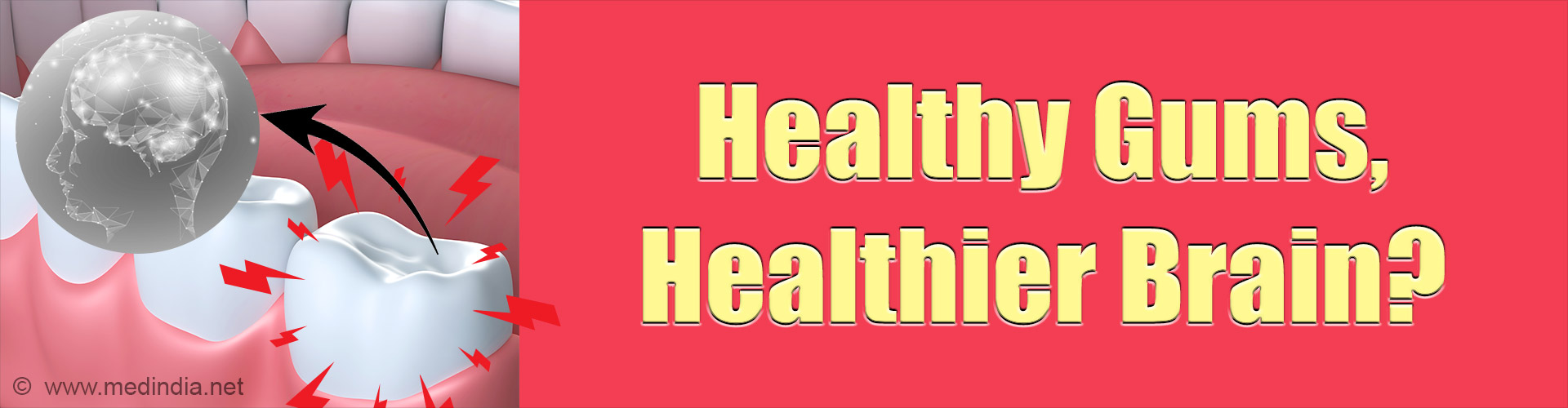
A new study in Neurology Open Access finds that gum disease may be linked to white matter changes in the brain, which could affect memory, balance, and stroke risk.
Highlights:
What if your dental exam did more than check cavities and gum pockets — what if it hinted at brain-health signals too? It may sound surprising, but a growing body of research suggests that the state of your mouth might reflect what's happening in your brain (1✔ ✔Trusted Source- People with gum disease had 56% higher odds of white matter changes in the brain
- These brain changes are tied to memory, balance, and stroke risk
- Study adds to evidence linking oral health to long-term brain health
Gum disease associated with changes in the brain
Go to source). A new study published in Neurology® Open Access found that older adults with gum disease had larger volumes of white-matter changes on brain MRI — changes that have been linked to stroke, mobility problems, and cognitive decline.

Does Oral Health Affect Your Heart?
Oral health has been noted as the key factor before and after experiencing heart diseases. Maintaining good oral health can help prevent risks of heart diseases.
Oral health has been noted as the key factor before and after experiencing heart diseases. Maintaining good oral health can help prevent risks of heart diseases.
TOP INSIGHT

Did You Know?
Healthy gums may protect more than your smile - they could help safeguard your brain too. #brainhealth #gumdisease #neurologyresearch #oralhealth #strokeprevention #healthyaging #medindia
What the Study Found
The study examined 1,143 adults with an average age of 77: 800 had gum disease (periodontitis) and 343 did not. Each participant received a dental exam to assess for gum disease, and a brain MRI to look for signs of cerebral small-vessel disease, including white matter hyperintensities (WMHs), cerebral microbleeds, and lacunar infarcts.The gum disease group showed white-matter hyperintensities covering 2.83% of total brain volume — slightly higher than 2.52% in those without gum disease. When analyzing participants by WMH volume quartile, 28% of those with gum disease were in the highest quartile (volume > 21.36 cm³), compared with 19% of those without gum disease.
After adjusting for typical risk factors (age, sex, race, hypertension, diabetes, smoking), gum disease remained associated with 56% higher odds of being in that highest WMH group. Interestingly, the study did not find a significant link between gum disease and cerebral microbleeds or lacunar infarcts.

Gum Disease Boosts the Risk of Mental Health Problems
Gum disease is associated with an increased risk of developing mental health issues, heart disease, and diabetes.
Gum disease is associated with an increased risk of developing mental health issues, heart disease, and diabetes.
Why It Matters
White matter in the brain consists of nerve fibres that help different brain regions communicate. Damage or changes in this tissue — visible as white-matter hyperintensities on MRI — are known to increase risk for stroke, cognitive decline, balance issues, and other neurologic problems.Chronic gum disease involves persistent inflammation and the presence of bacteria in the tissue surrounding the teeth. It’s plausible that the same inflammatory molecules or microbes may affect small blood vessels in the brain over time, contributing to the kind of damage seen as WMHs. The study’s lead author, Souvik Sen, MD MS MPH, noted: “This study shows a link between gum disease and white matter hyperintensities suggesting oral health may play a role in brain health that we are only beginning to understand.”

Dementia Risk Calculator
Dementia Risk Calculator is a tool to find out the risk of dementia among people over the age of 65.It also provides diet tips on Dementia.
Dementia Risk Calculator is a tool to find out the risk of dementia among people over the age of 65.It also provides diet tips on Dementia.
Global Perspective
With aging populations worldwide and brain health challenges rising, any novel modifiable risk factor is noteworthy. Gum disease affects millions globally, many of whom are unaware or untreated. If this link is confirmed in future studies, oral health care could become part of a brain health strategy — especially given the aging, rising diabetes, and hypertension burdens.Moreover, the study’s result highlights that prevention might start in unexpected places: routine dental check-ups, gum-care, and controlling oral inflammation might contribute to preserving brain structure — a message with potential for public-health campaigns.

Stroke Risk Calculator
Stroke Risk Calculator checks if you have hypertension, diabetes and heart failure and predicts the risk of stroke (cerebrovascular accident) in next 10 years.
Stroke Risk Calculator checks if you have hypertension, diabetes and heart failure and predicts the risk of stroke (cerebrovascular accident) in next 10 years.
Future Implications
While this study doesn’t prove that gum disease causes brain changes, it raises a compelling possibility: your gums may offer clues about your brain’s vascular and structural health. It underscores that oral-health care isn’t just about teeth — it may be part of broader healthy ageing.For now, maintaining good gum health — regular dental visits, brushing, flossing, addressing inflammation — is a sensible step. Future research may clarify whether treating gum disease can reduce brain-damage risk, but in the meantime, two practical takeaways emerge: care for your mouth, care for your brain.
Reference:
- Gum disease associated with changes in the brain - (https://www.aan.com/PressRoom/home/PressRelease/5289)
Source-Medindia
 Email
Email