MEDINDIA
 English
 हिन्दी
 Español
 français
 中文
中文
Ultra-processed foods now dominate global diets, fueling chronic diseases and health inequalities.
Ultra-processed foods: time to put health before profit
Go to source).

Eight Foods You May Not Realize Are Ultra-Processed
Discover eight everyday foods that are ultra-processed and learn about their health impacts and healthier alternatives.
Discover eight everyday foods that are ultra-processed and learn about their health impacts and healthier alternatives.
TOP INSIGHT

Did You Know?>
Over 55.0% of the calories people eat now come from ultra-processed foods. #ultraprocessedfoods #healthrisks #medindia
What Are Ultra-Processed Foods, Really?
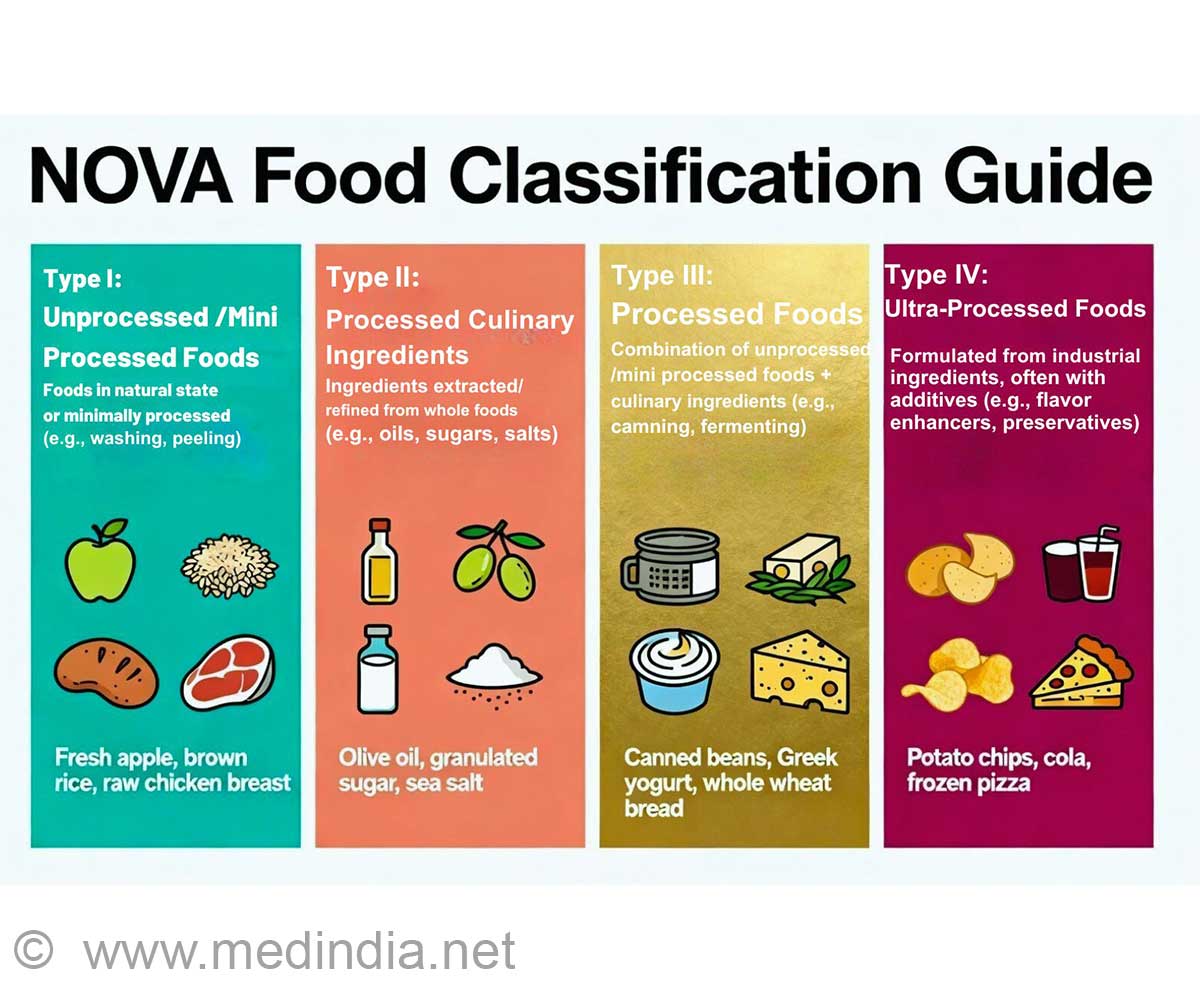
According to the Nova classification system, UPFs are in the most processed category. Their sensory-related additives—the colours, flavours, stabilisers, and sweeteners that improve their appearance, taste, and shelf life—can be used to identify them.A single ingredient does not make them hazardous. Instead, health risks are caused by the widespread practice of substituting synthetic foods for real foods as well as the combined effect of several additives.
A high UPF intake is closely associated with:
- Being obese
- Heart-related illnesses
- Numerous other long-term illnesses

Ultra-Processed Foods Behind Rising Rates of Obesity, Diabetes, and Heart Disease
The link between ultra-processed foods and obesity, heart disease, and diabetes has been brought to light by a Canadian study, raising a global health alarm.
The link between ultra-processed foods and obesity, heart disease, and diabetes has been brought to light by a Canadian study, raising a global health alarm.
The Corporate Engine Behind Ultra-Processed Foods
The UPF industry revolves around the large-scale processing of low-cost commodities such as maize, wheat, soy, and palm oil. These are combined into countless artificial ingredients, flavours, emulsifiers, and additives.A few powerful multinational corporations control this system, including:
- Nestlé
- PepsiCo
- Unilever
- Coca-Cola
In many wealthy nations, UPFs make up about 50% of household food intake, and consumption is soaring in low- and middle-income countries.
The damage extends beyond human health. UPFs cause environmental harm because they rely on production that uses a lot of fossil fuels and a lot of plastic packaging.
Quiz on Junk Food
"Every living cell in your body is made from the food you eat. If you consistently eat junk food then you’ll have a junk body." - Jeanette Jenkins Junk food has become increasingly popular in India with many traditional ...
"Every living cell in your body is made from the food you eat. If you consistently eat junk food then you’ll have a junk body." - Jeanette Jenkins Junk food has become increasingly popular in India with many traditional ...
Why Are Ultra-Processed Foods Hard to Regulate?
The UPF industry generates enormous profits, which fund political activities designed to block health regulations. The editorial warns that self-regulation has failed—governments must step in with strong, mandatory policies.Key policy actions recommended include:
- Adding UPF markers (additives like colours and flavours) to nutrient profiling systems
- Mandatory front-of-pack warning labels
- Banning marketing targeted at children
- Restricting UPFs in public institution (schools, hospitals, etc.)
- Taxing UPFs
Junk Foods 'Highs' Mimic Drug Addiction
Ultra-processed food addiction is similar to substance addiction due to disproportionately higher levels of fats and carbohydrates.
Ultra-processed food addiction is similar to substance addiction due to disproportionately higher levels of fats and carbohydrates.
Who Gets Hurt the Most From Ultra-Processed Foods?
UPF consumption is highest among people facing economic hardship. Cheap, long-lasting, heavily marketed products are often the only foods many families can afford.But solutions must be fair and realistic. Transitioning away from UPFs should not:
- Increase the burden on women
- Worsen food insecurity
- Punish low-income households dependent on cheap options
Tax revenue from UPFs can be used to fund cash transfers so low-income families can buy fresh, whole foods.
Alarming Takeaways About Ultra-Processed Food Consumption
- More than half (55.0%) of all the calories people eat—from age 1 year and up—now come from ultra-processed foods like packaged snacks, sugary drinks, instant noodles, frozen meals, and fast food.
- Children and teens (1–18 years) are eating even more ultra-processed foods than adults. They get a massive 61.9% of their daily calories from these foods — meaning almost two-thirds of what they eat is ultra-processed.
- Adults (19+ years) aren’t far behind, with 53.0% of their daily calories coming from ultra-processed foods.
- Both boys and girls, men and women are consuming similarly high levels – meaning this is a widespread problem, not limited to any one group (2✔ ✔Trusted Source
Ultra-processed Food Consumption in Youth and Adults: United States, August 2021–August 2023
Go to source).
Breaking the Corporate Grip on Global Diets
The UPF industry represents a global food system increasingly driven by corporate profits—not public health. The Lancet Series makes it clear: we need a coordinated, well-resourced international response to transform food systems.This includes:
- Strong competition laws
- Mandatory (not voluntary) regulations
- Comprehensive policies reinforcing one another
- Reducing corporate interference
- Supporting diverse, local food producers
Time to Put Health Before Profit
Ultra-processed foods are more than a diet trend—they’re a structural problem deeply tied to corporate power, marketing strategies, and global inequality. With UPFs already making up about 50% of household diets in high-income nations and rising rapidly elsewhere, the health consequences are impossible to ignore.The scientific evidence is clear. The policy solutions exist. What we need now is collective action that prioritises human health, planetary sustainability, and equity over the profits of a small group of transnational corporations.
References:
- Ultra-processed foods: time to put health before profit - (https://www.thelancet.com/journals/lancet/article/PIIS0140-6736(25)02322-0/fulltext)
- Ultra-processed Food Consumption in Youth and Adults: United States, August 2021–August 2023 - (https://www.cdc.gov/nchs/products/databriefs/db536.htm)
Source-Lancet
 Email
Email