MEDINDIA
 English
 हिन्दी
 Español
 français
 中文
中文
A new study says that a low level of response (LR) to alcohol reflects at least in part a low brain response to alcohol


Alcohol Abuse - Alcohol Addiction - Treatment � Rehab among Woman
Social drinking amongst women has become a fad. Stop it before it finishes you.
Social drinking amongst women has become a fad. Stop it before it finishes you.
Results will be published in the January 2012 issue of Alcoholism: Clinical & Experimental Research and are currently available at Early View.
"While some genes that contribute to LR have been provisionally identified, the mechanism through which the low LR operates in the brain has not been extensively studied," explained Marc A. Schuckit, distinguished professor of psychiatry at the University of California, San Diego, and corresponding author for the study. "This report confirms prior reports from our group that used a different cognitive task to show that people with a low LR process information differently from those with a high LR even when tested with placebo. The differences between LR groups after placebo and alcohol across different cognitive tasks may help explain why low LR subjects might have more problems recognizing the effects of moderate doses of alcohol. If you aren't able to recognize the effects of lower doses of alcohol, you are more likely to drink heavy amounts per occasion, which both directly and indirectly increases your risk for alcohol problems."

Alcohol Use Disorder | Alcoholism
Alcohol use disorder or alcoholism is an inability to control drinking. It can cause short term and long term physical, as well as psychological effects on the patient.
Alcohol use disorder or alcoholism is an inability to control drinking. It can cause short term and long term physical, as well as psychological effects on the patient.
Sullivan added that this study is cutting edge in its use of differential responses to alcohol at different levels of physiological processing as a grouping variable to interpret performance measures and brain physiological responses while performing cognitive tasks in an fMRI setting.

Alcohol and Driving-Blood Alcohol Level-Indian Law-Walk Test and Breathalyzer
Alcohol and driving do not mix. Drunken driving is the cause of many deaths in the world.
Alcohol and driving do not mix. Drunken driving is the cause of many deaths in the world.
"Those with a low LR seemed to have had to exert more cognitive effort to perform a cognitive task than those with high LR's after placebo," said Schuckit. "After alcohol, the low LR subjects seemed to do the task with less effort than after placebo, while the high LR subjects had to work harder to do the task after alcohol than after placebo. So when the low LR people drink modest amounts of alcohol, they may not perceive much change in how their brain is working. Also, if a modest dose of alcohol produces a situation where you don't have to exert as much effort to think about how a challenging task needs to be done, as might be true for low LR subjects, perhaps drinking is a bit more rewarding for you compared to people who find that modest alcohol doses impair their thinking, as is seen for high LR subjects." In short, intoxication seemed to become almost a 'normalized' state for low LR individuals.
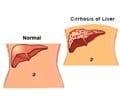
Alcoholic Liver Disease - Causes Symptoms Diagnosis Treatment FAQs
Encyclopedia section of medindia gives general information about Alcoholic Liver Disease.
Encyclopedia section of medindia gives general information about Alcoholic Liver Disease.
"The real issue for clinicians is that the low LR is an important genetically influenced risk factor for later alcohol problems," said Schuckit. "These results can also inform researchers interested in how the low LR might actually work to affect how intoxicated a person might feel."
Source-Eurekalert
 Email
Email