MEDINDIA
 English
 हिन्दी
 Español
 français
 中文
中文
Scientists in a new research have identified genetic alterations in lung cancer tumors that were helpful in selecting targeted treatments.
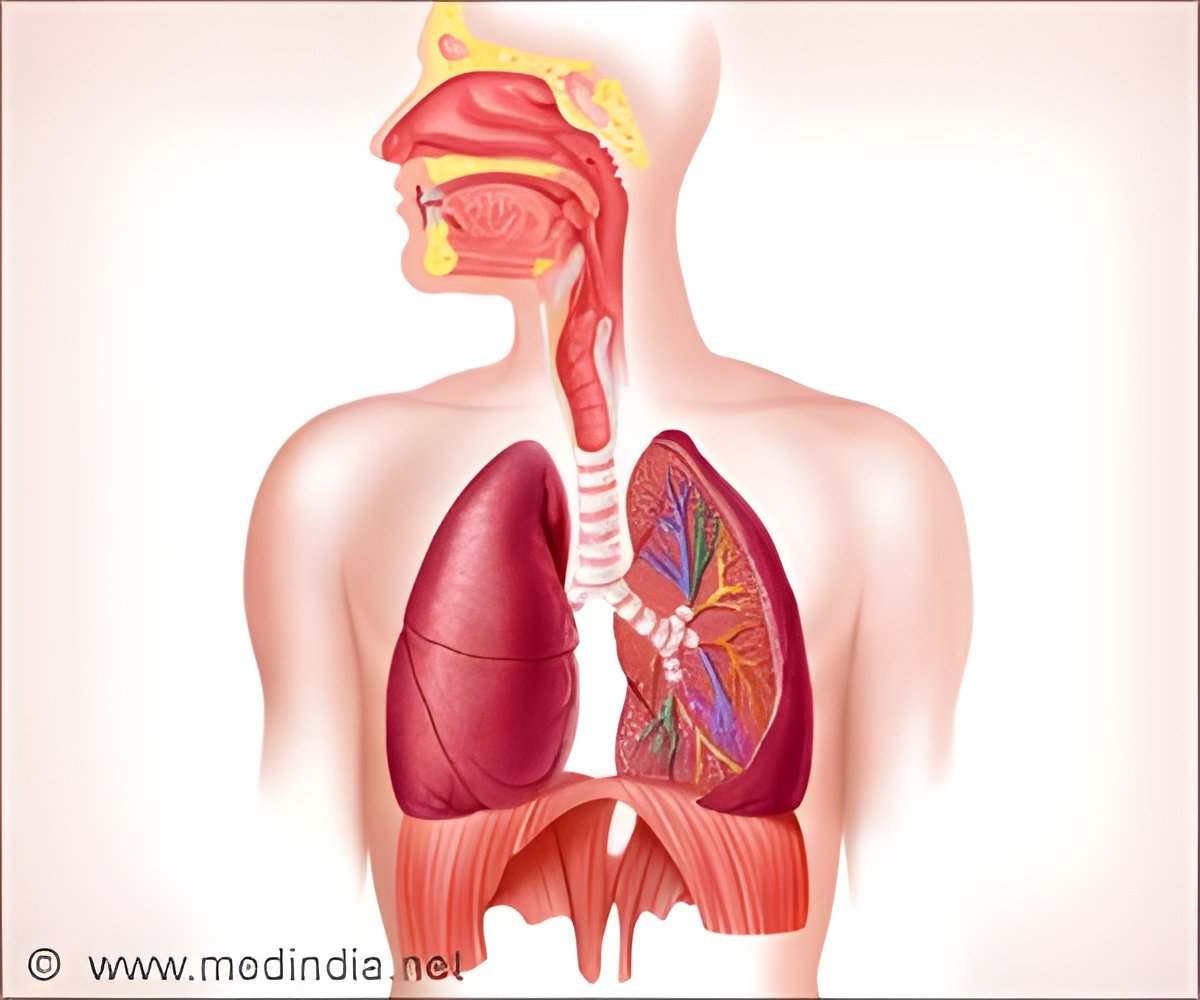
Lung Cancer - Types, Causes, Symptoms, Diagnosis, Treatment and Prevention
Lung cancer is a malignant tumor in the lung tissues. Smoking is the main cause of lung cancer with symptoms like recurrent respiratory diseases.
Lung cancer is a malignant tumor in the lung tissues. Smoking is the main cause of lung cancer with symptoms like recurrent respiratory diseases.
During the study period, tumors from 1,007 patients were tested for at least 1 gene and 733 for 10 genes (patients with full genotyping). An oncogenic driver was found in 466 of 733 patients (64 percent). Results were used to select a targeted therapy or clinical trial in 275 of 1,007 patients (28 percent).
The 260 patients with an oncogenic driver and treatment with a targeted agent had a median (midpoint) survival of 3.5 years; the 318 patients with a driver and no targeted therapy, 2.4 years; and the 360 patients with no driver identified, 2.1 years.

Lung Cancer Screening - FAQs
Lung cancer accounts for nearly 1.3 million deaths annually worldwide. Lung cancer screening can help in early detection of cancer and possible cure.
Lung cancer accounts for nearly 1.3 million deaths annually worldwide. Lung cancer screening can help in early detection of cancer and possible cure.
Editor's Note: This study was entirely supported by a grant from the National Institutes of Health, National Cancer Institute. Please see the article for additional information, including other authors, author contributions and affiliations, financial disclosures, etc.
Quiz on Lung Cancer (Advance)
Lung cancer, like other cancers, is a dreaded condition responsible for a number of deaths in both men and women. Test your knowledge on lung cancer by taking this quiz.
Lung cancer, like other cancers, is a dreaded condition responsible for a number of deaths in both men and women. Test your knowledge on lung cancer by taking this quiz.
Boris Pasche, M.D., Ph.D., of Wake Forest University, Winston-Salem, N.C., and Stefan C. Grant, M.D., J.D., M.B.A., of the University of Alabama at Birmingham, comment on the findings of this study in an accompanying editorial.

Mesothelioma
Animation on mesothelioma - a form of lung cancer, that explains about the condition, its risk factors, diagnosis and treatment
Animation on mesothelioma - a form of lung cancer, that explains about the condition, its risk factors, diagnosis and treatment
Editor's Note: Please see the article for additional information, including other authors, author contributions and affiliations, financial disclosures, funding and support, etc.
Source-Eurekalert
 Email
Email