MEDINDIA
 English
 हिन्दी
 Español
 français
 中文
中文
Through gene therapy, the corrected liver cells were transplanted into the diseased liver of pigs with HT1, resulting in enzyme production.

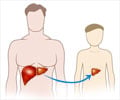
Adult to Child Living Donor Liver Transplantation
Adult to child liver transplantation refers to removing a small segment of liver from an adult and transplanting this segment into a child.
Adult to child liver transplantation refers to removing a small segment of liver from an adult and transplanting this segment into a child.
TOP INSIGHT

A newly developed gene therapy has resulted in the improvement of pigs with Hereditary tyrosinemia type 1 (HT1) and the prevention of liver failure.
Through gene therapy, the corrected liver cells are transplanted into the diseased liver, resulting in enzyme production. "This treatment is a new form of cell transplantation that utilizes the patient's own cells, so it does not require immunosuppressive drugs and, thus, avoids the side effects of those drugs," says Scott Nyberg, a liver transplant surgeon at Mayo Clinic.
This therapy resulted in the improvement of pigs with HT1 and the prevention of liver failure. The use of nuclear imaging enables the researchers to monitor expansion of the corrected cells through a noninvasive imaging process.
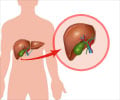
Liver Transplantation - Facts, Contraindications, Procedure, Follow up, Complications & Prognosis
Liver transplantation is a surgical option for the treatment of liver failure where the diseased liver is replaced with a healthy one.
Liver transplantation is a surgical option for the treatment of liver failure where the diseased liver is replaced with a healthy one.
The study also examines the use of lentiviral vectors for cell delivery in treating liver diseases, a tool traditionally used in treating blood disorders.
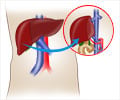
Living Donor Liver Transplant: What Are the Risks? - Causes, Symptoms, Diagnosis, Treatment
The risk of dying as a result of a living donor liver segment removal is between 0.2-2.0%. The risk of morbidity is anywhere between 1.3% (in highly experienced centers) to 60%.
The risk of dying as a result of a living donor liver segment removal is between 0.2-2.0%. The risk of morbidity is anywhere between 1.3% (in highly experienced centers) to 60%.

Medicaid Expansion Has Increased Enrollment Among Liver Transplant Recipients
Medicaid expansion increased Medicaid enrollment among people who received liver transplants funded by commercial insurance, revealed a new study.
Medicaid expansion increased Medicaid enrollment among people who received liver transplants funded by commercial insurance, revealed a new study.
 Email
Email