MEDINDIA
 English
 हिन्दी
 Español
 français
 中文
中文
New genetic mutations unique to colon cancers in African Americans have been discovered by Case Comprehensive Cancer Center researchers.

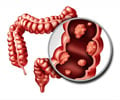
Colorectal Cancer - Types, Causes, Risk Factors, Symptoms, Diagnosis, Treatment, Prognosis & Prevention
Colorectal cancer is a cancer that starts in the colon or the rectum. Colorectal cancer is the third most common cancer in men.
Colorectal cancer is a cancer that starts in the colon or the rectum. Colorectal cancer is the third most common cancer in men.
TOP INSIGHT

Colorectal cancer patients who test positive for the mutations had an almost three times higher rate of metastatic disease.
These findings and the earlier study only became possible because of technological advances in gene sequencing and computational analysis. These studies ultimately involved review of 1.5 billion bits of data.
"This study builds on our previous genetic research on colorectal cancer," said Sanford Markowitz, MD, PhD, a co-author and principal investigator of the $11.3 million federal gastrointestinal cancers research program (GI SPORE) that includes this project. "It illustrates the extraordinary impact that dedicated, collaborative teams can make when they combine scientific experience and ingenuity with significant investment."

Colorectal Cancer Screening
Colorectal screening is done using tests to detect blood in stool, colonoscopy or sigmoidoscopy ordouble contrast barium enema or CT colonography.
Colorectal screening is done using tests to detect blood in stool, colonoscopy or sigmoidoscopy ordouble contrast barium enema or CT colonography.
From the very start, Dr. Markowitz and colleagues believed the answer to this question would be found through genetic analysis."Identifying gene mutations has been the basis of all the new drugs that have been developed to treat cancer in the last decade," Dr. Markowitz said. "Many of the new cancer drugs on the market today were developed to target specific genes in which mutations were discovered to cause specific cancers."

Colorectal Cancer Screening with Colonoscopy
Colonoscopy is a widely used endoscopic procedure to screen individuals for colorectal cancer. It is very sensitive in detecting colorectal cancers.
Colonoscopy is a widely used endoscopic procedure to screen individuals for colorectal cancer. It is very sensitive in detecting colorectal cancers.
The scientists made their discovery by using DNA sequencing to compare 103 colorectal cancer samples from African American patients with 129 colorectal cancer samples from Caucasian patients, all of whom had received care at UH Case Medical Center in Cleveland. The scientists examined 50 million bits of data from 20,000 genes in every cancer.
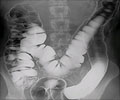
Colorectal Cancer Screening with Double-Contrast Barium Enema
Double-contrast barium enema is a radiological technique that can be used to screen individuals for colorectal cancer and is performed when colonoscopy is not possible.
Double-contrast barium enema is a radiological technique that can be used to screen individuals for colorectal cancer and is performed when colonoscopy is not possible.
 Email
Email