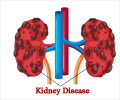

Smoking may Hinder the Benefits of Kidney Disease Medications
Cigarette smoking partially negates the kidney-protective effects of medications taken by patients with early CKD, possibly by inducing higher kidney levels of oxidative stress.
Cigarette smoking partially negates the kidney-protective effects of medications taken by patients with early CKD, possibly by inducing higher kidney levels of oxidative stress.
‘This preclinical study is first proof-of-concept to pave way for development of new therapeutics that target the G1 and G2 mutated APOL1 proteins to reduce kidney disease risk in African Americans.’
Tweet it Now
Now, a team led by researchers
from the Perelman School of Medicine at the University of Pennsylvania
has engineered mice with these mutations that cause human-like kidney
disease. "The key missing piece has been whether these variants are true disease culprits," said senior author Katalin Susztak, an associate professor of Medicine and Genetics, of the study published online in Nature Medicine. "Our study established that these mutations are definitely disease causing."
The G1 and G2 APOL1 gene variants, found almost exclusively in people of West African descent, have been shown to be associated with two-to-100-fold increased risk of kidney disease development, according to previous studies. Despite this highly significant risk, more than one third of African Americans carry the G1 and G2 variants.

Coordination of Care Benefits Patients With Kidney Disease and Reduces Medical Costs: Study
Coordination of care to slow kidney disease progression is likely to be cost effective because it prevents the need for dialysis.
Coordination of care to slow kidney disease progression is likely to be cost effective because it prevents the need for dialysis.
To prove that expression of APOL1 with the G1 and G2 mutations causes kidney disease, the team made mice in which they could induce the expression of the non-mutated APOL1 gene as well as the G1 or G2 mutated APOL1 genes in different cell types. The team found that when the G1 and G2 variants are expressed in the filtering cells of the kidney the disease in the mouse model strongly resembled features of human kidney disease at the functional, structural, and molecular level. "These mutant proteins caused the kidney filter to become leaky and scarred, resulting in defective kidney function" Susztak said.
Advertisement

Prevalence of Diabetic Kidney Disease Unchanged in the US
Diabetes is the leading cause of kidney disease and is responsible for half of end-stage renal disease requiring dialysis.
Diabetes is the leading cause of kidney disease and is responsible for half of end-stage renal disease requiring dialysis.
"Now that we know that the G1 and G2 mutated APOL1 proteins cause human-like kidney disease, we can start to look for ways to target them to reduce kidney disease risk among millions of people of African descent," Susztak said. "The good news is that in mice the disease development was experimentally reversible when the G1 and G2 genes were turned off, and in a related finding, disease severity also correlated with the amount of expression of G1 and G2 APOL1 variant proteins in patient samples."
Advertisement
Protein Identified That Drives the Severity of Kidney Disease
Over-expression of gene RTN1 causes an excess of reticulon protein. This changes the protein-building machinery in kidney cells, and signals cells to self-destruct.
Over-expression of gene RTN1 causes an excess of reticulon protein. This changes the protein-building machinery in kidney cells, and signals cells to self-destruct.