MEDINDIA
 English
 हिन्दी
 Español
 français
 中文
中文
Pregnant mice exposed to low doses of tributyltin (TBT), used in ship paints, promotes obesity which affects subsequent generations despite no exposure to the chemical.


Obesity - Causes, Symptoms, Diagnosis, Complications, Treatment
Obesity is a condition where there is excess accumulation of body fat which poses a risk to the health of the individual. It can affect children and adults.
Obesity is a condition where there is excess accumulation of body fat which poses a risk to the health of the individual. It can affect children and adults.
The "great-grandchildren" had never been exposed to TBT. Such effects without exposure are termed transgenerational and thought to be permanently transmitted to future generations.
These findings demonstrate that early-life exposure to endocrine-disrupting compounds such as TBT can have permanent effects on fat accumulation, gene expression and stem cell programming without further exposure, said study leader Professor Bruce Blumberg with the UC Irvine Departments of Developmental and Cell Biology, Pharmaceutical Sciences and Biomedical Engineering.
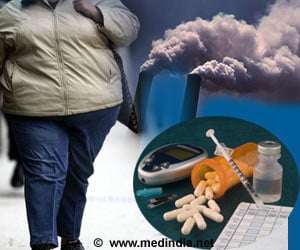
Influence of Environmental Chemicals on Obesity and Diabetes
Environment includes air, water, soil, all animate and inanimate things that affect us directly or indirectly. Various pollutants, such as noise, chemicals, light or heat, contaminate our environment.
Environment includes air, water, soil, all animate and inanimate things that affect us directly or indirectly. Various pollutants, such as noise, chemicals, light or heat, contaminate our environment.
TBT contaminates particles derived from products like shower curtains, vinyl flooring, carpet fibers, polyurethane foams, mold-resistant paints and other consumer products, where it is used as an antifungal agent.

Exposure to Daily Chemicals Affects Male Fertility
A Scottish study carried out on sheep has indicated that there could be a decrease in human sperm count due to exposure to every day chemicals.
A Scottish study carried out on sheep has indicated that there could be a decrease in human sperm count due to exposure to every day chemicals.
Although TBT is now largely banned for use in marine hull paints, it remains pervasive in the environment, and people can be exposed by ingesting TBT-contaminated seafood. Organotins may also leach into liquids that come into contact with organotin-containing plastic pipes, containers and packaging materials.

Quiz on Obesity
There are thousands out there battling ‘the bulge’. With childhood obesity on the rise even children are not spared. If your weight issues are threatening to weigh you down learn more about obesity by taking part in this quiz.
“We are indeed much more than what we eat, but what we eat can nevertheless help us to be much more than what we are”. - Adelle Davis
There are thousands out there battling ‘the bulge’. With childhood obesity on the rise even children are not spared. If your weight issues are threatening to weigh you down learn more about obesity by taking part in this quiz.
He and his colleagues identified TBT as an obesogen in a 2006 publication and showed in 2010 that TBT acts in part by modifying the fate of mesenchymal stem cells during development, predisposing them to become fat cells.
The study has been published in Environmental Health Perspectives.
Source-ANI
 Email
Email