MEDINDIA
 English
 हिन्दी
 Español
 français
 中文
中文
Mouse eyes have a photosensitive function built directly into the ring of sphincter muscle surrounding the pupil.
When Someone Listens to You, Their Pupils Dilate
Pupil dilation patterns reflect the contents of consciousness or what one pays attention to.
Pupil dilation patterns reflect the contents of consciousness or what one pays attention to.
TOP INSIGHT

In humans and many animals, the size of the pupil is controlled by involuntary contraction and dilation of the iris, in order to regulate the intensity of light entering the eye.
The mammalian eye adapts to changing light conditions by constricting or enlarging the pupil. That action, referred to as pupillary light reflex, is controlled by opposing dilator and sphincter muscles in the iris. "The traditional view of this reflex is that light triggers nerve signals traveling from the eye's retina to the brain, thereby activating returning nerve signals, relayed by the neurotransmitter acetylcholine, that make the sphincter muscle contract and constrict the pupil," says King-Wai Yau, Ph.D., a neuroscientist at the Johns Hopkins University School of Medicine and an author of the report.
But research by Yau and his team several years ago, building on earlier work by others, showed that nocturnal mammals and mammals active at dawn and dusk, such as mice, rabbits, cats and dogs, don't need the brain for this reflex to work. Instead, Yau's lab found that even when isolated, the sphincter muscle contracts in response to light, employing a light-sensitive pigment called melanopsin.
One Can Become Trustworthy by Mimicking Other's Pupil: Leiden University
Pupil mimicry is useful in social interactions in which extending trust and detecting untrustworthiness in others go hand in hand and benefits group interactions.
Pupil mimicry is useful in social interactions in which extending trust and detecting untrustworthiness in others go hand in hand and benefits group interactions.
This suggestion prompted Yau's team to ask what would happen if the action of acetylcholine were blocked. "Sure enough, even after blocking the action of acetylcholine pharmacologically, the isolated iris sphincter muscle still contracted in response to light, adding confidence to the notion that the muscle is itself light-sensitive because it contains melanopsin," Yau says of the present work.
Did You Know That Your Pupils Adjust Themselves Even While You Imagine Bright and Dark Scenes?
New research finds that conjuring up a visual image in the mind — like a sunny day or a night sky — has a corresponding effect on the size of our pupils, as if we were actually seeing the image.
New research finds that conjuring up a visual image in the mind — like a sunny day or a night sky — has a corresponding effect on the size of our pupils, as if we were actually seeing the image.
It turns out lower mammals that are active during the day, such as ground squirrels, lack the local pupillary light reflex Yau's team found; the same applies to primates, whether nocturnal or not. "The broad picture," Yau says, "is that the local pupillary light reflex appeared early in primitive vertebrates such as jawless fish, even before the brain got involved. In the course of evolution, the brain became involved in this reflex, but the local mechanism remained dominant in amphibians. By the time mammals appeared, the local reflex was progressively less important, becoming extinct altogether in subprimates that are active during the day and in primates. It's the local light reflex's absence in human beings that allows doctors to quickly evaluate whether a comatose patient is brain-dead by checking his or her pupillary light reflex."
Eyes Reveal When Two Minds Connect
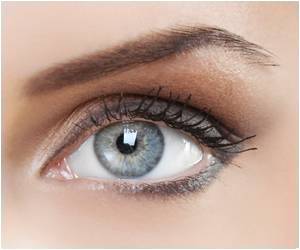
People know that pupils dilate to adjust the amount of light that enters eye, but pupils also dilate rapidly in response to information that is being processed.
People know that pupils dilate to adjust the amount of light that enters eye, but pupils also dilate rapidly in response to information that is being processed.
 Email
Email