MEDINDIA
 English
 हिन्दी
 Español
 français
 中文
中文
Although green tea is enjoyed by millions for its numerous health benefits, researchers have revealed that excessive consumption affects development in fruit fly.
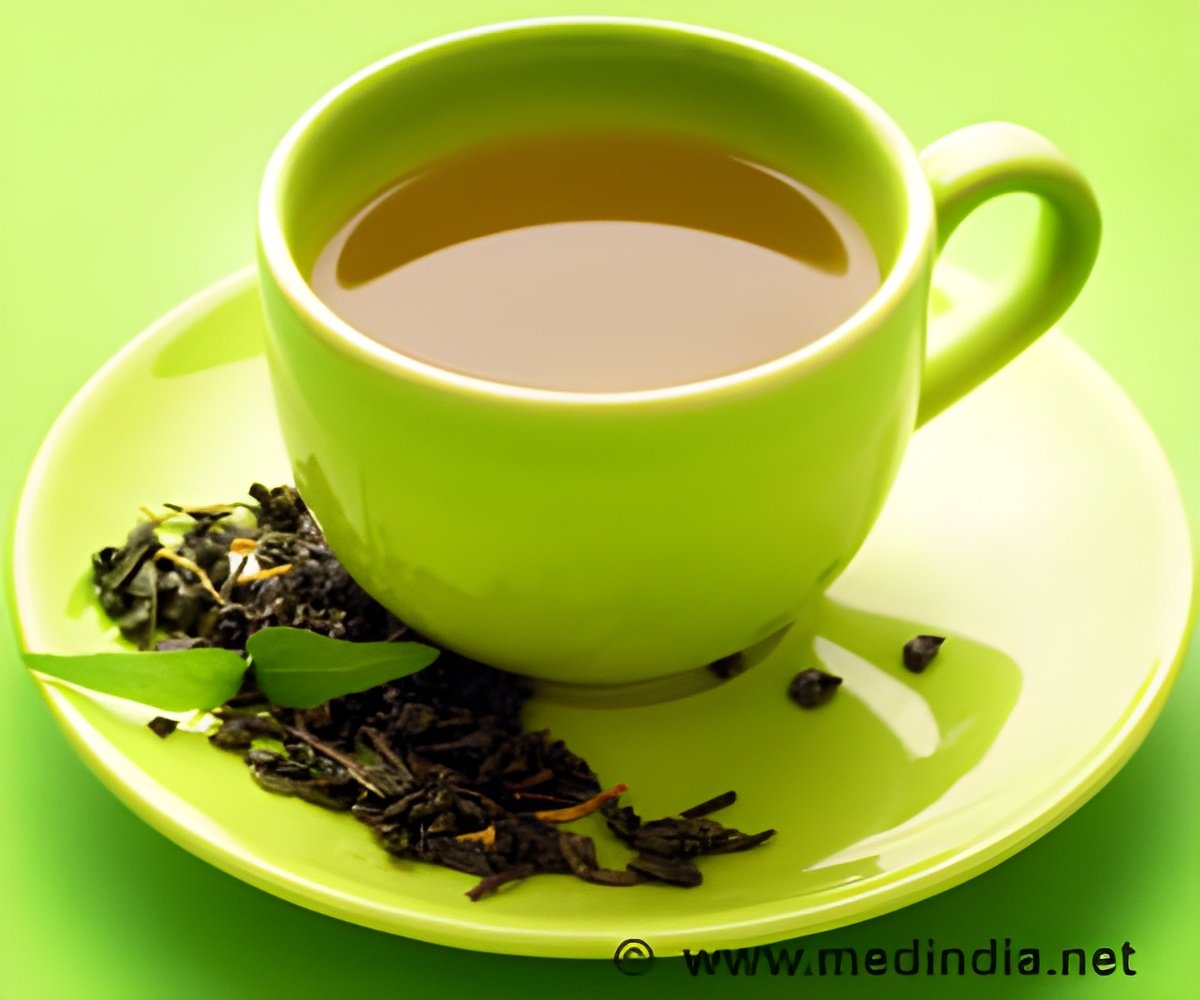

Chinese Green Tea - Health Benefits - Harmful Effects - FAQs
Green tea is the least processed variant of tea. Tea is a beverage made from the processed leaves of Camellia sinensis (Family- Theaceae).
Green tea is the least processed variant of tea. Tea is a beverage made from the processed leaves of Camellia sinensis (Family- Theaceae).
TOP INSIGHT

High doses of green tea may cause 'too much' apoptosis, or cell death, thus affecting the development and reproduction in fruit fly populations. The findings suggest caution when using green tea, or any natural product in high doses.
- 10 milligrams of green tea made the flies more susceptible to starvation and heat stress but protected them against dehydration.
- Female offspring showed decreased reproductive output and a 17% reduction in lifespan; males were unaffected.
- 10 milligrams of green tea caused morphological abnormalities in reproductive organs, such as testicular and ovarian atrophy.
Jafari believes that high doses of green tea may cause 'too much' apoptosis, or cell death, but in this study, she said that they did not evaluate mechanisms, which is the focus of her current research.
Derived from the plant Camellia sinensis, green tea is popular worldwide for its purported brain and heart health and anticancer properties. However, there are some reports of problems associated with excessive consumption: Jafari noted that in other tests with mice and dogs, green tea compounds in large amounts dramatically reduced body weight and, in mice, negatively affected embryo development.

Green Tea May Reduce Breast Cancer Risk in Post-Menopausal Women
Drinking green tea may reduce the risk of breast cancer in post menopausal women, according to a new study from National Cancer Institute.
Drinking green tea may reduce the risk of breast cancer in post menopausal women, according to a new study from National Cancer Institute.
The Jafari group is emerging as a leader in the study of natural food products - herbs, spices and root extracts, for example - that people have ingested for centuries because of their alleged health benefits. And fruit flies have proven useful in testing pharmaceuticals' and nutraceuticals' adverse effects.

Role of Green Tea in Preventing Breast Cancer
Studies have now demonstrated that certain substances present in green tea may help keep away breast cancer.
Studies have now demonstrated that certain substances present in green tea may help keep away breast cancer.
Source-Eurekalert

Green Tea is Good for Improving the Image Quality of MRI
Sanjay Mathur, a scientist of Indian-origin, has found that drinking green tea is not only for your health but it also improves the image quality of an MRI.
Sanjay Mathur, a scientist of Indian-origin, has found that drinking green tea is not only for your health but it also improves the image quality of an MRI.
 Email
Email