MEDINDIA
 English
 हिन्दी
 Español
 français
 中文
中文
A mouse model of autism has been developed by US scientists.
Autism Causes, Symptoms, Diagnosis, Treatment, Prognosis
Autism is a neurodevelopmental disorder typically characterized by impaired social and communication skills combined with repetitive movements.
Autism is a neurodevelopmental disorder typically characterized by impaired social and communication skills combined with repetitive movements.
"The idea that this deletion might be causing autism was exciting," said professor Alea Mills, co-author of the study that appears in the Proceedings of the National Academy of Sciences.
"So we asked whether clipping out the same set of genes in mice would have any effect."
Evidence for the Genetic Basis of Autism Emerges from Animal Study
A common genetic alterations in autism, deletion of a 27-gene cluster on chromosome 16 has been pinpointed by scientists at Cold Spring Harbor Laboratory (CSHL) as a cause for autism-like features.
A common genetic alterations in autism, deletion of a 27-gene cluster on chromosome 16 has been pinpointed by scientists at Cold Spring Harbor Laboratory (CSHL) as a cause for autism-like features.
"Mice with the deletion acted completely different from normal mice," said co-author Guy Horev.
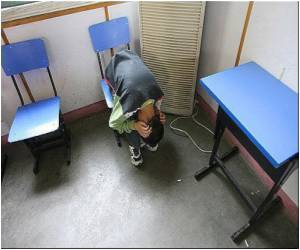
Mice With Autism Has Striking Similarities to Humans With Autism Spectrum Disorders
The behaviour and symptoms of mice with autism closely resembles humans suffering autism spectrum disorders.
The behaviour and symptoms of mice with autism closely resembles humans suffering autism spectrum disorders.
By closely examining the mice brains with MRI scans, researchers have been able to identify which regions are altered in the autistic mice.
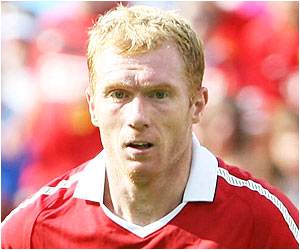
My Youngest Son Has Autism, Reveals Scholes
Paul Scholes, one of England's finest football players has revealed that his youngest son Aiden is autistic in his frank new autobiography, Scholes: My Story.
Paul Scholes, one of England's finest football players has revealed that his youngest son Aiden is autistic in his frank new autobiography, Scholes: My Story.
Children who have autism, a range of disorders linked to abnormal brain chemistry, are typically diagnosed by age three. Boys are three to four times more likely to have autism than girls.
Source-AFP
 Email
Email