MEDINDIA
 English
 हिन्दी
 Español
 français
 中文
中文
Primary care physician burnout stems from a complex interplay of systemic pressures, individual stressors, and the growing demands of modern medical practice.

Burnout of Physicians Working in Primary Health Care Centers under Ministry of Health Jeddah, Saudi Arabia
Go to source). However, a new trio of studies from the University of Michigan offers a promising path forward. These findings highlight strategies that could not only improve patient care but also enhance the day-to-day experience of providers. Together, they present a blueprint for primary care clinics nationwide to help stabilize and strengthen the foundation of the American healthcare system.
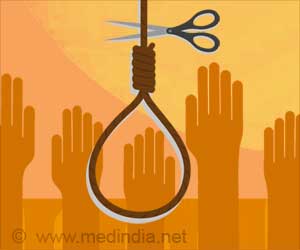
Job Problems More Likely to Increase Physician Suicide
Suicide among doctors (physician suicide) due to job problems, poor physical and mental health, substance use, relationships and finances is becoming more common worldwide.
Suicide among doctors (physician suicide) due to job problems, poor physical and mental health, substance use, relationships and finances is becoming more common worldwide.
TOP INSIGHT

Did You Know?
New research reveals a troubling gender gap in primary care: women physicians spend more time handling patient messages, receive more negative or demeaning ones, and report higher burnout linked to messaging. #healthcare #physicianburnout #genderequity
They each center around the issue of digital messages sent by patients through their digital portals, and how clinics handle their responses within the electronic health record.
Such messages went from a trickle to a deluge five years ago with the COVID-19 pandemic, and while the flood has ebbed a bit, they now form both a key part of care and a major driver of burnout.

UK Family Doctors Slow to Embrace Email Services for Their Patients
In England, the UK government sees the use of email contact and e-consultations as a means of boosting patient access to primary care and is piloting these services in 20 general practices.
In England, the UK government sees the use of email contact and e-consultations as a means of boosting patient access to primary care and is piloting these services in 20 general practices.
Key findings:
- One of the new studies shows major gender imbalances in how primary care physicians experience and handle such messages, with women physicians spending more time on them, getting more negative or demeaning ones, and more frequently citing messages as a source of burnout.
- Another of the new studies shows the positive impact of protecting a short amount of time each clinic session for physicians to handle the messages in their in-baskets in a more timely manner and as part of their normal workday. The study shows that while the intervention improved physician wellbeing and reduced their sense of “overwhelm” from the in-basket, it did not significantly change total patient visits or billing – key findings in a time when finances weigh heavily on the minds of health system leaders.
- The third of the studies shows the power of teamwork in handling patient messages, by creating a framework for medical assistants, nurses of different training levels, and physicians to use to address in-basket messages more efficiently and effectively.
The Influence of Gender on Patient Portal Communication
Women make up more than half – 57% -- of the physicians in U-M’s General Medicine and Internal Medicine-Pediatrics (also called Med-Peds) clinics. That’s even higher than the national average for all primary care disciplines, in which prior research has shown female physicians are especially prone to burnout and its impacts on their career decisions.
Disturbing Trend Between Burnout and Work-Life Balance Among US Physicians
The number of physicians who say they are suffering from “burnout” has jumped to more than half as the practice of medicine becomes more complicated in the US.
The number of physicians who say they are suffering from “burnout” has jumped to more than half as the practice of medicine becomes more complicated in the US.
They found many areas where male and female physicians were similar – including the fact that both groups spent just under an hour every day handling patient messages. But they also found key areas of difference.

Shared Dialogues and Sensible Mediation Reduce Physician Burnout
Report says training in mindfulness meditation and communication can alleviate the psychological distress and burnout experienced by many physicians
Report says training in mindfulness meditation and communication can alleviate the psychological distress and burnout experienced by many physicians
Women physicians were also 60% more likely than male physicians to receive messages from patients that were negative or demeaning.
At the same time, women physicians were twice as likely as men to see the electronic health record system as easy to learn and an asset for patient education, and less likely than men to see the EHR as inhibiting quality care.
“Exploring the differences in how male and female providers experience and manage portal messages reveals intriguing insights,” said Branford. “While some institutions report a higher message volume for female providers, our institution observed that women tend to spend more time managing these messages. Compared to their male counterparts, women find the EHR system easier to learn and more beneficial in clinical practice. However, they are more likely to cite the in-basket workload as a source of burnout. Recognizing these gender differences can help us develop tailored solutions to address these challenges”.
How Healthcare Providers Handle Patient Messages
One of the key drivers of burnout related to patient messages is “pajama time” – that is, the time that doctors spend handling messages outside of their normal work hours, often at home late into the night or early in the morning.
That’s why Jennifer Reilly Lukela, M.D. and colleagues studied an innovation that U-M General Medicine clinics launched in 2022, to try to reduce the sense of overwhelm those providers felt from handling patient messages and other in-basket tasks.
The clinics gave physicians a 20-minute slot for every half day they saw patients, which they could use to handle patient questions, refill requests, test results or new symptoms for which a patient was requesting advice via a portal message.
Lukela and colleagues looked at how these slots, which the authors now refer to as Patient Asynchronous Care Effort or PACE slots, impacted clinical care delivery, billing, physician pajama time, and physician experiences, through surveys of more than 100 providers and analysis of activity in the EHR.
In all, they found that the addition of these slots didn’t diminish the total number of hours of “pajama time” physicians spent handling digital clinical duties outside their official hours. Nor did the clinics see a significant drop in patient visits, time spent with patients, or billable time measured in relative value units or RVUs.
What did change, Lukela says, is how physicians felt about their workload. Nearly all felt it helped them address urgent incoming messages in a timelier manner and to feel less overwhelmed by their inbaskets. Many commented that they were now less worried about missing an urgent issue or safety risk. And most (88%) perceived that the slots decreased their pajama time – when in fact overall there wasn’t a measured drop.
“As we think about physician wellbeing and the sustainability of careers in primary care, one of the most critical things is agency over your day and control over your schedule,” said Lukela. “With the PACE innovation, we are both trying to meet patients where they’re at and make primary care a sustainable practice for physicians by recognizing all the kinds of work they do, without reducing financial sustainability.”
Lukela serves as vice chair for clinical strategy and community engagement of the U-M Division of General Medicine. She notes that Michigan Medicine’s Department of Family Medicine, as well as several other academic primary care groups across the nation, have also recently begun giving providers time to handle portal message-related demands.
“Asynchronous care is here to stay,” she said. “We need to figure out how to deliver this form of care efficiently and build it into the system, to prevent provider burnout, and ensure patient safety.”
Handling Patient Messages as a Team
Another recent paper by U-M General Medicine researchers shows the impact of an innovation that leverages the skills of the entire clinic team to make sure patient messages get handled appropriately. The new paper gives the results from a test conducted in one clinic, and compared with two others, before rolling it out broadly.
Led by Nicole Hadeed, M.D., the team interviewed all types of clinicians including medical assistants, patient service associates, licensed practical nurses, registered nurses, and physicians. They used this to develop standards and a routing guide for different kinds of patient portal messages, including communication among members of the clinic as they worked to handle a patient’s message.
To look at what happened in the intervention clinic and compare it to the two other clinics, Hadeed and colleagues examined 343,000 messages related to 31,500 patients, including messages from patients and among staff.
This team-based approach aimed to spread the load across different types of clinicians, reduce redundant routing and unnecessary “FYI” messages, and ensure that patients reporting new symptoms receive a phone call to triage their issue.
At the clinic where they implemented the guides, there was a 16% reduction in messages per physician, and a 62% reduction in duplicate messages sent to multiple clinicians, compared with two other clinics that hadn’t implemented the changes. There was also a 26% reduction in the messages sent directly to physicians at the intervention site, larger than the reduction at the control sites.
“While many clinician and staff reactions to the patient portal emphasize drowning under the brunt of clinical care happening over in-basket messages, it was evident that a significant proportion of messages are created by inefficient routing practices within the clinic itself, driven by a lack of transparency of each person’s role within the multidisciplinary team,” Hadeed said.
Through the evidence-driven guides, “we were able to significantly reduce the volume of messages by simply outlining roles and routing guidance for common issues,” she continued. “Focusing on getting the right message to the right place the first time was a simple and powerful intervention to reduce intra-clinic message traffic that is budget-neutral and completely within the clinic site’s control.”
Reference:
- Burnout of Physicians Working in Primary Health Care Centers under Ministry of Health Jeddah, Saudi Arabia - (https://pmc.ncbi.nlm.nih.gov/articles/PMC5784861/)
Source-Eurekalert
 Email
Email