MEDINDIA
 English
 हिन्दी
 Español
 français
 中文
中文
The connections between neurons, the synapses, seemed significantly weaker in the chemically-fixed brain imaging method compared to the cryofixed one.
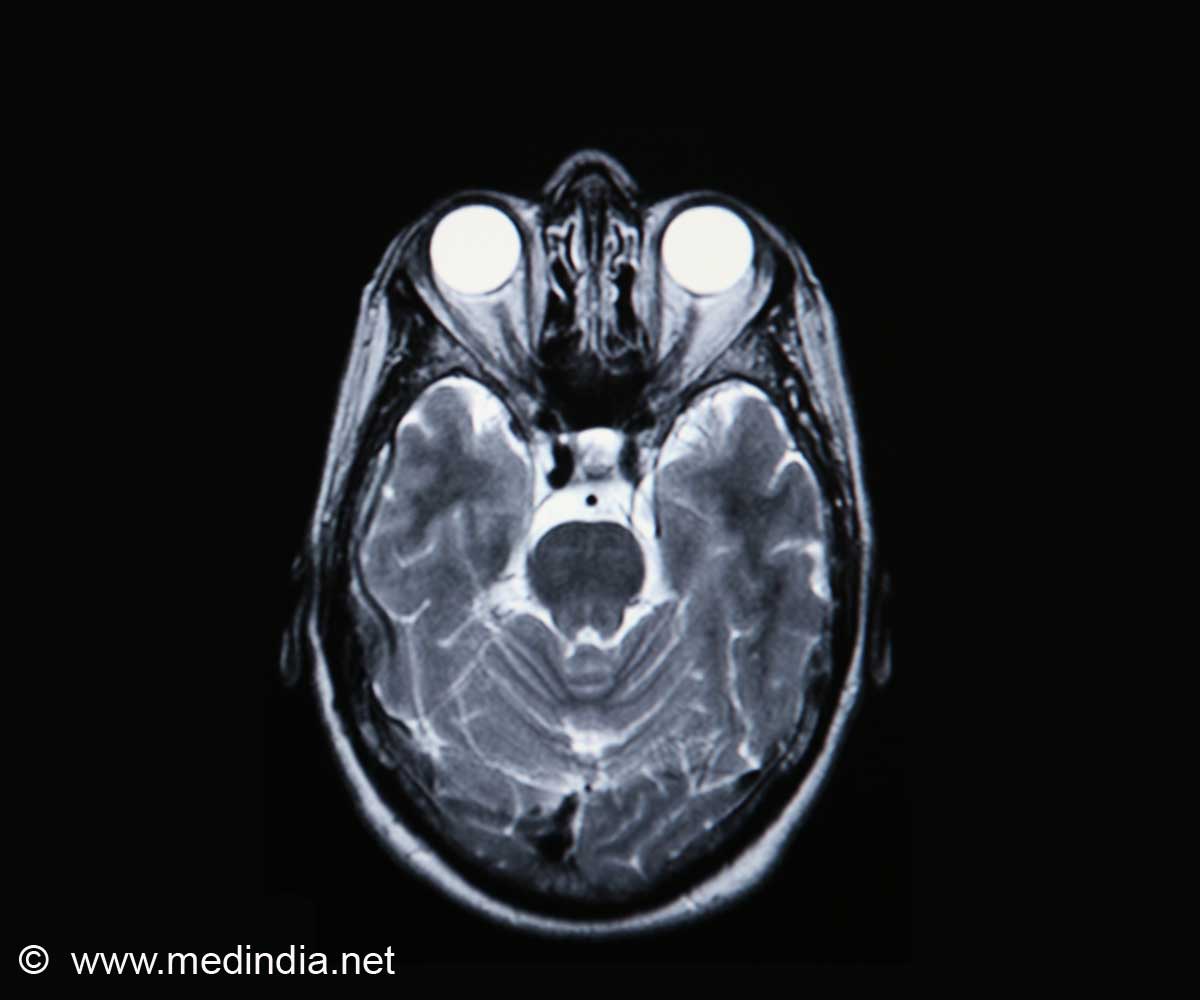
Non-invasive Brain Imaging Method to Detect Alzheimer's Disease
Designing therapies to combat and monitor the disease by early detection of damage to the brain would be possible by the use of non-invasive MRI probe.
Designing therapies to combat and monitor the disease by early detection of damage to the brain would be possible by the use of non-invasive MRI probe.
The researchers then compared the cryofixed brain images to those taken from a brain fixed with an "only chemical" method. The analysis showed that the chemically fixed brain was much smaller in volume, showing a significant loss of extracellular space - the space around neurons.
In addition, supporting brain cells called 'astrocytes', seemed to be less connected with neurons and even blood vessels in the brain. And finally, the connections between neurons, the synapses, seemed significantly weaker in the chemically-fixed brain compared to the cryofixed one. The researchers then compared their measurements of the brain to those calculated in functional studies, studies that measure the time it takes for a molecule to travel across that brain region.

Early Detection of Alzheimer's Disease Using Brain Imaging
Changes in brain connections visible on MRI that represents an imaging biomarker of Alzheimer's disease was observed in a new study.
Changes in brain connections visible on MRI that represents an imaging biomarker of Alzheimer's disease was observed in a new study.
Source-ANI

Brain Imaging Reveals Early Musical Training Boosts Executive Brain Function
Early musical training can make your brain work 'smarter' and boost executive functioning in both children and adults to regulate behaviors, make smart choices and solve problems.
Early musical training can make your brain work 'smarter' and boost executive functioning in both children and adults to regulate behaviors, make smart choices and solve problems.

Clues About Chronic Fatigue Syndrome Revealed Via Brain Imaging
Patients with chronic fatigue syndrome may have reduced responses in a region of the brain connected with fatigue.
Patients with chronic fatigue syndrome may have reduced responses in a region of the brain connected with fatigue.
 Email
Email